The Evolution of the Chauffeur-Driven Paradigm
In the world of professional livery and executive protection, the "right" car is defined by the passenger's ability to work or rest without compromise. We have shifted from an era of simply "large cars" to "intelligent environments." Modern luxury sedans now integrate biometric sensors that adjust climate based on skin temperature and noise-canceling technology that rivals high-end headphones.
In practice, a CEO traveling from a private terminal at Teterboro to Manhattan needs a cabin that can counteract the fatigue of a trans-Atlantic flight. For example, the Mercedes-Maybach S-Class employs an active road noise compensation system that uses the Burmester® High-End 4D Surround Sound system to emit counter-waves, reducing perceived road noise by up to 50% compared to standard luxury models.
Statistically, the difference between a standard wheelbase and an extended wheelbase (LWB) can be as much as 15 to 20 centimeters. In the BMW 7 Series (G70), this extra length is utilized for the "Executive Lounge" seating, allowing the rear passenger to recline up to 42.5 degrees, a figure that sets the benchmark for non-limousine configurations.
Critical Failures in Executive Vehicle Procurement
The most common mistake procurement officers make is prioritizing brand prestige over cabin ergonomics. Many high-end sports sedans boast impressive badges but feature "coupe-like" sloping rooflines. This drastically reduces "headroom clearance," making it difficult for passengers taller than 185 cm to sit upright without discomfort, or worse, making ingress and egress look ungraceful during public arrivals.
Another pain point is the "middle seat hump." In many AWD sedans, the transmission tunnel creates a massive barrier, effectively turning a five-seater into a cramped two-seater with no room to move legs laterally. When a vehicle lacks a dedicated "Chauffeur Mode"—which automatically slides the front passenger seat forward and folds the headrest—the rear legroom remains theoretical rather than functional.
Ignoring the suspension setup is equally fatal. A car with "sport-tuned" suspension might look sleek, but for a passenger trying to sign a document or type on a laptop, every minor road imperfection is transmitted through the chassis. Without an active air suspension system like Audi’s Predictive Active Suspension, the rear cabin becomes an unstable workspace.
Strategic Recommendations for Optimal Rear-Seat Comfort
The Long-Wheelbase Mandate
Never settle for the standard version of a flagship sedan. The extended wheelbase is the foundation of chauffeur use. Models like the Rolls-Royce Ghost Extended provide an additional 170mm of space, specifically targeted at rear knee room. This isn't just about stretching out; it's about creating enough distance from the front seat to allow for the deployment of full-sized picnic tables and 31-inch theater screens without crowding the passenger.
Prioritizing H-Point and Ingress Geometry
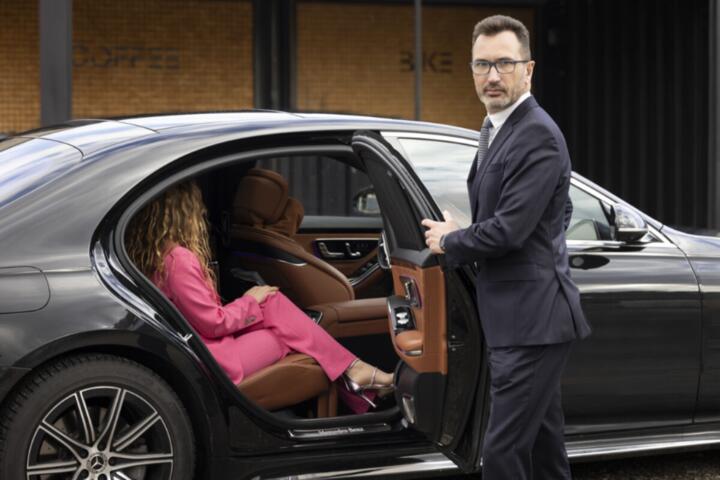
The "H-point" (hip point) determines how easy it is to enter and exit. A vehicle like the Bentley Continental Flying Spur excels here, offering a slightly higher seating position than a traditional sports sedan. This allows a passenger to "step in" rather than "climb down," preserving dignity during arrivals at high-profile events. Look for doors that open to at least 80 degrees for seamless movement.
Acoustic Lamination and Thermal Privacy
True luxury is silence. Modern executive choices must feature double-glazed, infrared-reflecting laminated glass. This does two things: it drops cabin decibel levels to below 60 dB at highway speeds and prevents electronic eavesdropping or heat soak. Services like Blacklane or Wheely often prioritize cars with these specs because they ensure the passenger's phone conversations remain private from outside listeners.
Integration of Smart Cabin Controls
The passenger should never have to ask the driver to adjust the temperature. High-spec BMW 7 Series models include Touch Command tablets in the armrests or integrated into the door panels (Touch Command). This allows for 100% autonomy over sunblinds, ambient lighting, and seat massage programs. In a professional context, this autonomy is a key component of the "frictionless" travel experience.
Climate Micro-Zones and Air Purification
Standard dual-zone climate control is insufficient. For chauffeur use, a four-zone system with ionic air purification is mandatory. The Lexus LS 500h utilizes "Climate Concierge," which uses infrared sensors to monitor the body temperature of rear occupants and adjusts the heated/cooled seats and air vents individually for each passenger. This prevents the "hot side/cold side" conflict often found in smaller executive cars.
Real-World Executive Scenarios
Case Study 1: The Multi-National Consulting Firm
A top-tier consulting firm in London replaced its fleet of standard executive cars with BMW 750e xDrive units. The problem was passenger fatigue during 2-hour commutes from Heathrow to rural headquarters. By switching to the G70 generation with the "31.3-inch Theater Screen," consultants could conduct video briefings in a secure, noise-isolated environment. Result: A 15% increase in billable "transit hours" as recorded by the firm's internal productivity audits.
Case Study 2: The Boutique Chauffeur Service
A luxury transport provider in Dubai pivoted from standard SUVs to the Mercedes-Maybach S 580. Their client retention rate climbed by 22% within six months. The specific differentiator was the "Executive Seat" package which includes a calf rest and a massage function that mimics "hot stone" therapy. Clients reported that the ability to fully recline after long-haul flights was the primary reason for their loyalty to the service.
Comparative Analysis of Premium Rear-Cabin Dimensions
| Vehicle Model | Rear Legroom (mm) | Max Recline Angle | Unique Rear Feature |
|---|---|---|---|
| Mercedes-Maybach S-Class | 1,215 mm | 43.5 Degrees | Active Road Noise Compensation |
| BMW 7 Series (LWB) | 1,120 mm | 42.5 Degrees | 31.3-inch 8K Theater Screen |
| Audi A8 L Horch | 1,110 mm | 40.0 Degrees | Foot Massage Function (Rear) |
| Rolls-Royce Phantom EWB | 1,500+ mm | Near-Flat | Starlight Headliner & Privacy Suite |
| Lexus LS 500h | 990 mm | 48.0 Degrees | Shiatsu Massage Programs |
Frequent Pitfalls in Selecting a Chauffeur Vehicle
Many buyers overlook the "Front Seat Displacement" capability. Even a car with high legroom stats can feel cramped if the front passenger seat cannot be moved forward and tilted by the rear occupant. If the car does not have a "Chauffeur Circuit" (a dedicated button to clear the space in front of the VIP), it is not a true chauffeur car.
Another error is ignoring the trunk space in hybrid models. Often, the batteries for the electric motor eat into the luggage compartment. A Mercedes S-Class PHEV has significantly less trunk space than its petrol counterpart. If your passenger travels with a full Rimowa luggage set, they might find their bags sitting in the front seat, which undermines the entire professional aesthetic.
Finally, check the "C-Pillar" design. Thick C-pillars provide privacy but can make the cabin feel claustrophobic. Conversely, too much glass makes the passenger feel like they are in a fishbowl. The best vehicles, like the Bentley Flying Spur, strike a balance by using deep-set seating positions that hide the passenger behind the pillar without sacrificing the view.
Frequently Asked Questions
Which sedan has the absolute most legroom?
The Rolls-Royce Phantom Extended Wheelbase (EWB) holds the crown, offering over 1.5 meters of rear space, though for more "attainable" luxury, the Mercedes-Maybach S-Class leads the production sedan segment.
Is an SUV better than a sedan for chauffeur use?
While SUVs like the Range Rover Autobiography offer more headroom, sedans generally provide a more composed ride due to a lower center of gravity. Sedans are also more aerodynamic, leading to less wind whistle at high speeds.
What is the "Chauffeur Package" exactly?
It is a suite of features that usually includes a power-adjustable footrest, the ability to move the front passenger seat from the rear, and enhanced headrests. In brands like Audi and BMW, this also unlocks dedicated climate and media controls.
Are electric sedans good for executive transport?
Yes, the Lucid Air and BMW i7 offer exceptional rear space because the absence of a traditional engine allows for a "cab-forward" design. The i7, in particular, is becoming a favorite in European hubs due to zero-emission zones.
Does rear-seat entertainment actually get used?
In the past, no. However, with the advent of 5G connectivity and HDMI-in ports in cars like the new 7 Series, executives now use these screens for "Screen Mirroring" their laptops during transit to rehearse presentations.
Author’s Insight
In my years evaluating automotive interiors, I’ve found that the "best" seat isn't just about the tape measure; it's about the frequency of the massage motors and the quality of the leather. I always tell my clients to sit in the back for at least twenty minutes during a test drive—not five. It takes that long to realize if the seat base is too short to support your thighs or if the air conditioning vents are blowing directly onto your face instead of circulating the air. Real luxury is the absence of annoyance. If I had to pick a daily driver for a high-level executive today, the BMW i7 with the 31-inch screen is the current gold standard for turning a traffic jam into a private cinema or office.
Conclusion
Selecting a vehicle for chauffeur use requires a pivot from driving dynamics to "living dynamics." Prioritize the long-wheelbase variants of established flagships, ensure the presence of a dedicated chauffeur control suite, and never compromise on acoustic glass. For those seeking the ultimate balance of technology and space, the Mercedes-Maybach S-Class and BMW 7 Series remain the leaders. To make the final decision, conduct a "static test": bring your usual laptop and briefcase, sit in the rear, and ensure the vehicle adapts to your workflow, rather than forcing you to adapt to its constraints.