Urban Dimensionality
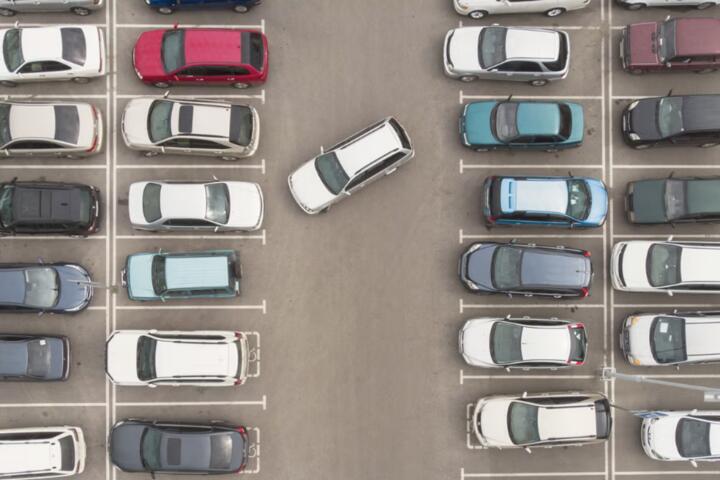
In metropolitan hubs like New York, London, or Tokyo, the "standard" parking spot is shrinking. While a typical US parking space is 8.5 to 9 feet wide, structural columns in older garages often reduce effective clearance to under 8 feet. Navigating these requires a vehicle that prioritizes "point-to-point" agility over raw horsepower.
Practical urban driving isn't about top speed; it’s about the Turning Circle. A car with a 35-foot turning diameter can pull a U-turn on a standard two-lane city street without reversing. Modern compacts now utilize variable-ratio steering to make 90-degree alleyway turns feel effortless at 10 mph.
According to INRIX data, drivers in major cities spend an average of 17 hours a year searching for parking, resulting in $345 per driver in wasted time and fuel. Choosing a vehicle with a sub-180-inch length significantly increases the pool of available curb spots by roughly 22%, statistically lowering your "search time" and stress levels.
Commuting Costs
Incompatible Infrastructure and "Garage Rash"
Many drivers mistakenly buy mid-sized sedans for "safety," only to find that the wider track leads to "curb rash" on expensive alloy wheels. In underground facilities like those managed by SP+ или LAZ Parking, ramps are often designed for 1970s compacts, not modern SUVs. This leads to cosmetic damage and high repair bills.
The Visibility Gap in Heavy Pedestrian Zones
A major error is overlooking the beltline height. High-waisted cars create massive blind spots at the A-pillar. In a city environment, this creates a dangerous lag in spotting delivery cyclists or pedestrians at crosswalks. If you can't see the curb from the driver’s seat, you will struggle to parallel park precisely.
Fuel Inefficiency in Stop-and-Go Grids
Heavy vehicles suffer most in the "idle-crawl" of peak traffic. Without a hybrid powertrain or a lightweight frame, a standard sedan's fuel economy can drop by 40% compared to its EPA highway rating. This results in more frequent, inconvenient stops at overpriced urban gas stations.
Metropolitan Solutions
Prioritizing the 360-Degree Awareness Suite
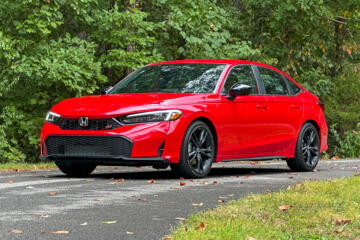
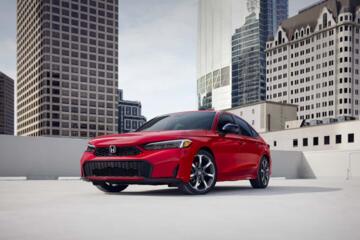
Modern tech has moved beyond the basic backup camera. When shopping, look for Surround View Monitors. Systems found in the Honda Civic или Mazda 3 use four cameras to stitch together a bird's-eye view. This allows you to center the car perfectly between lines, preventing door dings from neighboring vehicles.
The Rise of the "Short-Overhang" Design
A vehicle’s total length is less important than its wheelbase-to-body ratio. Cars with short front and rear overhangs—meaning the wheels are pushed to the corners—are much easier to "swing" into tight spots. The Volkswagen Jetta, for instance, balances this well, providing interior volume without a protruding "nose" that clips garage walls.
Hybrid Integration for Idle Longevity
In city traffic, your engine spends a third of its time doing nothing. Opting for a hybrid system, like that in the Toyota Corolla Hybrid, allows the AC and electronics to run off a high-voltage battery. This saves roughly 0.5 gallons of fuel per hour of heavy congestion, a massive saving for daily commuters in Los Angeles or Chicago.
Automated Parking Assistants
If parallel parking causes anxiety, leverage Active Park Assist technologies. Services like Bosch’s Automated Valet are being integrated into vehicle software, allowing cars to steer themselves into spots with only 12 inches of clearance. This isn't a luxury anymore; it's a productivity tool for the urban professional.
Optimizing for Low-Speed Torque
City driving requires "squirt" capability—the ability to jump into a closing gap in traffic safely. Look for turbocharged small-displacement engines or electric motors. These provide peak torque at low RPMs (1,500–2,500), which is far more useful than 300 horsepower that only arrives at 6,000 RPM.
Urban Success Stories
Case Study 1: The Manhattan Courier Transformation
A boutique delivery firm in Lower Manhattan switched its fleet from mid-sized crossovers to Hyundai Elantra Hybrids. The problem was a $12,000 annual spend on parking tickets due to "double-parking" when spots were too small. By switching to compact sedans, their drivers found legal curb spots 30% more often. Result: A 15% increase in daily delivery volume and a 40% reduction in fines within six months.
Case Study 2: The Residential Commuter Pivot
A professional living in San Francisco's Nob Hill struggled with a 1920s-era garage. They traded a luxury SUV for a Subaru Impreza. The Impreza’s standard Symmetrical AWD handled the 17% grade hills, while its 105.1-inch wheelbase allowed it to fit into the legacy garage without folding mirrors. The owner reported saving 20 minutes every evening previously spent "scouting" the neighborhood for street parking.
Top Urban Performers
| Vehicle Model | Dimensions (L/Turn) | City MPG | Best Urban Feature |
|---|---|---|---|
| Honda Civic | 184.0" / 35.4' | 31-33 | Multi-angle camera |
| Corolla Hybrid | 182.3" / 35.6' | 53 | Low-speed EV mode |
| Mazda 3 | 183.5" / 34.8' | 26-28 | 360-degree monitor |
| Hyundai Elantra | 184.1" / 35.4' | 32-34 | Remote Park Assist |
Urban Selection Pitfalls
Ignoring the Turning Circle Metric
Many buyers look at the engine specs but never check the "curb-to-curb" turning diameter. A difference of just two feet can be the difference between a clean U-turn and a three-point turn that blocks traffic and invites road rage. Always test the turn radius in a tight cul-de-sac before purchasing.
Overestimating the Utility of Large Rims
Low-profile tires on 19-inch rims look great in showrooms but are a liability in cities like Philadelphia or Detroit where potholes are rampant. A compact sedan with 16 or 17-inch wheels has more "sidewall" to absorb impacts, preventing blown tires and bent rims that cost $500+ to replace.
Forgetting Ground Clearance
While sedans are low, too low is a problem. Steep driveway entrances in cities like Seattle can scrape the front air dam of a sports-tuned sedan. Check that the "approach angle" is sufficient for the specific ramps you encounter daily at your home or office garage.
FAQ
What is the ideal car length for easy parallel parking?
Anything under 185 inches is considered "parking friendly." Once you exceed 190 inches, you lose access to approximately 15-20% of street-side gaps in dense urban areas.
Are hybrid sedans better for city driving than EVs?
If you have a dedicated home charger, an EV is superior. However, for apartment dwellers relying on street parking, a hybrid is often more practical as it avoids the "charging desert" issue found in some urban cores.
Does All-Wheel Drive (AWD) matter in the city?
Only if you live in a hilly city with frequent snow (e.g., Boston or Pittsburgh). For flat cities like Miami or Phoenix, AWD adds unnecessary weight and reduces fuel efficiency by 2-3 MPG.
Which sensor is most important for city parking?
Rear Cross-Traffic Alert (RCTA) is critical. When backing out between two large SUVs, this sensor "sees" down the street before your eyes can, preventing collisions with oncoming traffic.
How do I protect my bumper from scratches in the city?
Aside from tech, consider a BumperBadger or similar rubber protector if you park on the street. Also, ensure your vehicle has "folding power mirrors" to prevent them from being clipped by passing cyclists.
Author’s Insight
After a decade of testing vehicles in congested corridors, I’ve learned that the "best" car is the one that disappears around you. I personally prioritize thin A-pillars and a low hood line over any fancy infotainment screen. If I can't see the front-right corner of my car, I'm going to be slower and less confident in a gap. My top tip: Always test drive a city car at 5 PM on a Tuesday, not 10 AM on a Sunday. You need to feel how the transmission behaves in a crawl and how much heat the cabin retains when trapped between buses.
Summary
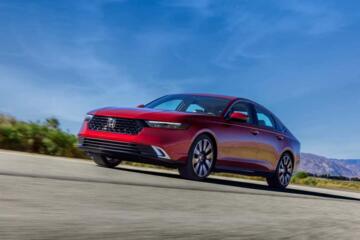
The perfect urban sedan is a balance of physical dimensions, visibility, and low-speed efficiency. Focus on a turning circle under 36 feet, a length under 185 inches, and a robust suite of proximity sensors. By prioritizing agility over status, you reduce daily stress and long-term maintenance costs associated with urban wear and tear. Choose a vehicle that fits your actual environment, not just your highway aspirations. Small, smart, and tech-forward is the winning formula for the modern city driver.