Luxury Markup in SUVs
In the current fiscal climate, the price gap between a top-tier mainstream SUV and an entry-level luxury model has narrowed to approximately $5,000–$8,000, yet the feature disparity often favors the mainstream option. Many buyers assume that paying more guarantees better components, but the reality of "platform sharing"—where a mass-market brand and a luxury brand use the same chassis and engine—tells a different story. For instance, the Volkswagen Group often utilizes shared architectures across multiple price points, meaning a well-specced Tiguan shares DNA with much more expensive cousins.
Practically speaking, looking for value means looking for "trickle-down technology." Features that were exclusive to $100,000 sedans five years ago—such as Adaptive Cruise Control (ACC) with Stop-and-Go, 360-degree camera systems, and ventilated seating—are now standard on high-trim models from manufacturers like Hyundai, Kia, and Mazda. Statistical data from Consumer Reports suggests that several mid-market SUVs currently outperform their "premium" counterparts in predicted reliability and owner satisfaction, specifically in the infotainment and electronics categories where luxury brands often struggle with over-complexity.
Pursuit of Value Pitfalls
The most common mistake buyers make is equating a low "starting MSRP" with value. A base-model SUV often lacks the very safety and comfort features that make a modern vehicle worth owning, leading to a "poverty spec" experience that depreciates rapidly. When you skip the higher trim of a non-luxury brand to afford the base trim of a prestige brand, you often lose out on LED lighting, premium audio, and advanced driver assistance systems (ADAS) that significantly impact daily quality of life.
Furthermore, many consumers ignore the Total Cost of Ownership (TCO). A "cheaper" SUV with a poorly designed CVT (Continuously Variable Transmission) or an undersized, overworked engine can lead to massive repair bills once the warranty expires. Real-world situations frequently show owners of European luxury SUVs spending 40% more on routine maintenance over five years compared to owners of high-spec domestic or Asian SUVs, despite having similar performance metrics. Failing to account for fuel requirements (premium vs. regular) and insurance premiums based on "luxury" status can drain a household budget faster than the monthly car payment itself.
Strategic Recommendations
Prioritize Powertrain Sophistication Over Cabin Leather
The heart of value lies in the engine and transmission. Look for vehicles utilizing 2.0L turbocharged four-cylinder engines or robust hybrid systems. These setups offer the torque necessary for SUV weights without the fuel penalty of older V6 designs. For example, the Hyundai Tucson Hybrid provides 226 horsepower and standard AWD, outperforming many base-level luxury crossovers in 0-60 mph sprints while maintaining superior fuel economy.
Utilize Third-Party Reliability Ratings
Do not rely on dealership brochures. Consult the J.D. Power Initial Quality Study and the Dashboard Light Long-Term Reliability Index. These tools provide empirical evidence on which "value" brands actually hold up over 100,000 miles. Mazda, for instance, has consistently ranked near the top of reliability charts, offering "near-luxury" interior materials (Nappa leather, real wood) at a price point that undercuts BMW or Lexus by a significant margin.
Leverage Year-End Inventory Cycles
The best value is often found during "model year transitions" in late Q3 and early Q4. Dealerships are incentivized to move outgoing stock to make room for new arrivals. By targeting a "leftover" high-trim model, you can often secure a vehicle with a higher specification than a new entry-level model for the same price. Data shows that buyers can negotiate 10-15% off MSRP on these units, whereas luxury brands rarely discount as deeply to maintain "brand prestige."
Analyze the Infotainment Ecosystem
Luxury brands often insist on proprietary touchpads or rotary controllers that are distracting and prone to failure. High-value SUVs from brands like Subaru or Toyota now feature massive 11-to-14-inch screens with wireless Apple CarPlay and Android Auto. This ensures your vehicle's tech remains relevant as your phone updates, rather than relying on an automaker's aging built-in navigation system.
Assess the Safety Suite as a Standard
Verify if the vehicle includes a "Level 2" driving assistant. This includes Lane Centering and Adaptive Cruise. Brands like Honda (Honda Sensing) and Toyota (Safety Sense 3.0) include these as standard across almost all trims. In contrast, many German luxury brands still hide these essential safety features behind "Executive" or "Driver Assistance" packages that cost thousands extra.
Evaluate Resale Projections via KBB
True value is realized at the time of sale. Use Kelley Blue Book to check 36-month and 60-month residual value projections. A Jeep Wrangler or a Toyota RAV4 might have a higher monthly payment than a discounted rival, but because they retain 60%+ of their value after five years, they are objectively "cheaper" to own in the long run.
Value vs. Prestige Gap
Consider the case of a mid-sized law firm fleet manager who needed five vehicles for senior associates. The initial instinct was to lease entry-level Audi Q5s. However, after analyzing the spec sheets, the firm opted for Mazda CX-50 Turbo Premium Plus models. The Mazdas featured ventilated seats, a Head-Up Display (HUD), and 360-degree cameras—features that were optional and unavailable on the Audi units at the allocated budget. Over a three-year lease, the firm saved $12,000 per vehicle in lease payments and insurance, with zero reported downtime due to mechanical issues.
In another instance, a private buyer compared a base Volvo XC60 to a fully loaded Kia Sorento SX-Prestige. While the Volvo offered significant brand cachet, the Kia provided a third row of seating, a superior 10-year/100,000-mile powertrain warranty, and a more intuitive remote parking assistant. The buyer chose the Kia, citing the $10,000 price difference as "the cost of four years of fuel and insurance," effectively making the car's operating costs "free" compared to the Volvo's entry price.
High-Value SUV Contenders
| Vehicle Model | Key "High-Spec" Feature | Value Advantage | Reliability Score (Avg) |
|---|---|---|---|
| Mazda CX-5 | Nappa Leather / AWD standard | Premium interior at $35k | 4.5 / 5.0 |
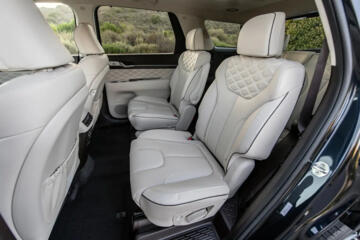
| Hyundai Palisade | Power-folding 3rd row / Ergo-Motion seat | Features of a $90k SUV for $50k | 4.0 / 5.0 |
| Subaru Outback | 8.7-inch Ground Clearance / EyeSight | Unmatched off-road capability for price | 4.2 / 5.0 |
| Toyota RAV4 Hybrid | Electronic AWD / 40 MPG Combined | Long-term fuel & maintenance savings | 4.8 / 5.0 |
| Honda CR-V | Multi-Angle Rearview / Huge Cargo | Best-in-class interior ergonomics | 4.7 / 5.0 |
Avoiding Ownership Blunders
One of the most frequent errors is falling for "Dealer Add-ons" like ceramic coating, VIN etching, or nitrogen-filled tires. These are high-margin items that add zero value to the vehicle’s specs but inflate the price tag by $2,000–$5,000. Always demand an itemized "Out the Door" (OTD) price before discussing financing. Furthermore, be wary of "First-Year Models." Even reliable brands often have "teething" issues with new engine designs or infotainment software in the first year of a new generation. Waiting for the second or third year of a model's lifecycle ensures the factory has ironed out the bugs.
Another trap is the "Extended Warranty" sold in the F&I (Finance and Insurance) office. While a warranty on a high-spec SUV is valuable, you do not have to buy it from the dealer at the time of purchase. You can often shop around and buy a manufacturer-backed (not third-party) extended service contract from any dealer in the country for a fraction of the cost, as long as your car is still under the original factory warranty.
FAQ
Is a "fully loaded" mainstream SUV better than a "base" luxury SUV?
In 90% of cases, yes. A fully loaded mainstream model offers better technology, higher-quality seating materials (like ventilated leather), and more safety sensors. The base luxury model often has "leatherette" (vinyl) seats and lacks basic features like a power liftgate or adaptive cruise control.
Which SUV brand offers the best specs-to-price ratio currently?
Hyundai and Kia currently lead the market. Their "Limited" and "SX-Prestige" trims offer features—like Blind-Spot View Monitor (cameras in the dash) and Remote Smart Parking Assist—that are typically found only in luxury vehicles costing $20,000 more.
Does a high-spec SUV hold its value better than a base model?
Yes. Used car buyers specifically look for "the one with all the buttons." A base model becomes difficult to sell in the secondary market when every other used car has a sunroof and navigation. High-spec trims generally command a 15-20% higher resale price.
Are turbocharged 4-cylinder engines reliable for heavy SUVs?
Modern turbocharging is very reliable, provided you follow the maintenance schedule. Most use "twin-scroll" technology to reduce lag and are tested to the same 150,000-mile standards as older V6 engines. Brands like Honda and Toyota have mastered this transition.
How can I verify the actual "specs" of a car without trusting the salesperson?
Use the VIN (Vehicle Identification Number) and a tool like MonroneyLabels.com to pull the original window sticker. This shows exactly what equipment was installed at the factory, preventing you from paying for features that aren't actually on the vehicle.
Author’s Insight
Having spent over a decade analyzing automotive depreciation and build quality, I’ve realized that "value" is a moving target. I always tell my clients to ignore the badge and feel the switchgear; if the buttons wiggle and the plastic creaks, it doesn't matter if there's a German logo on the steering wheel. My practical advice is to always test drive the highest trim of a "normal" brand back-to-back with the lowest trim of a luxury brand. The difference in features is usually so staggering that the "value" choice becomes obvious. Always prioritize the mechanical warranty—that’s where the true long-term savings live.
Summary
Securing a high-spec SUV without the premium price tag requires shifting focus from brand prestige to objective data. By prioritizing advanced powertrains, researching residual values on KBB, and opting for top-tier trims from manufacturers like Mazda, Hyundai, or Toyota, buyers can enjoy a luxury experience for a mainstream price. Avoid dealer markups, verify safety suites, and always look at the TCO over a five-year period. The most sophisticated vehicle isn't the one that costs the most—it's the one that delivers the most technology and reliability for every dollar spent.