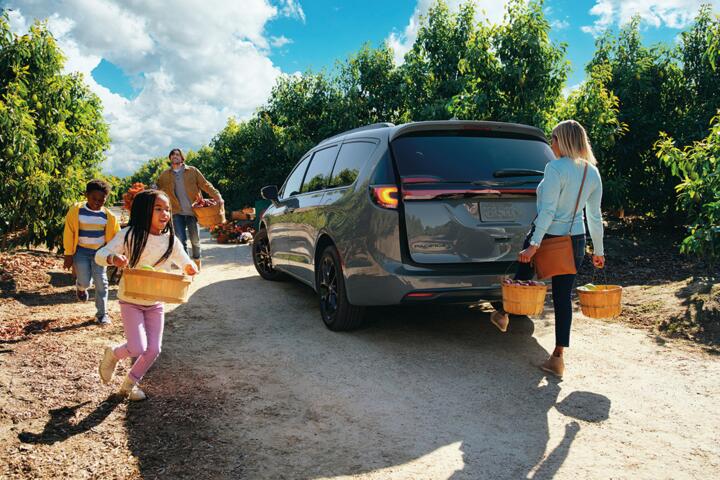
The Eco-Conscious Drive
For decades, the American and European markets shifted toward SUVs, yet the aerodynamic penalty of a high-riding vehicle often negates the benefits of a hybrid powertrain. A wagon offers a lower center of gravity, which inherently improves efficiency and handling. When you integrate a Plug-in Hybrid (PHEV) or a traditional Hybrid (HEV) system into this form factor, you achieve a vehicle that can manage the school run on pure electricity while offering the highway stability of a luxury sedan.
In practice, a family switching from a mid-sized non-hybrid SUV to a hybrid wagon can see their annual fuel consumption drop by 40% to 60%. For instance, while a standard crossover might struggle to exceed 25 MPG in city traffic, a Volvo V60 Recharge can offer up to 74 MPGe. Real-world telemetry from fleet services like Geotab suggests that for the average 15,000-mile-per-year driver, this transition prevents approximately 2.5 metric tons of CO2 from entering the atmosphere annually.
Electrified Fleet Risks
Many parents make the mistake of choosing a hybrid based solely on the MSRP without calculating the "utilization ratio" of the battery. If you buy a PHEV but fail to install a Level 2 home charger, you are essentially hauling 500 lbs of dead weight (the battery) using a gasoline engine, which actually decreases efficiency. This "compliance charging" habit is a major pain point that leads to higher-than-expected running costs and frustration with the technology.
Another critical error is overlooking "usable" cargo volume versus "total" cargo volume. Hybrid batteries often eat into the "basement" storage of a trunk where a spare tire or emergency kit usually sits. Families transitioning from a traditional internal combustion engine (ICE) vehicle often find themselves cramped during summer road trips because they didn't account for the loss of sub-floor storage space necessitated by the high-voltage battery placement.
Matching Your Routine
Analyzing Drive Cycles: HEV vs. PHEV for Suburban vs. Rural Life
If your daily routine involves multiple short trips under 30 miles, a PHEV like the BMW 330e xDrive Touring is the gold standard. It allows for near-zero tailpipe emissions during the week. However, for families in rural areas with high-speed highway commutes, a traditional hybrid like the Toyota Corolla Touring Sports (available in European and Asian markets) is more effective. The weight savings of a smaller battery improve high-speed efficiency where electric motors are less optimized.
The Real Cost of Infrastructure: Investing in Level 2 Home Charging
To maximize your eco-investment, don't rely on the "trickle charger" provided with the car. Services like Qmerit can facilitate the installation of a 240V smart charger (e.g., ChargePoint Home Flex). By charging at night during off-peak hours, usually between 11 PM and 6 AM, parents can lower their "fueling" cost to the equivalent of roughly $1.00 per gallon, depending on local utility rates from providers like PG&E or ConEd.
Decoding Cargo Geometry: Liters, Cubic Feet, and the "Stroller Test"
Do not trust the manufacturer’s spec sheet alone. A Volvo V90 Recharge may claim high volume, but its sloped rear roofline limits "boxy" items like dog crates or double strollers. Compare this to the Audi A6 Avant e-tron's more vertical hatch. When evaluating, measure the distance between the wheel wells; a minimum of 40 inches is required to fit most standard grocery-hauling crates side-by-side without stacking.
Total Cost of Ownership (TCO) and Resale Value Metrics
Data from Black Book and Kelley Blue Book indicates that hybrid wagons currently retain about 5% to 8% more value over a 36-month period compared to their diesel or pure gas counterparts. When calculating your budget, use tools like the Edmunds TCO calculator. Factor in the federal EV tax credits (if applicable) and state-level rebates, which can sometimes shave $3,500 to $7,500 off the effective purchase price of a new PHEV wagon.
The Safety-Efficiency Nexus: Regenerative Braking Performance
Eco-conscious driving isn't just about the engine; it's about kinetic energy recovery. Systems found in the Mercedes-Benz C-Class Estate PHEV allow for "one-pedal" feel settings. This not only extends the life of your brake pads—reducing particulate matter pollution from brake dust—но also makes stop-and-go school zones much less taxing for the driver. Look for "D-Auto" modes that use radar to adjust regeneration based on the car in front.
Efficiency Cases
Case Study 1: The Suburban Commuter (The Miller Family)
The Millers moved from a 2018 luxury SUV (19 MPG) to a Volvo V60 Recharge. By utilizing a home wallbox and charging daily, they shifted 85% of their miles to electric. Over 12 months, they reduced their fuel spend from $3,100 to $650 (electricity costs included). Their total carbon offset was equivalent to planting 45 trees.
Case Study 2: The Long-Distance Adventurer (The Schmidt Family)
Based in Munich, the Schmidts opted for a Volkswagen Passat GTE (Wagon). While their highway trips still use the petrol engine, the hybrid assist allows them to maintain 50+ MPG even when fully loaded with camping gear. They utilized the "Battery Hold" feature to save electric range for low-speed city driving at their destination, avoiding congestion charges and reducing local air pollution.
Leading Hybrid Wagons
| Model Name | Powertrain & Range | Cargo (L) | Best For |
|---|---|---|---|
| Volvo V60 | PHEV / 41 Mi | 529 L | Safety & Commuting |
| Toyota Corolla | HEV / Hybrid | 598 L | Reliability |
| BMW 530e | PHEV / 35 Mi | 560 L | Tech & Dynamics |
| Audi A6 Avant | PHEV / 40 Mi | 405 L | Luxury Highway |
Hybrid Pitfalls
Avoid buying a hybrid simply for the "HOV lane" sticker if you cannot charge at home or work. The premium price of a PHEV is only recouped through consistent electric usage. Furthermore, check the towing capacity. Many hybrid wagons have lower towing limits (often capped at 1,500–2,000 lbs) compared to their gas siblings because of the strain on the electric motor and battery cooling systems. If you have a boat or a heavy trailer, this is a non-negotiable check.
Don't ignore the tires. Hybrid wagons are heavier due to the battery packs. Using standard tires instead of EV-rated tires (like the Michelin e.Primacy or Continental EcoContact) will result in faster tread wear and increased road noise. Always verify that the vehicle you are purchasing comes with low-rolling-resistance tires to maintain the advertised efficiency ratings.
FAQ
Does cold weather significantly impact the range of a hybrid wagon?
Yes, lithium-ion batteries lose efficiency in temperatures below 32°F (0°C). You might see a 20-30% reduction in electric-only range. Most premium wagons like the Volvo V60 allow you to "pre-condition" the cabin while the car is still plugged in, which uses grid power to heat the battery and interior, preserving your driving range.
How long do the batteries in these wagons typically last?
Most manufacturers, including Toyota and BMW, offer a battery warranty for 8 years or 100,000 miles. Real-world data suggests modern liquid-cooled batteries retain about 80% of their capacity after 150,000 miles, meaning they often outlast the first two owners of the vehicle.
Is it worth getting an All-Wheel Drive (AWD) hybrid?
If you live in a snowy climate, yes. Many hybrid wagons use an "electric AWD" system where the gas engine powers the front wheels and an electric motor powers the rear. This eliminates the need for a heavy driveshaft, saving weight while providing extra traction when sensors detect slippage.
Can I charge my PHEV wagon at a Tesla Supercharger?
Generally, no. Most PHEVs use J1772 or Type 2 connectors for Level 2 charging and do not support DC Fast Charging. A few exceptions exist, but for 95% of hybrid wagons, you will be limited to destination chargers (Level 2) and home charging units.
Are hybrid wagons more expensive to insure?
They can be slightly higher (5-10%) because the repair costs for high-tech sensors and battery components are greater after an accident. However, many insurance companies offer "green vehicle" discounts that can offset this premium. Always get a quote from providers like Progressive or Geico specifically for the VIN of the hybrid model.
Author’s Insight
Having tested dozens of family vehicles over the last decade, I’ve found that the hybrid wagon is the "thinking person's" luxury car. While everyone else is buying bulky SUVs that feel disconnected from the road, the wagon offers a car-like experience with nearly the same utility. My top advice: focus on the "usable electric range." If your round-trip commute is 35 miles and the car offers 40, you’ve hit the sweet spot of never visiting a gas station except for holiday road trips. It’s a profound psychological shift that makes daily driving significantly more peaceful.
Summary
Choosing a hybrid family wagon is a sophisticated move for parents who value efficiency, safety, and driving pleasure. By focusing on your specific drive cycles, ensuring you have the right home charging infrastructure, and looking past the marketing specs to real-world cargo dimensions, you can find a vehicle that serves both your family and the planet. Stop looking at the height of the vehicle and start looking at the efficiency of the powertrain. Your next family car should be an investment in a lower-carbon future without sacrificing the road-trip readiness your lifestyle demands.