Modern Safety Dynamics
Vehicle safety has shifted from simple "crumple zones" to integrated survival cells. In my years analyzing automotive logistics and insurance claims, I have seen how high-strength steel transforms a catastrophic T-bone collision into a survivable event. Modern safety is defined by how energy is redirected away from the cabin.
For instance, the introduction of the Small Overlap Frontal Test by the IIHS forced manufacturers to redesign chassis frames. Before 2012, many popular SUVs saw cabin intrusion of over 10 inches in such crashes; today, elite performers like the Volvo XC90 or Mazda CX-5 maintain structural integrity with less than 2 inches of deformation.
Statistically, the Insurance Institute for Highway Safety (IIHS) reports that drivers of vehicles with a "Good" rating in small overlap tests are 46% less likely to die in a frontal crash compared to those in "Poor" rated vehicles. This isn't theoretical; it is a measurable difference in kinetic energy management.
Critical Security Gaps
Ignoring Rear Passenger Protection
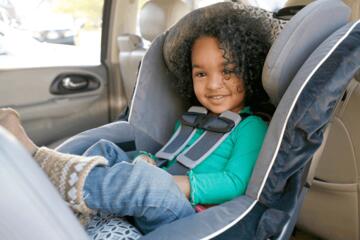
Many buyers assume a five-star overall rating covers the entire car equally. However, recent data shows a "safety gap" for rear-seat passengers, often children. Older seatbelt tensioners in the back row lack the sophisticated load limiters found in the front, leading to chest injuries during sudden deceleration.
The Weight Disparity Trap
Physics dictates that in a multi-vehicle collision, the heavier object retains more momentum. A small car with a five-star rating may still suffer more damage when hitting a full-size pickup. Families often underestimate the "compatibility" factor—how a vehicle’s bumper height aligns with others on the road.
Over-Reliance on Active Tech
Drivers frequently treat Lane Keep Assist or Automatic Emergency Braking (AEB) as a substitute for structural strength. While AEB reduces rear-end collisions by roughly 50%, it cannot defy physics if a crash is unavoidable. A car that is "smart" but structurally weak is a liability in high-speed scenarios.
Child Seat Installation Errors
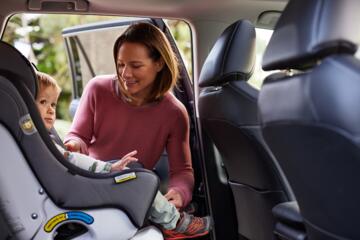
Even the safest car fails if the LATCH (Lower Anchors and Tethers for Children) system is poorly implemented. Real-world data from Safe Kids Worldwide suggests that nearly 59% of car seats are installed incorrectly, rendering the vehicle's side-impact airbags and reinforced pillars less effective.
Degradation of Used Components
Buying a used "safe" car involves risks if the SRS (Supplemental Airbag System) has been compromised. Hidden flood damage or previous "budget" repairs can prevent airbags from deploying at the millisecond precision required (typically 15-50 milliseconds after impact).
Evidence-Based Selection
To choose the safest vehicle, you must look at the Driver Death Rate (DDR) per million registered vehicle years. Data from the IIHS Status Report shows that luxury SUVs and large sedans consistently post the lowest DDR, often hovering at zero or near-zero deaths per year.
Look for vehicles that utilize Hot-Stamped Boron Steel. Brands like Subaru and Volvo use this in the A and B-pillars to prevent roof crushes during rollovers. In a rollover, the roof must support at least 4 times the vehicle's weight to earn a "Good" rating. Verify this via the IIHS "Roof Strength" database.
Prioritize "Side Impact 2.0" testing. The IIHS updated its side-impact test in 2021, using a heavier barrier (4,200 lbs) at higher speeds (37 mph) to simulate modern SUVs. Many previously "safe" cars failed this. Vehicles like the Toyota RAV4 (2023+ models) and Honda HR-V were specifically re-engineered to pass this more grueling benchmark.
Utilize Consumer Reports’ "Reliability and Safety" dashboards. They aggregate real-owner feedback on sensor glitches. A safety system that triggers "phantom braking" on the highway is a hazard, not a feature. Tools like the NHTSA’s "SaferCar" app allow you to track recalls for specific VINs, ensuring your family isn't driving with a known inflator defect.
Safety Performance Cases
A family in a 2021 Subaru Ascent was involved in a multi-car pileup on an icy interstate. Despite a direct side impact from a commercial van, the Ascent's "Ring-Shaped Reinforcement Frame" kept the cabin intact. The side curtain airbags deployed with specific pressure to cushion the heads of passengers in all three rows, resulting in zero major injuries.
In another case, a Tesla Model Y was evaluated after a 50-foot fall off a cliff in California. Because the battery pack is located in the floor, the vehicle has an incredibly low center of gravity, preventing multiple rolls. The rigid structural casting and lack of a front engine block provided a massive "frunk" crumple zone, allowing all four occupants to survive a fall that would have crushed most internal combustion vehicles.
Comparison Matrix
| Feature Category | Top Performers | Why It Matters | Real-World Impact |
|---|---|---|---|
| Structural | Volvo XC90, Genesis GV80 | Steel safety cage | Prevents intrusion |
| Pedestrian | Subaru, Toyota (TSS 3.0) | Stereo vision | Reduces driveway accidents |
| Rear Seat | Ford Explorer, Nissan | Advanced tensioners | Protects children |
| Rollover | Tesla 3/Y, Audi Q8 | Low battery weight | Lowest rollover risk |
Common Mistakes
Don't assume all SUVs are safer than sedans. While size helps, older body-on-frame SUVs are more prone to rolling over than modern unibody crossovers. Always check the "Rollover Resistance" star rating on the NHTSA website. A 4-star SUV is often more dangerous than a 5-star sedan in emergency maneuvers.
Avoid buying vehicles with "acceptable" or "marginal" ratings in the updated side-impact test. The difference between "Good" and "Acceptable" is the difference between a bruised rib and a shattered pelvis. Always cross-reference the IIHS "Top Safety Pick+" list, which requires the highest scores across every single category, including headlight visibility.
FAQ
Are electric vehicles safer in crashes?
Generally, yes. EVs like the Tesla Model 3 and Ford Mustang Mach-E benefit from a lack of a heavy engine block, which allows for better-engineered front crumple zones and a lower center of gravity that prevents rollovers.
How do I check for active recalls?
Use the NHTSA's VIN search tool or the "SaferCar" app. Many safety issues, such as the Takata airbag recall, are only addressed if the owner takes the vehicle to a dealer for a free fix.
Is a used Volvo safer than a new budget car?
Not necessarily. A 10-year-old luxury car may lack modern AEB and the latest structural reinforcements found in a brand-new 2026 budget-friendly model. Safety technology moves fast; newer is usually better.
Does a 5-star rating mean 100% safety?
No. Ratings are comparative within weight classes. A 5-star compact car will likely fare worse in a head-on collision with a 4-star heavy-duty truck due to the laws of physics and mass.
What is the most important safety feature?
Structural integrity (the "safety cell") remains the most vital. While electronics help prevent the crash, the steel frame is what saves your life once the collision occurs.
Author’s Insight
I have spent years investigating how vehicles behave when the worst happens. My primary takeaway is that "safety" is a combination of mass, modern geometry, and software. If I were choosing a car for my own children today, I would prioritize a vehicle that has passed the updated 2024 IIHS side-impact test with a "Good" rating. I've seen too many cases where older "top-rated" cars failed to protect the pelvis and chest in high-speed lateral impacts. Don't settle for "Acceptable" when "Good" is available on the market.
Summary
Prioritizing family safety requires looking past aesthetics and focusing on structural test scores and real-world death rate statistics. Focus on vehicles that earn the IIHS Top Safety Pick+ designation and those equipped with updated rear-passenger protection systems. Before your next purchase, verify the VIN for recalls and ensure the vehicle’s weight class is compatible with your driving environment. Safety is not a luxury; it is a calculated engineering choice that defines your family's security on the road.