A turbocharged engine does not automatically need premium gasoline. The answer is in the owner's manual for that specific engine, and the wording is what matters: "required" means the engine was designed around higher octane, while "recommended" means regular is acceptable and premium mainly restores or adds performance.
Key takeaways
- Turbocharging raises the odds of engine knock, so higher octane is "often required or recommended" for turbo engines, according to fueleconomy.gov, but it is not universal.
- Where the manual says premium is required, fueleconomy.gov says to use it; where the manual says premium is recommended, the choice is yours.
- Many newer engines can retard spark timing to reduce knock when they get lower octane than they need, but fueleconomy.gov says power and fuel economy still suffer, and damage can build up over time.
- In the EIA national average for the week of November 2, 2026, premium cost $1.005 more per gallon than regular, about 24% more. At that gap, a car would need a 24% mpg gain on premium just to break even.
Required and recommended differ
The federal octane guidance on fueleconomy.gov does not define the two words. It says most gasoline vehicles are designed to run on 87 octane, and that higher octane fuels are often required or recommended for engines with higher compression ratios or with supercharging or turbocharging, and that you should use the octane your manufacturer specifies in the owner's manual. If a manual requires midgrade or premium, the agency's advice is to use it. If the manual says premium is not required but the car "will run better" on it, fueleconomy.gov leaves the decision to you.
Manufacturers write the distinction into the fuel section of each manual, and the same model line can carry different wording for different engines. The comparison below uses documents opened in November 2026. Wording changes by model year, so these are examples of the three patterns, not a statement about any current model.
Three documents, three wordings
| Document | What it specifies | Pattern |
|---|---|---|
| Ford owner's manual, 2020 Transit, one page shared by the 3.5L Duratec and the turbocharged 3.5L EcoBoost | Designed for regular unleaded with a minimum pump (R+M)/2 octane rating of 87; premium of 91 or higher recommended for best overall performance | Regular is the design fuel; premium is a performance option |
| Mazda online owner's manual, 2026 CX-90 (URL path names that year) | Two engine versions listed: Standard Power on regular unleaded, 87 (R+M)/2 or above; High Power on premium unleaded, 91 (R+M)/2 or above (96 RON or above) | One engine family, two fuel grades, depending on the power level |
| Subaru 2026 WRX compare-specs sheet (a spec sheet, not the owner's manual) | 2.4-liter turbocharged engine; "Premium unleaded gasoline (91 octane) is required." | Premium is required |
The Ford page uses the language of a recommendation. In its words, "premium fuel with an octane rating of 91 or higher is recommended", with the benefit most noticeable in hot weather and when towing a trailer. The same page says occasional light knocking is nothing to worry about, but heavy knocking on the recommended fuel should be checked by a dealer. The page itself never uses the word turbo; the 3.5-liter EcoBoost is the engine that an Oak Ridge National Laboratory report describes, in a Ford F-150, as a turbocharged, direct-injection V6. Because the page covers a non-turbo and a turbo engine with the same words, the turbo engine's design fuel in this manual is still regular, and the premium recommendation is not specific to the turbo. It is a 2020 van manual, and current Ford manuals were not checked for this comparison.
Mazda's page differs because it never calls a fuel grade "recommended" or "required." It lists a fuel type per engine version and says to use the specified fuel for the best engine performance. For the High Power version, it says regular fuel rated 87 to 90 can be used, but this slightly reduces performance, such as engine output, and brings engine knocking. Fuel rated below 87 is warned against for both versions because of emission-control damage and possible serious engine damage. The manual page does not use the word turbo, but Mazda's CX-90 model page lists an inline-six turbo engine for the model.
The Subaru sheet is the plainest of the three: for the WRX's 2.4-liter turbocharged engine, the fuel line states that 91-octane premium is required. A published spec sheet is a weaker source than the manual itself, so a buyer should confirm the same wording in the manual or on the fuel-door label.
What the octane number measures
Octane is a measure of a gasoline's resistance to knocking, the too-early detonation of the air-fuel mixture. In the US, the number on the pump is the average of two lab tests, the research octane number (R) and the motor octane number (M). The FTC's rule at 16 CFR Part 306 defines the octane rating as (R+M)/2 and requires retailers to post it on each face of each dispenser, as a whole or half number no higher than the number certified to the retailer or determined by it. One exception: gasoline with more than 10% and up to 15% ethanol does not need an octane label if the dispenser carries the EPA's E15 label. That is why Ford's manual says "(R+M)/2" and Mazda's table calls the figure the anti-knock index.
Fueleconomy.gov lists the usual US grades as 87 for regular, 88 to 90 for midgrade and 91 to 94 for premium. Some mountain regions sell an 85-octane regular, which the agency says is not suitable for modern gasoline engines, and Ford's manual page warns that fuel posted as regular but rated below 87, sold particularly in high-altitude areas, could cause engine damage that the vehicle warranty will not cover.
Mazda's manual also shows why a car can seem to ask for a different number than the pump displays. It pairs 87 (R+M)/2 with 91 RON, and 91 (R+M)/2 with 96 RON. For pump gasoline the research number runs higher than the (R+M)/2 figure, so by Mazda's own pairing, a manual asking for "91 RON" means roughly the grade posted as 87 at a US pump.
How an engine copes with low octane
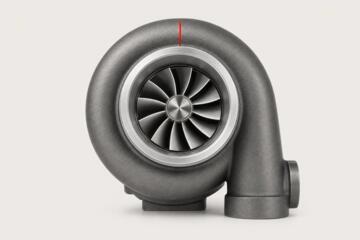
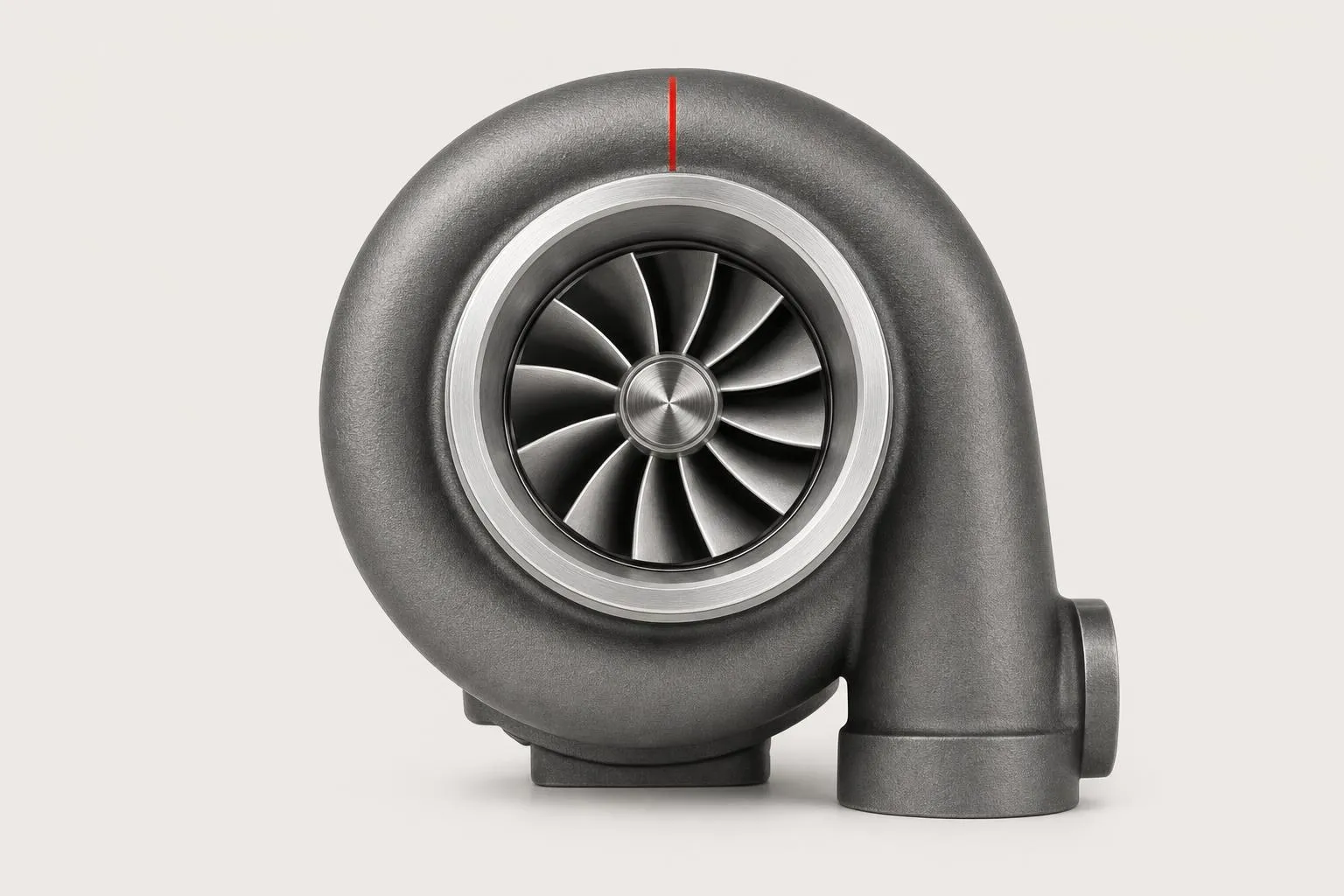
A turbocharger forces extra air into the cylinders, which raises cylinder pressure. Fueleconomy.gov explains that higher pressure lets an engine extract more mechanical energy from the air-fuel mixture but needs higher-octane fuel to keep the mixture from detonating early. That is why the agency names turbocharging alongside high compression as a reason for higher-octane requirements.
Modern engines do not simply let that knock continue. Fueleconomy.gov notes that many newer vehicles can adjust spark timing to reduce knock, but engine power and fuel economy still suffer. A report from Oak Ridge National Laboratory for the Department of Energy says the same thing in engineering terms: knock is often mitigated via spark retard, which reduces efficiency. Spark retard means firing the spark plug later in the engine's cycle than the ideal point.
Timing adjustment is protection with a price, not a cure. Fueleconomy.gov says that running lower octane than required can make the engine run poorly and can damage the engine and emissions control system over time, and that it may void the warranty. Mazda's manual says fuel rated below 87 can cause serious engine damage in either engine version. Neither the agency nor the manuals give a "safe number of tanks," so how to handle a one-off fill-up when the required grade is unavailable is a question for the specific manual, not a general rule.
The other direction, using more octane than the manual requires, is a smaller matter. For most vehicles, fueleconomy.gov says higher octane may slightly improve performance and mileage in severe duty such as towing or carrying heavy loads, especially in hot weather, and may give little or no benefit in normal driving. Ford's page likewise says the premium benefit is most noticeable in hot weather and when towing.
What the extra cost buys
For a car whose manual only recommends premium, fueleconomy.gov's answer is that the cost increase is typically higher than the fuel savings. A break-even calculation shows how much better the mileage would have to be, without guessing at how much any given engine gains.
extra cost per year = (miles per year / mpg) × (premium price − regular price)
break-even mpg gain = premium price / regular price − 1
- miles per year — 15,000, the annual mileage the EPA assumes on its fuel economy label
- mpg — the car's fuel economy on regular, 25 mpg in this illustration
- premium price, regular price — the EIA national averages for the week of November 2, 2026: $5.158 and $4.153 per gallon, all formulations
Illustrative example: a car that gets 25 mpg and drives 15,000 miles uses 600 gallons a year (15,000 / 25). Premium would cost $1.005 more per gallon (5.158 − 4.153), so $603 more a year (600 × 1.005), or roughly $50 a month. Prices move weekly, so this is a snapshot, not a forecast. Over the six EIA weeks from September 28 to November 2, 2026, the premium gap ran from $1.005 to $1.046 a gallon, or 22.8% to 24.2% above regular.
The break-even figure is 5.158 / 4.153 − 1 = 24.2%. A 25 mpg car would have to reach about 31.0 mpg on premium (25 × 5.158 / 4.153) to cost the same per mile. Fueleconomy.gov does say that in high-compression and turbocharged engines, high-octane fuel will improve performance and fuel economy, but it gives no percentage, and for cars where premium is optional it calls the gain in normal driving little to none. Any gain has to clear roughly 23% to 24% at these prices before premium pays for itself at the pump. For a car that requires premium, the question is not about savings at all.
Frequently asked questions
My manual says 91 but the pump says 87 for regular. Which do I buy?
Check whether the manual quotes research octane (RON) or the pump's (R+M)/2 figure. Mazda's manual, for instance, pairs 87 (R+M)/2 with 91 RON and 91 (R+M)/2 with 96 RON. Match the number the manual labels as (R+M)/2 to the number posted on the pump.
Is every pump labeled "premium" the same octane?
No. Fueleconomy.gov puts premium at 91 to 94 across the US, and the FTC rule requires the octane rating to be posted on each dispenser, so the label number is the one that counts, not the grade name. The posted value must be a whole or half number no higher than the number certified to the retailer or determined by it. Pumps selling gasoline with more than 10% and up to 15% ethanol under the EPA's E15 label are exempt from the octane label.
Does ethanol change the octane of the gasoline I buy?
Yes. Fueleconomy.gov says ethanol has an octane rating of about 109, higher than gasoline, and refiners often blend it in to raise octane. Most US gasoline contains up to 10% ethanol, and several manufacturers approve E15 for recent models. Mazda's manual limits oxygenated fuel to no more than 10% ethanol by volume, and Ford's page warns against fuel with more than 15% ethanol, so the manual's ethanol limit applies as well as its octane line.
Does premium help when towing or in hot weather?
It can help a little in some vehicles. Fueleconomy.gov says higher octane may slightly improve performance and mileage under severe use such as towing, hauling or hot weather, and Ford's manual page says the premium benefit is most noticeable in those conditions. Whether that kind of driving also counts as severe service for maintenance intervals is a separate question, and towing capacity itself comes from published towing ratings, not from fuel grade.
If I use regular where premium is required, does the warranty still apply?
Fueleconomy.gov says lower octane than the manufacturer requires may void the warranty, and Ford's manual says damage from fuel the vehicle was not designed for may not be covered. Mazda's manual limits its explicit warranty warning to excess ethanol, methanol and leaded fuel. The warranty booklet for the specific vehicle is the document that decides, so read its fuel clause before relying on any general statement.
Checking your own car
- Open the owner's manual to the fuel section and note the exact words: "required," "recommended," or a table of fuel types per engine.
- Check whether the figure is (R+M)/2 or RON, and match it to the number on the pump label.
- If the manual lists engine versions, confirm which one your vehicle has, since the same model can specify different grades.
- If premium is only recommended, decide using the cost figures above and your own driving, such as towing or hot-weather use.
- If premium is required and it is not available, check whether the manual names a fallback grade (Mazda's allows 87 to 90 in its High Power version, with reduced output); if it names none, ask the dealer or manufacturer rather than assume one.
This article is general educational information about fuel specifications, not advice on a specific vehicle or its warranty. The manual and warranty booklet for your vehicle govern.
Sources
- Octane basics, fueleconomy.gov (U.S. Department of Energy and EPA)
- 16 CFR Part 306, Automotive Fuel Ratings, Certification and Posting, eCFR
- Fuel Quality, 3.5L Duratec/3.5L EcoBoost, 2020 Transit owner's manual, Ford
- Fuel Requirements, online owner's manual, Mazda USA
- CX-90 model page, Mazda USA
- 2026 WRX Compare Specs, Subaru of America
- Effects of High-Octane E25 on Two Vehicles Equipped with Turbocharged, Direct-Injection Engines, ORNL/TM-2018/814, Oak Ridge National Laboratory for the U.S. Department of Energy
- Weekly Retail Gasoline and Diesel Prices, U.S. Energy Information Administration
- Learn more about the gasoline fuel economy label, fueleconomy.gov