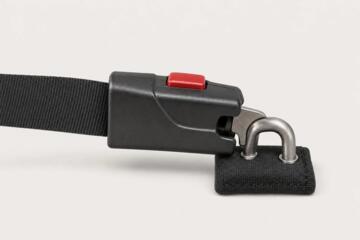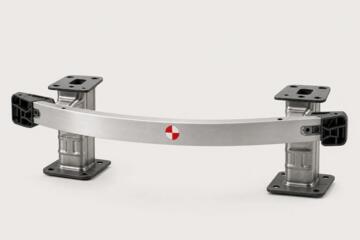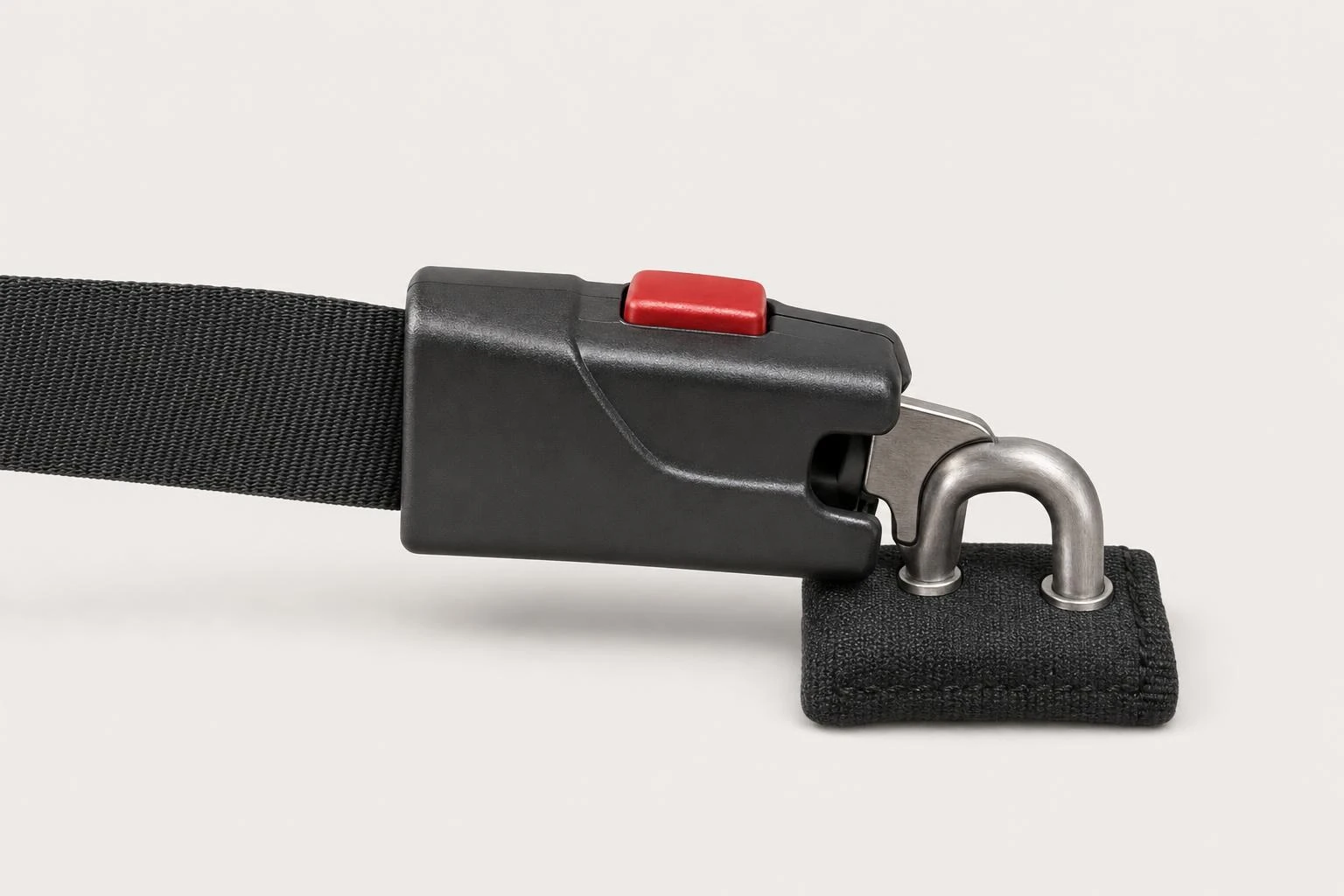
A car seat can be installed with either the lower anchors of the LATCH system or the vehicle seat belt. The American Academy of Pediatrics (AAP) says the two systems are equally safe. The better choice is the one that gives a tight, correct installation in a particular seat and vehicle, within the weight limits printed on the seat and in the manuals.
Key takeaways
- Use one method, not both, unless the car-seat maker and the vehicle maker both say using both is acceptable.
- The AAP gives 65 pounds combined (child plus car seat) as the lower-anchor maximum. The seat's label states the child-weight limit for the lower anchors, and the rear-facing limit can be lower than the forward-facing one.
- The top tether goes with every forward-facing seat, whether the seat is held by the lower anchors or by the seat belt.
- A seat belt installation only works if the belt is locked; the seat should move no more than 1 inch at the belt path.
- Read both the car-seat manual and the vehicle owner's manual, and have a certified technician check the result.
What LATCH consists of
LATCH stands for Lower Anchors and Tethers for Children. Under Federal Motor Vehicle Safety Standard (FMVSS) 225, a child restraint anchorage system has two lower anchorages and one tether anchorage. The standard covers passenger cars, trucks and multipurpose passenger vehicles up to 3,855 kg (8,500 lb) gross vehicle weight rating, and buses up to 4,536 kg (10,000 lb). It excludes a few vehicle types, such as walk-in vans, shuttle buses and funeral coaches.
The lower anchorages are two bars, each 6 mm in diameter, that cannot be folded or stowed away. On vehicles built before September 1, 2028, each bar must either be marked with a circle at least 13 mm across on the seat back or cushion near it, or be visible. The tether anchorage is a separate fixed point. The standard requires the vehicle's written instructions, normally the owner's manual, to show which seating positions have tether anchorages and lower anchorages, with step-by-step tether instructions and diagrams. A standard tether-anchor symbol is only being phased in: at least 20% of a maker's vehicles built from September 1, 2028 must carry it, rising to all vehicles built from September 1, 2030. In many current cars, the manual is therefore the reliable way to find the anchor. The car seat supplies the matching parts: two connectors for the lower bars and a tether strap with a hook.
Choosing between LATCH and the belt
The AAP's HealthyChildren.org page states that the seat belt and LATCH systems are equally safe. It says caregivers should use only one, unless both the car-seat and vehicle manufacturers say using both together is acceptable. Manufacturers state their own rules. The Britax knowledge center says the company does not allow simultaneous seat belt and lower anchor attachment on any of its models. The manual for the specific seat decides.
Because neither method is safer on its own, the choice usually comes down to practical points.
| Question | Lower anchors (LATCH) | Vehicle seat belt |
|---|---|---|
| What holds the seat | Two connectors on the seat clip to the two lower bars | The vehicle belt is routed through the seat's belt path and buckled |
| Weight limit | The child-weight limit on the seat's label, set from the 65-pound combined figure (60 pounds on the rear-facing table); the vehicle manual may also rate the anchors | No 65-pound lower-anchor cap; the seat's own harness limits and both manuals apply |
| Extra step | Top tether for forward-facing seats | Top tether for forward-facing seats, plus making sure the belt locks |
| Where available | Only seating positions with anchors; the vehicle manual lists them | Positions with a belt type the car-seat manual accepts |
The belt method has its own conditions. The Britax Marathon ClickTight user guide lists vehicle belts it cannot be used with. The list includes motorized automatic belts, lap belts forward of the seat bight (the crease between seat back and cushion) and belts anchored on the door. The vehicle owner's manual explains how its belts work with child seats.
The lower-anchor weight limit
The 65-pound figure is a combined weight. HealthyChildren.org says the lower anchors are rated for a maximum of 65 pounds including the car seat and the child. It adds that newer seats print the maximum on their label. The Britax guide also sends owners to the vehicle owner's manual for the vehicle's own lower-anchor weight rating, so where the two differ, the lower limit applies.
The label rule sits in FMVSS 213. It covers child restraints manufactured on or after February 27, 2015 whose own weight plus the maximum harness child weight exceeds 65 pounds. For these, the lower-anchor installation diagram must carry the statement "Do not install by this method for a child weighing more than" a stated number (S5.5.2(l)(3)). The manufacturer can set that number at no more than 65 pounds minus the seat's weight. It can also use the standard's rounding tables. The forward-facing table starts from 65 minus the seat weight, while the rear-facing table starts from 60 minus the seat weight. Both round up to the next 5-pound step. Seats made between February 27, 2014 and February 26, 2015 had to carry a similar written instruction (S5.6.1.12). Seats manufactured on or after December 5, 2026 are certified to FMVSS 213b, which keeps the same statement and tables.
forward-facing: child limit ≈ 65 lb - weight of the car seat
rear-facing (table): child limit ≈ 60 lb - weight of the car seat
Here the seat weight is the empty seat's weight. Illustrative example, with made-up seat weights: a 25-pound seat used forward-facing leaves about 40 pounds for the child (65 - 25 = 40). A 30-pound seat leaves about 35 pounds (65 - 30 = 35). Rear-facing on the table, the same seats give 35 pounds (60 - 25) and 30 pounds (60 - 30). The heavier seat reaches the limit with a lighter child. That is why two children of the same weight can be on the lower anchors in one seat and on the seat belt in another. The rounding tables can put the printed number up to almost 5 pounds above this estimate, and a maker may also choose a lower number, so the number on the seat's own label governs.
A real label shows the pattern. The Britax Marathon ClickTight guide says not to use the lower anchors for a child over 35 pounds rear-facing or 40 pounds forward-facing. The same seat's harness is rated for children up to 65 pounds forward-facing. A forward-facing child over 40 pounds, up to the 65-pound harness limit, is therefore installed in that seat with the seat belt and the top tether.
When the child reaches the label limit, the move is to the seat belt, with the top tether still attached for a forward-facing seat. Reaching the lower-anchor limit does not mean the child has outgrown the seat. FMVSS 213 S5(f) covers a harnessed seat whose own weight plus the average child weight its test dummy represents exceeds 65 pounds: it must still meet the standard with its harness while installed with the seat belt.
Locking the belt, the 1-inch check
With the belt method, the seat is held only if the vehicle belt stays tight. HealthyChildren.org says you must make sure the seat belt locks to hold the seat tightly. In many newer cars, the belt locks when it is pulled all the way out and allowed to retract. Many car seats also have built-in lock-offs, and the vehicle owner's manual explains how its belts lock. The Britax guide puts the step as "lock and remove slack from the vehicle belt" as the vehicle manual directs.
The check afterward comes from the AAP's car safety seats guidance for families: if the seat moves more than an inch side to side or front to back at the belt path, it is not tight enough. The belt path is the slot or channel where the belt (or the LATCH strap) passes through the seat, so the test is done by holding the seat at that spot. The Britax guide applies the same 1-inch limit to its lower-anchor installations as to its belt installations.
Top tether and center-seat anchors
Top tether
The AAP says the top tether should always be used with a forward-facing seat, and that this applies whether the seat is installed with the seat belt or with the lower anchors. The tether strap runs from the top of the seat to the vehicle's tether anchorage. HealthyChildren.org adds that the vehicle manual gives the highest child weight allowed with the top tether. That limit is separate from the 65-pound lower-anchor figure.
Center seat
The AAP says the middle of the back seat may be the best spot if the seat can be installed tightly there. It also says many vehicles do not have lower anchors in the middle, so a side position may fit better. This matches FMVSS 225. A vehicle with three or more forward-facing rear seating positions needs full anchorage systems at only two of them, plus a tether anchorage at a third. If the vehicle has a forward-facing rear center position, at least one tether anchorage must be at such a position. The center can therefore be belt-plus-tether, and a belt installation in the center is a normal option when both manuals allow it.
Whichever position is used, the fit is specific to that car seat and vehicle. IIHS and NHTSA crash ratings compare how vehicles protect occupants in tests; they do not show how a particular car seat installs in a particular seating position.
Frequently asked questions
Does a rear-facing seat use the top tether?
The AAP's tether guidance is stated for forward-facing seats. Some seats forbid rear-facing tethering: the Britax Marathon ClickTight guide says not to use the top tether with rear-facing installations. Other seats may have different rules, so the seat's manual decides.
Is the tether weight limit the same as the 65-pound lower-anchor limit?
No. HealthyChildren.org points to the vehicle manual for the highest child weight allowed with the top tether, while the 65-pound figure is a combined limit for the lower anchors. Both manuals should be checked.
Can the side seats' anchors be borrowed for the center?
Only when both manuals allow it. Check the vehicle owner's manual to see whether the automaker offers a center installation using the inner lower anchor from each side position, and check the car-seat manual to see whether the seat allows it. Consumer Reports gives the same advice. If either manual does not allow it, use an installation method and seating position that both manuals permit.
Does the date on the seat change the rule?
It changes which standard applies, not the lower-anchor label. Seats made before December 5, 2026 are certified to FMVSS 213 and seats made on or after that date to FMVSS 213b. Both require the same "Do not install by this method" statement on the lower-anchor installation diagram. Whatever the seat's age, the limit in its own label or manual is the one to follow, together with the AAP's 65-pound combined figure and the vehicle manual's rating.
Is the seat manual enough on its own?
No. The Britax guide tells owners to check the vehicle owner's manual to see whether the vehicle has LATCH, its lower-anchor weight rating, tether anchor capacities and which seating positions can be used. The AAP points to the same manual for how the belts lock. The two manuals cover different halves of the installation.
Steps before the first drive
- Read the car-seat manual and the vehicle owner's manual, and confirm which seating positions have lower anchors and a tether anchor.
- Find the lower-anchor child-weight limit on the seat's label or installation diagram, for the direction the seat will face, and compare it with the child's current weight.
- Choose one method, lower anchors or seat belt, and do not combine them unless both manuals allow it.
- For a forward-facing seat, attach and tighten the top tether.
- With the belt method, make sure the belt is locked as the manuals describe.
- Check movement at the belt path: no more than 1 inch side to side or front to back.
- Get the installation checked. The AAP says a certified child passenger safety technician can help, and it lists 877-366-8154 for the National Child Passenger Safety Certification program. That program's car seat check page has a technician search, and Safe Kids coalitions hold free inspection events. NHTSA's inspection station locator dataset points to its car seat page for the locator. Confirm hours and any fee with the station.
This article is educational and does not replace the manuals for a specific car seat and vehicle or a certified technician's check.
Sources
- 49 CFR 571.225 (FMVSS 225), child restraint anchorage systems, eCFR
- 49 CFR 571.213 (FMVSS 213), child restraint systems, eCFR
- 49 CFR 571.213b (FMVSS 213b), child restraint systems from December 5, 2026, eCFR
- Car Seat Installation Information: Seat Belts and LATCH, HealthyChildren.org (AAP)
- Car Safety Seats: Information for Families, HealthyChildren.org (AAP)
- About LATCH, Britax knowledge center
- Marathon ClickTight user guide (P11857600, 2020), Britax
- Car Seats and Rear Center-Seat Installations, Consumer Reports (2019)
- Get Your Car Seat Checked, National CPS Certification (Safe Kids Worldwide)
- NHTSA Child Safety Seat Inspection Station Locator, Data.gov
- Car seats and booster seats, NHTSA