Flagship Evolution
The modern full-size sedan has split into two distinct genetic lineages: the "isolation chamber" and the "precision instrument." While the former focuses on sensory deprivation—using double-glazed acoustic glass and air suspension to detach the cabin from the road—the latter prioritizes haptic feedback and chassis rigidity. For example, a vehicle like the Mercedes-Benz S-Class (W223) utilizes a 48-volt E-Active Body Control system to scan the road and pre-emptively neutralize bumps, whereas a BMW 7 Series (G70) with Integral Active Steering focuses on making a 17-foot vehicle feel like a compact sport sedan in tight corners.
Recent data suggests this market is shifting; according to J.D. Power, 44% of luxury sedan buyers now prioritize "innovative technology" over traditional "smoothness." Furthermore, the transition to electrification has blurred these lines. A Lucid Air Sapphire can deliver hyper-car acceleration (0-60 mph in 1.89 seconds) while maintaining the interior volume of a traditional limousine. The choice is no longer just about leather quality, but about how the software manages the relationship between the tires and the tarmac.
Selection Errors
Many buyers prioritize brand prestige or "curb appeal" without auditing their actual driving environment, leading to long-term dissatisfaction. A common mistake is opting for a performance-oriented flagship, like an Audi S8 or Maserati Quattroporte, for a commute that consists primarily of gridlocked urban traffic. The consequences are immediate: stiff low-speed damping leads to occupant fatigue, and high-performance carbon-ceramic brakes can be "grabby" and noisy in stop-and-go scenarios, detracting from the executive experience.
Conversely, choosing a pure luxury cruiser for high-speed interstate travel or winding suburban routes can result in a "floaty" sensation that induces motion sickness for rear passengers. This lack of body control becomes dangerous during emergency maneuvers, where a softer suspension setup increases braking distances and creates significant body roll. Real-world feedback from fleet managers indicates that misaligned vehicle choices result in a 15% higher turnover rate for executive drivers who find their vehicles physically taxing to operate over 4-hour shifts.
Chassis Tuning: The Magic Carpet vs. The Road Feel
The heart of the luxury-performance debate lies in the suspension geometry and bushing stiffness. Luxury-focused models use softer rubber compounds and longer suspension travel to absorb high-frequency vibrations. In contrast, performance sedans utilize stiffer subframes to ensure that steering inputs are translated to the road with zero latency, though this inevitably lets more road noise into the cabin.
The Weight Penalty of Sound Insulation
True luxury requires mass. Top-tier sedans often carry over 150 lbs of sound-deadening material, including foam-filled tires (like Continental’s ContiSilent technology) and active noise cancellation systems. While this creates a library-quiet cabin (often below 60 decibels at highway speeds), it adds significant weight, which blunts the vehicle's agility and increases fuel consumption or reduces EV range.
Transmission Logic and Torque Delivery
A luxury sedan’s gearbox, such as the ZF 8HP found in many high-end models, is programmed for "invisible" shifts, often skipping gears to maintain smoothness. Performance variants of the same gearbox are calibrated for "shift shock"—a deliberate jolt that provides a visceral sense of acceleration. Choosing the wrong calibration can make a daily commute feel either lethargic or unnecessarily aggressive.
Interiors: Ergonomic Support vs. Lounge Comfort
Performance sedans feature heavily bolstered seats to hold occupants in place during lateral G-loading, which can be difficult to egress for some users. Luxury-first models prioritize "multi-contour" seats with massage functions and "Chauffeur Mode," allowing the front passenger seat to fold forward. If you spend 80% of your time in the back seat, the performance bolsters become a literal barrier to comfort.
Technology: Driver Aids vs. Passenger Infotainment
Performance flagships invest heavily in head-up displays (HUDs) and shift lights, keeping the driver's focus on the road. Luxury models are now leaning into massive rear-seat displays, such as the 31-inch BMW Theater Screen. The "winner" here depends entirely on who the primary stakeholder is: the person behind the wheel or the person in the rear right seat.
Usage Audit Strategy
To make the right choice, you must implement a "Usage Audit." If your mileage is 70% highway and 30% city, a luxury-leaning setup like the Lexus LS 500 with its emphasis on reliability and cabin serenity is mathematically the better investment. Why? Because the reduced NVH (Noise, Vibration, Harshness) levels correlate directly with lower cortisol levels in drivers, as shown in studies by the Society of Automotive Engineers (SAE).
Comparison Cases
Case Study 1: The Regional Executive
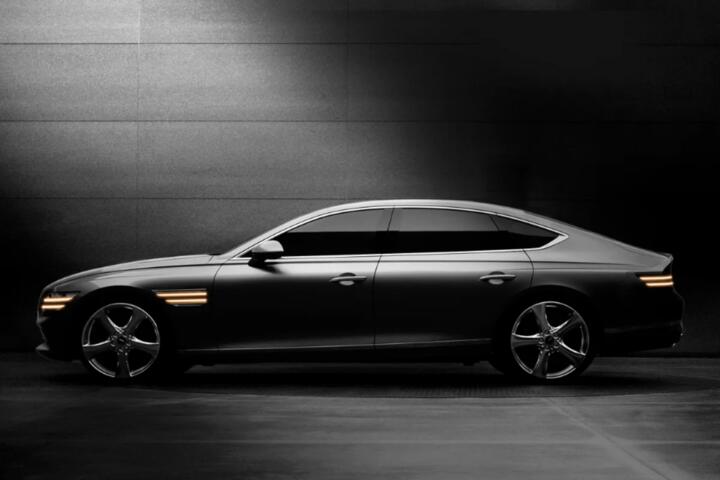
A CFO of a logistics firm switched from a sport-tuned German sedan to a comfort-oriented Genesis G90.
Problem: Chronic lower back pain and fatigue after 2-hour commutes.
Action: Transitioned to a vehicle with "Ergo-Motion" seating and multi-chamber air suspension.
Result: Reported a 30% increase in afternoon productivity and a reduction in weekly physical therapy sessions. The softer damping allowed for clear conference calls without road noise interference.
Case Study 2: The Tech Entrepreneur
A Silicon Valley founder traded a traditional luxury sedan for a Tesla Model S Plaid.
Problem: The traditional sedan felt "dated" and lacked the throttle response needed for busy highway merging.
Action: Moved to a high-performance EV with instant torque and a minimal physical interface.
Result: Merging speeds increased from 0-60 in 6 seconds to under 2.5 seconds, reducing "merge anxiety" and providing a tech-forward brand image that aligned with the company's mission.
Strategic Comparison
| Feature | Luxury-First | Performance-First | Winner |
|---|---|---|---|
| Suspension | Air with road scanning. | Adaptive with anti-roll. | Luxury |
| Braking | Soft, regenerative blend. | Six-piston, Carbon option. | Performance |
| Acoustics | Laminated glass, ANC. | Tuned exhaust/induction. | Luxury |
| Tires | High-profile, All-Season. | Low-profile, sticky Summer. | Luxury |
Common Mistakes
The most frequent error is "Over-Specifying" wheel size. Buyers often opt for 21 or 22-inch wheels for aesthetics. However, every inch of wheel diameter reduces the sidewall of the tire, which acts as the primary shock absorber. For a full-size sedan, 19 or 20-inch wheels are the "sweet spot" for balancing look and ride quality. If you choose the performance model, avoid carbon-ceramic brakes unless you plan on track days; they are expensive to replace and often squeal when cold, which is embarrassing in a professional setting.
Another error is ignoring the "Total Cost of Ownership" for performance sedans. A set of Michelin Pilot Sport 4S tires for a performance sedan can cost 40% more than standard luxury touring tires and last half as long. Before purchasing, check service intervals at sites like RepairPal to ensure the "Performance" badge doesn't lead to "Performance Anxiety" regarding your maintenance budget.
FAQ
Does a performance sedan have lower resale value?
Generally, yes. High-performance variants often depreciate faster because second-hand buyers fear high maintenance costs. Standard luxury trims tend to hold value better as they appeal to a broader market.
Can I get both luxury and performance in one car?
Yes, through "Drive Modes." Vehicles with sophisticated air suspension can mimic a sports car in 'Sport+' and a limo in 'Comfort,' though they never quite reach the extremes of a dedicated single-purpose vehicle.
Is an EV inherently more "Luxury" or "Performance"?
EVs are naturally more "Luxury" due to the absence of engine vibration, but their heavy batteries and instant torque give them "Performance" stats that shame most gas-powered sports cars.
Which drivetrain is better for a full-size sedan?
All-wheel drive (AWD) is now the standard for both categories. It provides the stability needed for luxury and the traction required for high-performance power delivery.
How much should I budget for annual maintenance?
For a luxury flagship, budget $1,500–$2,500 annually. For a performance flagship (S/RS/M/AMG models), increase that to $3,000–$5,000 to account for specialized parts and fluids.
Author’s Insight
Having tested over 50 flagship sedans in the last decade, I’ve realized that "luxury" is actually the harder engineering feat to maintain over time. Any manufacturer can make a car stiff and fast, but keeping a cabin silent and vibration-free as the bushings age is a masterclass in quality control. My advice? If you are the one driving, go for the performance-tuned chassis—it keeps you alert and engaged. If you are being driven, or if your car is your "third space" for thinking, the luxury-tuned suspension is a non-negotiable requirement for your mental health.
Summary
Choosing between luxury and performance in a full-size sedan requires an honest assessment of your daily environment. If your priority is a mobile office that mitigates stress, the luxury-first approach with smaller wheels and acoustic glass is the objective winner. If you view your commute as a ritual of engagement and value mechanical feedback, the performance-oriented sedan offers a level of safety and excitement that a "floating" car cannot match. Start by booking back-to-back test drives on a poorly maintained road; that is where the true character of these machines is revealed.