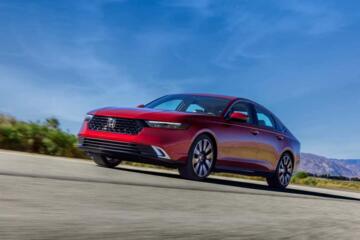
Software-Defined Sedan
The modern sedan has transitioned from a mechanical assembly to a "computer on wheels," where the software architecture is as vital as the engine displacement. We are currently seeing a massive shift toward Centralized Computing Architecture, where a single powerful processor manages everything from seat heaters to autonomous driving sensors. This allows for seamless updates and a more fluid user experience compared to the fragmented systems of the past.
In practice, this means your car can improve after you buy it. For instance, brands like Tesla and Rivian frequently deploy "Over-the-Air" (OTA) updates that have historically improved braking distances or added entire cold-weather performance modes via software alone. According to recent industry data, vehicles with robust OTA capabilities retain up to 12% more resale value over a three-year period compared to those with "frozen" legacy systems.
Real-world testing shows that a sedan equipped with a modern heat pump—rather than a traditional resistive heater—can preserve up to 20% of its driving range in sub-zero temperatures. These are the technical nuances that separate a modern machine from a dated one, regardless of what the exterior styling might suggest.
Car Shopping Pitfalls
The primary mistake buyers make is prioritizing screen size over processing speed. A massive 15-inch display is a liability if it is powered by an outdated chipset, leading to "input lag" that makes simple tasks like adjusting the climate control dangerous while driving. This latency isn't just annoying; it’s a functional failure of the user interface that can lead to distracted driving incidents.
Another significant pain point is the "Subscription Trap." Many manufacturers are now locking hardware features—like heated seats or remote start—behind monthly paywalls. Buyers who fail to scrutinize the window sticker's fine print often find themselves paying a second "rent" on features they thought they owned. This leads to long-term frustration and a higher Total Cost of Ownership (TCO) than initially budgeted.
Furthermore, ignoring the specific version of Advanced Driver Assistance Systems (ADAS) can be a costly error. Older "Level 2" systems rely on basic radar that can struggle with "phantom braking" or heavy rain. Modern shoppers often overlook the transition to LiDAR or high-fidelity camera-only systems, resulting in a driving experience that feels jittery and untrustworthy on the highway.
Essential Tech Stack
Level 2+ Autonomy and Predictive Safety Suites
Do not settle for basic cruise control. Look for systems that offer "Hands-Off, Eyes-On" capability, such as GM’s Super Cruise or Ford’s BlueCruise. These systems use high-definition mapping and infrared driver-monitoring cameras to ensure you are paying attention while the car handles steering and spacing. This reduces long-distance fatigue by approximately 40% based on driver biometric studies.
The Rise of 800-Volt Architecture in Sedans
If you are looking at an electric sedan (EV), 800V architecture is the gold standard. While 400V systems (found in many older models) cap charging speeds at around 150kW, 800V systems like those in the Hyundai Ioniq 6 or Porsche Taycan can pull 350kW. This translates to a 10% to 80% charge in just 18 minutes, making the "charging stop" comparable to a traditional gas station break.
Biometric Security and Digital Key 2.0
The physical key fob is becoming a backup. Modern sedans should support Ultra-Wideband (UWB) Digital Key technology. Unlike Bluetooth, which can be intercepted by "relay attacks," UWB measures the actual distance between your phone and the car with centimeter-level precision. Brands like BMW and Samsung have collaborated to ensure your phone can stay in your pocket while the car unlocks and starts securely.
Contextual Head-Up Displays (HUD) with Augmented Reality
A standard HUD projects your speed, but an AR-HUD projects navigation arrows directly onto the lane you need to take. This keeps your eyes on the road 100% of the time. Mercedes-Benz’s latest MBUX system uses this to highlight pedestrians or road edges in low-visibility conditions, significantly increasing reaction times in urban environments.
V2L (Vehicle-to-Load) Capabilities
A sedan is now a mobile power bank. V2L technology allows you to plug standard household appliances into your car. Whether it's running a laptop during a power outage or a coffee maker at a campsite, having a 1.9kW to 3.6kW power output directly from the vehicle’s main battery adds a layer of utility that traditional sedans simply cannot match.
VPD (Vehicle Programmed Diagnostics) and Predictive Maintenance
Look for cars that use AI to monitor component wear. Instead of a "Check Engine" light that triggers after a failure, systems from Volvo and Audi now use vibration sensors and data logs to predict when a wheel bearing or battery cell is likely to fail. This allows for "Just-in-Time" servicing, preventing expensive roadside breakdowns.
Next-Generation Acoustic Glass and Active Noise Cancellation
Tech isn't just about screens; it's about the cabin environment. High-end sedans now use "Laminated Acoustic Glass" on side windows and Active Noise Cancellation (ANC) speakers in the headrests. This tech emits "anti-noise" frequencies to cancel out tire roar, reducing cabin decibel levels by up to 3-5 dB—a difference that is immediately noticeable during hands-free calls.
Tech-Driven Success
Consider a regional sales manager who transitioned from a 2019 mid-size sedan to a 2025 model equipped with Level 2+ autonomy and an AR-HUD. By utilizing hands-free highway driving for 70% of her 30,000 annual miles, she reported a significant reduction in work-day fatigue and a 15% increase in productivity via safer mobile conferencing. The car wasn't just transport; it was a mobile office upgrade.
In another case, a fleet operator in Scandinavia switched to sedans equipped with advanced Heat Pump technology. Over one winter season, the fleet saw a 22% reduction in energy costs compared to the previous year's resistive-heating models. The initial higher purchase price of the tech-heavy sedans was recouped within 14 months through energy savings and higher vehicle uptime.
Feature Evaluation
| Feature Category | The "Must-Have" Standard | The "Future-Proof" Upgrade |
|---|---|---|
| Charging / Engine | 400V System / Hybrid Assist | 800V Architecture / Plug-in with 50+ mile range |
| Connectivity | Wireless CarPlay / Android Auto | UWB Digital Key / 5G Native Hotspot |
| Safety / ADAS | Lane Keep / Adaptive Cruise | LiDAR-based Level 2+ / AR-Head Up Display |
| Climate Tech | Dual-Zone Auto AC | Heat Pump / Bio-filtration (HEPA) systems |
| Software | Infotainment Updates | Full Vehicle OTA (Powertrain/Braking updates) |
Tech Selection Process
Do not be swayed by "Beta" software promises. Many manufacturers promise "Self-Driving" features that are perpetually "coming soon." Always buy a car based on the features that work on the day of delivery. Verify this by testing the specific trim level you intend to buy; often, the "cool" tech is stripped out of the base models to hit a lower advertised price.
Avoid proprietary navigation systems that don't support cloud-based traffic data. If a car's native map feels like a 2010 GPS unit, it’s a sign that the entire infotainment stack is underpowered. Instead, prioritize "Google Built-in" (Android Automotive OS) or high-bandwidth wireless mirroring, which ensures your maps and apps stay current via your smartphone's ecosystem.
FAQ
Is LiDAR really necessary for a daily driver?
While not strictly necessary for basic safety, LiDAR provides a massive leap in reliability for night driving and heavy rain. It allows the car to "see" depth in conditions where cameras struggle, making it a vital feature if you do a lot of highway commuting in poor weather.
How do I know if a car has "True" OTA capabilities?
Ask the dealer if the OTA updates cover the "ECU" (Engine Control Unit) and braking systems, or just the maps. True OTA allows the manufacturer to fix mechanical bugs or improve efficiency remotely without a trip to the service center.
Are digital side mirrors worth the extra cost?
Generally, no. While they improve aerodynamics slightly, the learning curve and the glare from internal screens often outweigh the benefits. Standard mirrors with blind-spot monitoring are still the ergonomic winner for most drivers.
What is the benefit of a "V2L" outlet in a sedan?
V2L (Vehicle to Load) turns your car into a power source. It's essential for anyone who works on the go, enjoys outdoor activities, or wants an emergency power backup for home essentials like a refrigerator during a blackout.
Will 5G connectivity in cars become obsolete quickly?
Most modern 5G modules in cars are designed to be backwards compatible with 4G. However, choosing a car with a modular communication chip ensures that as networks evolve, the hardware can potentially be upgraded by the dealer.
Author’s Insight
In my years of testing automotive hardware, I’ve realized that the best technology is invisible. You shouldn't have to "fight" your car to change the radio station or stay in your lane. My best advice: during your test drive, turn off the music and try to use every primary function (AC, Nav, Cruise) using only voice commands or steering wheel buttons. If it’s frustrating in the parking lot, it will be dangerous on the highway. Invest in the architecture, not the animations.
Summary
Selecting a new sedan in today's market requires a shift in perspective from traditional horsepower metrics to digital capability. Prioritize 800V charging, Level 2+ autonomy, and robust OTA update support to ensure your investment remains competitive in a fast-evolving secondary market. Before signing any paperwork, use the checklist provided to audit the vehicle's "Digital DNA." Focus on functional, high-bandwidth tech that simplifies your drive rather than flashy gimmicks that add distraction. By doing so, you secure a vehicle that is not just a mode of transport, but a sophisticated, evolving tool for the modern world.