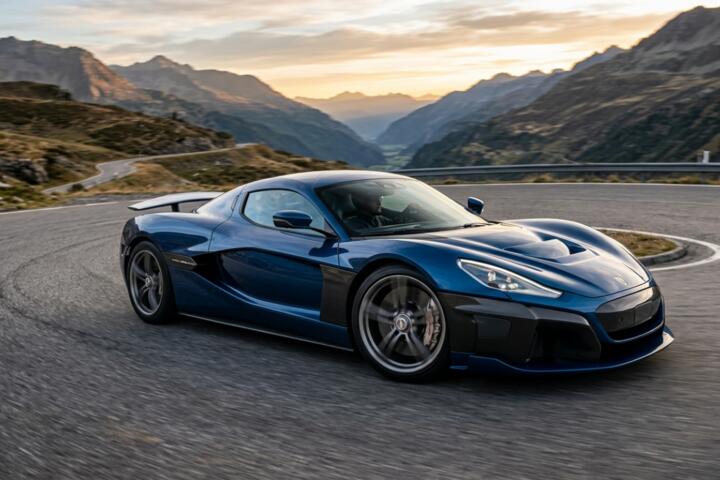
Performance Evolution
The boundary between a "hypercar" and a "sports car" has become increasingly blurred due to the rapid democratization of high-end R&D. Historically, technology like Anti-lock Braking Systems (ABS) took decades to move from aircraft and luxury flagships to standard vehicles; today, that cycle is compressed into less than five years. We are seeing a "trickle-down" effect where the experimental features of yesterday’s poster cars are now standard equipment on mass-produced performance coupes.
Consider the use of active aero. A decade ago, a moveable rear wing was a mechanical marvel found on the Bugatti Veyron. Today, the Porsche 911 GT3 RS utilizes a Drag Reduction System (DRS) directly inspired by Formula 1 and the 918 Spyder. This isn't just aesthetic; it’s a fundamental shift in how vehicles manage fluid dynamics at high speeds. Statistically, modern sports cars now produce up to 300% more downforce than their counterparts from the early 2000s, largely due to simulated CFD (Computational Fluid Dynamics) modeling that has become more affordable for manufacturers.
In 2024, a standard performance EV can accelerate from 0 to 60 mph in under 3.5 seconds—a figure that would have outpaced almost every flagship supercar of the 1990s. This shift is driven by high-voltage battery architectures and silicon carbide inverters that were initially developed for elite racing series like Formula E.
Performance Myths
Many manufacturers and tuners attempt to replicate "supercar feel" by simply increasing raw horsepower, which often leads to unbalanced vehicles. This "brute force" approach ignores the fact that true supercar technology is about holistic integration—managing heat, weight, and aero simultaneously. When enthusiasts or sub-premium brands slap a massive turbocharger on a chassis not designed for it, the result is a car that is fast in a straight line but dangerous or inefficient on a technical circuit.
Another major pain point is the "weight penalty." As cars gain advanced technology, they often gain mass. Modern sports cars are frequently 200–400 kg heavier than their predecessors. The failure to adopt carbon-fiber-reinforced polymers (CFRP) or sophisticated aluminum bonding techniques—technologies pioneered by companies like McLaren—results in vehicles that feel lethargic despite high power figures. Without these "trickle-down" weight-saving measures, the extra power is merely fighting the extra weight, leading to higher brake wear and diminished agility.
Real-world data shows that a vehicle with 400 hp and a 1,300 kg curb weight will consistently outperform a 600 hp vehicle weighing 1,800 kg on any technical track. The industry is currently struggling to balance the consumer demand for luxury tech with the mechanical necessity of lightness, a lesson the hypercar world learned decades ago.
Engineering Solutions
Active Aerodynamics and Thermal Management
Modern sports cars are moving toward "active" everything. Systems like the Multimatic Spool Valve (ASV) dampers or active grill shutters allow a car to be a comfortable cruiser and a track weapon simultaneously. By implementing active aero, a car can maintain a low drag coefficient (Cd) of 0.26 for fuel economy on the highway, then deploy flaps to increase downforce by 40% when it senses high lateral G-forces. Brands like Chevrolet with the Corvette Z06 have mastered this, using underbody aero ducts previously seen only in Ferrari’s "Special Series" models.
The Rise of the 48V Mild-Hybrid System
Torque filling is perhaps the most significant "supercar" gift to the modern driver. Using a small electric motor to bridge the gap while turbochargers spool up ensures a linear power delivery. This tech, which debuted in the "Holy Trinity" (LaFerrari, P1, 918), is now found in Mercedes-AMG’s 43 and 53 series. It allows smaller, more efficient 4-cylinder or 6-cylinder engines to mimic the effortless "shove" of a large-displacement V12.
Bespoke Chassis Control Logic
Software is the new suspension. Ferrari’s Side Slip Control (SSC) and McLaren’s Proactive Chassis Control have trickled down into systems like Ford’s MagneRide or Hyundai’s Electronic Limited Slip Differentials (e-LSD). These systems calculate road conditions at 1,000 Hz (once every millisecond). For a professional result, look for vehicles utilizing Bosch’s latest ESP 10.0 firmware, which allows for "drift modes" and "track maps" that were nonexistent in the consumer space five years ago.
Carbon Architecture and Composite Integration
We are seeing a shift from full carbon monocoques to "multi-material" frames. The BMW M series uses carbon-fiber roofs and strut braces to lower the center of gravity. This reduces "polar moment of inertia," making the car rotate faster. For those building or buying, prioritizing unsprung weight—such as forged aluminum wheels or Carbon Ceramic Brakes (CCB) from providers like Brembo—yields the highest performance return on investment.
Synthetic Fuels and High-Efficiency Combustion
Supercar brands like Porsche and Lamborghini are investing heavily in e-fuels to save the internal combustion engine (ICE). This research is already impacting modern engine tuning, with higher compression ratios and 350-bar direct injection systems becoming common in standard sports engines. These advancements allow for higher specific output (hp per liter) without the reliability issues of the past.
Digital Twin Telemetry
High-end track telemetry used to require a dedicated engineer and a laptop. Now, apps like the Corvette Performance Data Recorder (PDR) or Porsche’s Track Precision App provide Formula 1-level data overlays directly to a smartphone. This allows amateur drivers to analyze brake pressure, steering angle, and throttle application to improve lap times by seconds, not just tenths.
Real-World Cases
Case Study 1: The Mass-Market Mid-Engine Shift
A major American manufacturer transitioned their flagship sports car from a front-engine to a mid-engine layout to compete with European exotics. By adopting the transaxle design and weight distribution (40/60) of a supercar, they achieved a 0-60 mph time of 2.9 seconds in the base model.
Case Study 2: Hybridization for Performance
A German performance division integrated a 48V electric motor directly into the transmission of their inline-6 executive coupe to eliminate turbo lag. The result: a 15% improvement in acceleration while reducing emissions, proving hybrid tech enhances daily drivers.
Hardware Guide
| Technology | Supercar Origin | Modern Equivalent | Benefit |
|---|---|---|---|
| Chassis | Carbon Monocoque | Aluminum/CFRP Hybrid | Weight Reduction |
| Brakes | Brembo CCB | Steel / CCB Option | No Brake Fade |
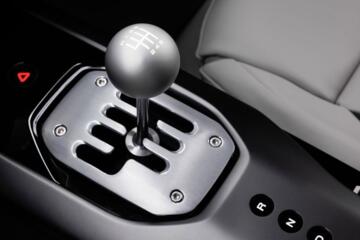
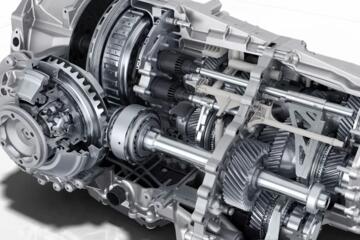
| Gearbox | Seamless Shift DCT | Fast-Shift ZF8 / DCT | Fast Shifts |
| Damping | Pushrod Systems | Adaptive Magnetic | Variable Stiffness |
Common Mistakes
The most common error is over-complication. Manufacturers sometimes add weight-heavy "active" features that don't provide enough performance benefit to justify the mass. For example, active rear-wheel steering is fantastic for agility, but if the system adds 25 kg to the rear axle, it can sometimes deaden the steering feel that enthusiasts crave.
Another error is cooling neglect. Supercars have massive radiators and oil coolers because they are designed for sustained 300 km/h runs. When sports cars adopt "supercar power" via tuning, the cooling systems often fail after two laps on a track. Expert advice: Always upgrade the heat exchangers if you increase boost pressure, regardless of what the marketing material says.</