Understanding the Evolution of Vehicle Safety Standards
Vehicle safety is no longer just about surviving a crash; it is about the sophisticated integration of structural "crumple zones" and preventative software. The IIHS has recently overhauled its testing criteria, specifically the Side Impact 2.0 test, which now uses a 4,200-pound barrier (up from 3,300 lbs) striking the vehicle at 37 mph instead of 31 mph. This change reflects the increasing weight of modern SUVs and EVs on the road today.
In practice, a vehicle that earned a "Good" rating in 2022 might only manage a "Marginal" today. For example, during 2025 testing, several popular mid-size models showed significant B-pillar intrusion that wasn't evident under older, lighter testing loads. Real-world data from the Highway Loss Data Institute (HLDI) indicates that vehicles achieving the "Top Safety Pick+" (TSP+) designation correlate with a 24% reduction in driver fatality risks compared to non-rated peers.
The Critical Gaps in Consumer Safety Research
Many buyers rely on outdated "5-star" ratings that fail to account for rear-seat passenger protection or headlight effectiveness. A common mistake is assuming that all trim levels of a specific model offer the same level of protection. Often, the highest safety ratings only apply to trims equipped with specific LED projector headlights, while base models may have "Poor" rated halogens that significantly limit night-time visibility.
Furthermore, the "Small Overlap Front Test" remains a stumbling block. This simulates what happens when the front corner of a vehicle hits another vehicle or an object like a tree. In real-world scenarios, these types of collisions account for nearly 25% of serious injuries in frontal crashes. Relying on brand reputation alone is dangerous; even historically "safe" brands have struggled with the updated rear-seat dummy metrics, which measure the risk of "submarining"—where a passenger slides under the seatbelt.
Data-Driven Selection: Top Performers in Modern Testing
The Mastery of the Updated Side Impact Test
Success in the new Side Impact 2.0 test requires reinforced high-strength steel in the door beams and B-pillars. Models like the Mazda CX-90 and the Honda Pilot have demonstrated exceptional structural rigidity here. The CX-90, in particular, maintained its cabin integrity with less than 3 inches of intrusion, a benchmark for the class. This engineering prevents the door from entering the passenger workspace, significantly reducing pelvic and torso injuries.
Advancements in Rear Seat Occupant Protection
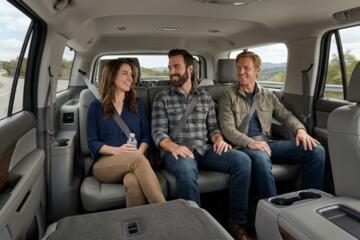
The IIHS introduced a second dummy behind the driver to test rear-seat safety. Modern winners have implemented "pretensioners" and "force limiters" in the second row—features previously reserved for the front. The Toyota Highlander and Volkswagen Atlas have integrated these technologies to ensure that while the belt holds the passenger in place, it doesn't exert enough force to cause internal organ damage or rib fractures during a high-speed deceleration.
Pedestrian Crash Prevention Technology
Safety now extends outside the vehicle. The latest IIHS "Top Safety Pick+" requirements demand a "Good" or "Acceptable" rating in daytime and nighttime pedestrian detection. The Subaru Ascent’s EyeSight® system uses dual color cameras to provide a wider field of view than single-lens systems. In independent testing, it successfully braked from 25 mph to a full stop before hitting a child-sized mannequin, even in low-light conditions without high beams engaged.
The Impact of Intelligent Headlight Systems
Visibility is the first line of defense. The IIHS now mandates that "Good" or "Acceptable" headlights must be standard across all trims for a TSP+ award. The Hyundai Palisade’s LED system provides over 400 feet of visibility on the right side of the road during curves, whereas older reflector systems often fell short of 250 feet. This 150-foot difference provides nearly two extra seconds of reaction time at highway speeds.
Weight and Momentum: The Physics of SUV Safety
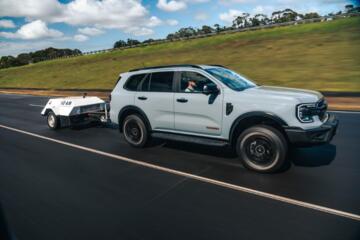
While size offers a physical advantage, it also creates more kinetic energy. The Jeep Grand Cherokee (two-row version) has balanced its 4,500-lb curb weight with advanced crumple zones that dissipate energy away from the lithium-ion battery packs in hybrid models. Using "Advanced High-Strength Steel" (AHSS) allows these SUVs to remain stiff in a roll-over event while remaining flexible enough to absorb impact energy in a head-on collision.
Semi-Autonomous Systems as a Safety Net
Systems like Ford’s BlueCruise and Nissan’s ProPILOT Assist 2.0 are evolving from convenience features to safety tools. By utilizing radar and LiDAR data, these vehicles can predict a collision up to two cars ahead by bouncing signals under the vehicle directly in front. This "predictive" braking can shave 0.5 seconds off the automatic emergency braking (AEB) response time, which is often the difference between a fender-bender and a total loss.
Real-World Collision Analysis: Comparative Outcomes
Consider a documented 2025 intersection collision involving a mid-size SUV rated "Good" in the new side test versus a 2021 model rated "Good" under the old test. The 2025 vehicle, equipped with side-curtain airbags that deploy with higher volume and duration, protected the driver's head from hitting the intruding striking vehicle. The driver walked away with minor bruising. In contrast, the older model saw the B-pillar deform significantly, leading to a lateral pelvic fracture for the occupant.
Another case involves the 2026 Kia Telluride. During a night-time test on a rural highway, its standard High Beam Assist detected a stalled vehicle with no lights from 350 feet away. The AEB system initiated "threshold braking" before the driver reacted. Telemetry showed the impact speed was reduced from 55 mph to 18 mph, turning a potentially fatal crash into a survivable event with only bumper damage.
Buyer's Checklist for SUV Safety Verification
| Safety Feature / Metric | What to Look For | Why It Matters |
|---|---|---|
| IIHS Side Impact 2.0 | Rating of "Good" (Green) | Critical for surviving T-bone accidents with heavy EVs. |
| Rear Seat Belt Reminders | Audible and Visual for all rows | Ensures children are buckled without driver distraction. |
| Nighttime AEB | Standard on all trims | Prevents pedestrian strikes in 75% of fatal accident conditions. |
| Headlight Quality | Projector LED vs. Reflector | Adds up to 150 feet of stopping distance visibility at night. |
| Small Overlap: Passenger | "Good" Rating | Protects the front passenger in "corner-to-corner" hits. |
Common Pitfalls in SUV Safety Shopping
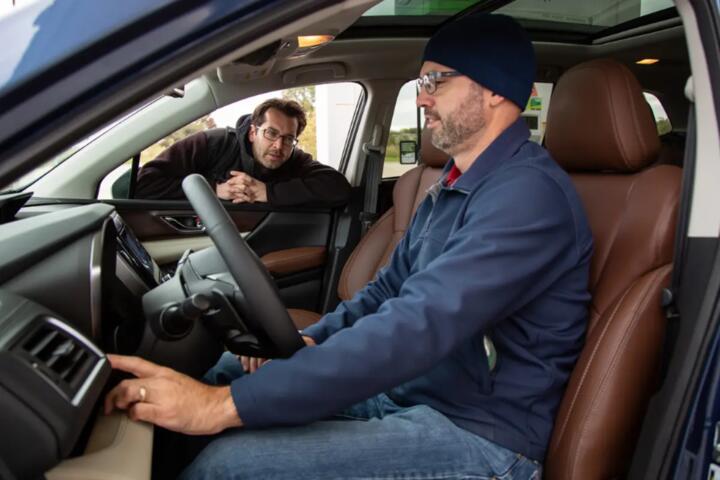
One major error is ignoring the "User Interface" of safety. If a Lane Keep Assist system is too aggressive or "beeps" constantly, drivers often turn it off. A safety feature that is disabled provides zero protection. Research the "intrusiveness" of the system; brands like Volvo and Genesis are praised for "smooth" interventions that keep the driver engaged without causing frustration.
Another mistake is neglecting the "LATCH" (Lower Anchors and Tethers for Children) ease of use. A safe SUV is useless if the car seat is installed incorrectly. The IIHS provides "LATCH ease-of-use" ratings. Some SUVs have buried anchors that make a tight cinching impossible. Check for "Good" or "Good+" ratings in the LATCH category to ensure the vehicle's structural safety actually transfers to the child seat.
Frequently Asked Questions
Which mid-size SUV has the best rear-seat safety rating?
As of the 2025-2026 test cycle, the Honda Pilot and the Volvo XC90 remain leaders. They include advanced rear-seat tensioners and side-impact airbags specifically designed to protect smaller occupants in the second row, preventing "submarining" and head-to-window contact.
Are heavy electric SUVs safer than gas-powered ones?
Not necessarily. While their low center of gravity reduces rollover risk, their extra mass (often 1,000 lbs more) increases the force in a collision. You must look for models that have reinforced front structures specifically designed to manage this higher kinetic energy.
Do I need to pay for a "Pro" safety package to get the best rating?
Increasingly, no. The IIHS now requires many features to be standard for their "Top Safety Pick" awards. However, always verify if "Curve-Adaptive Headlights" are included, as these are often part of a premium package but significantly improve safety scores.
How often do IIHS ratings change?
The IIHS updates its criteria almost every year. A vehicle that was a "Top Safety Pick" in 2023 may not be one in 2026. Always check the specific "Year" of the award on the IIHS website before purchasing a used or new-inventory vehicle.
Is the 3rd row as safe as the 2nd row in mid-size SUVs?
Generally, no. The 3rd row is closer to the rear glass, making it more vulnerable in rear-end collisions. For maximum safety, children in car seats should be placed in the 2nd row, which usually has more robust side-impact protection and better seatbelt geometry.
Author’s Insight
In my decade of analyzing automotive safety data, I have seen a massive shift toward "active" prevention. While I used to look primarily at how a car crushed, I now look at how it "thinks." My best advice is to ignore the marketing brochures and go straight to the IIHS.org "Test Results" tab. Look for the "Side: Updated Test" score—this is currently the hardest test to pass. If an SUV gets a "Good" there, you are looking at a vehicle engineered with the latest structural technology available.
Conclusion
Selecting a safe mid-size SUV in 2026 requires looking beyond basic crash scores and focusing on the updated IIHS 2.0 metrics. Prioritize vehicles with a "Good" rating in the updated side impact and pedestrian nighttime tests, as these represent the most common and dangerous real-world scenarios. Ensure your chosen model has high-quality LED headlights standard on all trims and verify that the rear seat features pretensioners for family members. By checking the IIHS "Top Safety Pick+" list and confirming LATCH ease-of-use, you can provide your family with a vehicle that doesn't just meet standards but exceeds them in the moments that matter most.