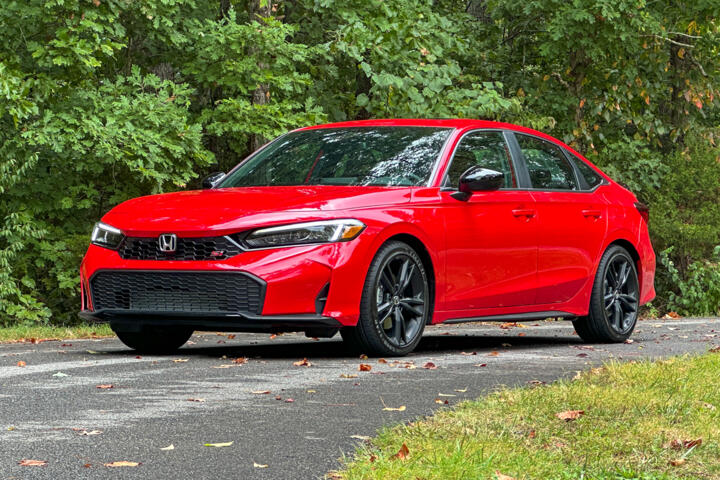
Sport Vs Comfort: The Reality
Trim names often hide mechanical differences. A “sport” package can mean firmer damping, different wheels and tires, and sometimes larger brakes. A “comfort” trim often shifts tuning toward lower impact harshness and quieter cabin targets.
On many vehicles, the tire size change is the first trade. A move from 17-inch to 19-inch wheels usually reduces sidewall height, which raises impact harshness and road noise. That same change can shorten tire life if alignment and tire pressures drift.
Fuel economy also shifts with trim. Wider tires and lower-profile rubber can add rolling resistance, and EPA estimates may not match your route. For example, a 2.0-liter turbo sedan might be rated around 30 mpg combined on one trim and 28 mpg on another, even with the same engine.
Ownership costs follow the hardware. Brake pads and rotors can wear faster when sport trims pair larger calipers with more aggressive pad compounds. Insurance can also differ by trim because repair parts and labor hours vary.
Resale value is tied to what buyers want later. If a comfort-tuned trim has quieter tires and softer seat bolsters, it often attracts commuters and families, while sport-tuned trims attract a narrower group.
Road tests matter, but so do the spec sheets. Look for wheel diameter, tire width, brake rotor size, and suspension type. Those details explain most of the day-to-day differences.
What Buyers Get Wrong
People often treat trim as “appearance plus a few settings.” The problem is that suspension and tire choices change how the car absorbs potholes, how it tracks grooves, and how it transmits vibration into the cabin.
Sport trims can feel fine on smooth roads, then punish you on broken pavement. Firmer damping reduces body motion, but it also increases the chance you feel sharp impacts through the seat and steering wheel. That effect shows up faster on 19-inch wheels with low-profile tires.
Comfort trims can hide their own compromises. Softer damping can allow more pitch and roll in quick lane changes, and some comfort packages use smaller brakes. In repeated hard stops, brake fade risk rises when rotor mass is lower.
Consequences show up in maintenance schedules. Low-profile tires are more sensitive to potholes and curb impacts, and they often cost more per replacement. If you drive 12,000 miles per year, a tire price difference of $150 to $250 per tire can swing annual cost quickly.
Real-world situations are predictable. A commuter who drives 20 miles each way on patched asphalt may notice noise and impact harshness within a week. A family on a road trip may care more about seat support and fatigue than lap times.
Skip the assumption that “sport” only affects acceleration. The biggest changes are usually ride compliance, steering feel, and tire wear patterns.
Specific Ways To Choose
Match Tires To Your Roads
Choose the trim whose tire sidewall matches your pavement. Low-profile tires reduce cushioning, so potholes and expansion joints feel sharper. In practice, a 19-inch setup with 35-series tires will ride firmer than a 17-inch setup with 45-series tires.
Check tire width too. Wider tires can improve grip but can raise road noise and slightly reduce fuel economy. If you see the same engine rated at different mpg across trims, tire choice is often part of the reason.
Use a tire cost estimate before signing. Multiply the expected replacement interval by your annual mileage. If a set lasts 35,000 miles on one trim and 45,000 on another, the cheaper-per-mile option may be the one with taller sidewalls.
For a quick reality check, look up the tire model and its warranty mileage. Then compare it to your driving mix, because warranty mileage assumes ideal conditions.
Compare Suspension Tuning
Firmer sport damping changes how the car reacts to bumps. Comfort tuning often uses softer shock valving and sometimes different spring rates. The difference matters most at low speeds, where impacts are frequent and you cannot “settle” the suspension.
Look for adaptive suspension hardware. Some trims use electronically controlled dampers, and the comfort mode can reduce harshness. If the sport trim uses fixed-rate dampers, the ride stays firm even in normal settings.
In practice, test over the same road surface twice. Drive one direction with the comfort trim and the other with the sport trim, if possible. Pay attention to how the front end reacts to potholes and how the rear axle feels over speed bumps.
I keep a phone timer for this test, version 2.1 of my notes app, because seat-of-the-pants memory drifts. You can also record cabin noise with a decibel meter app, though phone mics vary.
Check Brake Hardware And Use
Sport trims sometimes add larger rotors or different pad materials. That can improve stopping consistency, but it can also increase brake dust and rotor wear. If you drive in hilly areas, brake cooling and rotor mass matter more than the badge.
Ask for brake part numbers or rotor diameter. Even without numbers, you can compare whether the sport trim uses ventilated rotors with larger swept area. If the comfort trim uses smaller rotors, repeated downhill braking can raise brake temperatures.
Estimate brake service cost using local labor rates. A typical brake job might run $400 to $900 depending on rotor replacement and labor time. If the sport trim needs rotors sooner, the gap can show up within 2 to 3 years for heavy drivers.
Skip the assumption that “sport pads last longer.” Many performance pad compounds trade longevity for bite and fade resistance.
Seat Comfort And Child-Seat Fit
Comfort trims often use more padding and softer seat bolsters. Sport trims may have firmer bolsters that hold you in place, but they can reduce comfort on long drives. For families, seat shape affects how easily you install child seats and how well you can access rear anchors.
Check rear-seat usability. Look at rear legroom, seat cushion height, and whether the rear door opening is wide enough for a bulky child seat. If the sport trim uses different seatbacks, rear access can change.
In practice, bring the child seat manual and test the fit. Many installers use a tape measure to confirm anchor spacing and seat base clearance. If you cannot get a tight installation without forcing the base, the trim choice matters.
Also check heated seat controls. Some trims place switches on the center stack, others on the seat. That affects how often you reach across passengers during winter commutes.
Noise, Vibration, And Cabin Materials
Cabin noise targets differ by trim. Sport trims may use less sound insulation to save weight or to meet packaging constraints around wheels and brakes. Comfort trims often add insulation around wheel wells and under the dash.
Road noise is not only tire tread. Wheel size, tire compound, and suspension bushings all affect how vibration travels. If you hear a higher-pitched hum at 60 mph, tire model and tread pattern are usually the culprit.
Test at highway speed. Drive at 55 to 70 mph on a consistent stretch and compare how the cabin noise changes when you accelerate lightly. If one trim stays quieter at steady throttle, it likely has better NVH tuning.
Bring a small object to check rattles. A folded microfiber cloth in the cupholder can reveal vibration points you would otherwise miss.
Fuel Economy And Drivetrain Matching
Trim differences can change rolling resistance and aerodynamics. Even with the same 2.0-liter turbo, a sport package with larger wheels and wider tires can reduce combined mpg by 1 to 3 mpg in EPA testing. Your real number depends on tire pressure and alignment.
Check whether the sport trim adds a different final drive ratio. Some models pair sport packages with different gearing, which changes highway rpm and fuel burn. If you tow or drive at higher speeds, gearing differences can matter more than suspension tuning.
Use a simple cost comparison. If your fuel is $3.50 per gallon and the sport trim costs 2 mpg less over 12,000 miles, the annual difference is about $300. That estimate ignores maintenance and tire wear, which can widen the gap.
Do not trust a single tank reading. Compare average mpg over multiple fill-ups, because traffic patterns swing results.
Warranty, Maintenance, And Repair Frequency
Warranty coverage usually follows the vehicle, but trim can change what wears first. Low-profile tires, sport brakes, and larger wheels can raise replacement costs. Suspension components can also see different loads if the car runs stiffer springs.
Ask the dealer for the maintenance schedule by powertrain, then compare tire and brake intervals. Many manufacturers list tire rotation every 5,000 to 7,500 miles, and skipping it accelerates uneven wear. Uneven wear is more damaging on wider tires.
Repair frequency is harder to predict, but patterns exist. Wheels and tires are the most common trim-related cost items because they are consumables. If you live where potholes are frequent, the sport trim’s wheel and tire package often costs more per year.
Keep receipts for tire rotations and alignments. When resale time arrives, documentation helps explain why tread life matched expectations.
Resale And Insurance Differences
Resale value depends on buyer expectations. A comfort-tuned trim can hold value with commuters because it reduces fatigue on daily routes. A sport-tuned trim can sell faster in markets where buyers prioritize appearance and steering response.
Insurance can vary by trim because repair costs differ. Larger wheels, performance tires, and brake packages can raise claim severity. If you compare quotes, request coverage for the exact VIN, not just the trim name.
In practice, ask your insurer how they price tires and wheels. Some insurers cap wheel replacement costs, and aftermarket wheels can complicate claims. That matters if the sport trim uses a unique wheel design.
Depreciation trends also differ. If a trim has higher running costs, it can depreciate faster in used listings, especially when fuel economy ratings are lower.
Mini Case Studies With Numbers
A fleet manager at a regional service company ran two versions of the same model: one with a comfort package and one with a sport package. The company drove 15,000 miles per year per vehicle on mixed city streets. After 18 months, the sport-trim vehicles needed tires about 8,000 miles earlier, and brake dust buildup led to more frequent cleaning complaints. The manager estimated tire and brake-related costs were roughly $900 to $1,400 higher per vehicle over that period.
In a second case, a family bought a midsize sedan for weekend trips. They chose a comfort trim because rear-seat access mattered for a child seat and because they often drove 400-mile days. After one winter, they reported fewer “tire thump” impacts from potholes and less cabin noise fatigue on the highway. The family kept the same tire brand and rotation schedule, and their tire wear stayed closer to the warranty mileage than the sport-trim test car did.
Skip the idea that one test drive predicts ownership. Tire wear and brake dust depend on alignment, tire pressure habits, and road surface.
Trim Checklist For Real Life
| What To Compare | Sport Trim Tends To Change | Comfort Trim Tends To Change | Buyer Action |
|---|---|---|---|
| Wheel/Tire Package | Often larger wheels, lower sidewall | Often smaller wheels, taller sidewall | Check tire size and sidewall; estimate tire cost per year |
| Brake Hardware | May use larger rotors or sport pads | Often smaller rotors, quieter pads | Ask rotor diameter and pad type; estimate brake job cost |
| Suspension Tuning | Firmer damping, less body motion | Softer damping, more compliance | Test over potholes and speed bumps at low speed |
| Cabin NVH | May have less insulation | Often more insulation and quieter tires | Compare noise at 60–70 mph on the same road |
| Fuel Economy | May reduce mpg via tires | May hold higher mpg | Compare EPA combined mpg by trim; estimate $/year |
| Child-Seat Fit | Seat shape can change access | Seat shape may be easier for installs | Check rear anchors and door opening; test with your seat |
Common Mistakes And Fixes
Buying by badge only happens because trim names are marketing shortcuts. The impact is predictable: you end up with tires and suspension you did not plan for. Avoid it by reading the tire size and wheel diameter in the spec sheet, then matching them to your road surface.
Skipping the insurance quote is another common mistake. The impact shows up after purchase when wheel and tire claims cost more on sport packages. Avoid it by requesting a VIN-based quote before you sign, and ask how they price wheel replacement.
Ignoring brake dust and noise is a quieter mistake. The impact is more than mess; some pad compounds squeal more in stop-and-go traffic. Avoid it by asking for pad type or by checking owner forums for brake squeal reports, then verify with a test drive in traffic.
Overestimating “comfort mode” is common on adaptive systems. The impact is that comfort mode may soften damping but still uses low-profile tires and firmer steering geometry. Avoid it by testing the comfort mode over the same pothole route, not just on smooth streets.
Underestimating tire rotation and alignment is the most expensive mistake. The impact is uneven wear that shortens tread life, especially on wider tires. Avoid it by budgeting rotation every 5,000 to 7,500 miles and checking alignment after curb hits.
FAQ
Do Sport Trims Always Ride Firmer?
Most sport trims do ride firmer because they often pair stiffer damping with lower-profile tires. The exact outcome depends on wheel size, tire sidewall height, and whether the suspension is adaptive. A sport trim with 19-inch wheels and 35-series tires usually transmits more impact harshness than a comfort trim with 17-inch wheels and 45-series tires. If the sport trim uses adaptive dampers, comfort mode can reduce harshness, but it cannot change tire sidewall. Test over potholes and expansion joints at low speed to judge the difference.
Will A Sport Package Lower Fuel Economy?
Fuel economy can drop when sport trims use wider tires, lower rolling resistance targets, or different gearing. Even with the same engine, EPA combined mpg can differ by trim because tire size and wheel aerodynamics change. Real-world results depend on tire pressure, alignment, and driving speed. If the sport trim is rated 2 mpg lower combined, the cost difference over 12,000 miles can be around $200 to $350 per year at typical fuel prices. Compare EPA numbers by trim and then estimate your annual fuel cost using your mileage.
Are Comfort Trims Better For Road Trips?
Comfort trims often reduce fatigue on long drives through softer suspension tuning and quieter cabin NVH. Seat shape matters too: sport bolsters can feel supportive but may cause pressure points after 2 to 3 hours. Road-trip comfort also depends on rear-seat practicality, especially if you carry passengers and luggage. Check whether the comfort trim has more insulation and whether the tire package is quieter at 60–70 mph. If you plan 400-mile days, test highway noise and seat comfort together, not separately.
Do Sport Brakes Cost More To Maintain?
They can. Sport trims may use larger rotors, different pad compounds, or brake hardware that wears differently. Brake dust and squeal can also be more noticeable with performance-oriented pads, which affects how often owners clean wheels. Maintenance cost depends on whether rotors are replaced with pads and on local labor rates. If your sport trim needs brake service 10,000 miles earlier, the cost gap can be meaningful over a 3-year ownership window. Ask for rotor diameter and pad type, then estimate a brake job cost using your area’s labor pricing.
How Should I Compare Trims Without Confusing Specs?
Compare trims that share the same engine and drivetrain first. Then focus on the hardware that changes ride and running costs: wheel diameter, tire size, brake rotor size, suspension type, and any adaptive damping. Look for differences in EPA combined mpg by trim, not just the engine rating. For family use, verify rear-seat anchor access and child-seat fit by doing a physical install check. For ownership costs, request VIN-based insurance quotes and ask about tire and wheel replacement pricing. This approach avoids being misled by styling-only differences.
Author's Insight
Trim trade-offs show up in consumables: tires, brakes, and the cabin’s noise profile. A sport package often changes wheel and tire geometry first, then suspension tuning follows, and those changes drive most of the day-to-day complaints. Comfort packages can reduce harshness but may use smaller brakes or different seat shapes that affect long-distance comfort and child-seat access.
When comparing trims, I treat the spec sheet like a cost forecast. If one trim uses 19-inch wheels instead of 17-inch, I expect higher tire replacement cost and more sensitivity to potholes. If the mpg rating drops by 1–3 mpg combined, I estimate the fuel difference over 12,000 miles before deciding.
Warranty coverage usually tracks the vehicle, but trim hardware can change what wears first. That is why maintenance records, tire rotation discipline, and alignment checks matter more than the trim badge.
Key Takeaways
Pick the trim that matches your roads and your tolerance for impact harshness. Sport trims often trade comfort for firmer suspension tuning and low-profile tires, which can raise tire and wheel costs. Comfort trims often reduce fatigue but may use brake and suspension setups tuned for everyday driving rather than repeated hard stops.
Next steps: compare tire size and wheel diameter, check brake rotor specs, and request VIN-based insurance quotes. Then test-drive over the same pothole route and at 60–70 mph to judge noise and vibration. If you carry children, verify rear-seat anchor access with your child seat installed.
Limits: spec sheets do not predict every outcome because tire pressure habits, alignment, and road surface vary. If you notice persistent harshness, steering pull, or brake noise after purchase, schedule an inspection with a qualified shop. For safety-related concerns like brake performance or abnormal vibration, get professional diagnosis promptly rather than waiting for the next service interval.