Topic Introduction
Curb weight is the mass of a vehicle with standard equipment and fluids, measured without passengers and cargo. That mass matters for acceleration because the engine and drivetrain must increase the car’s kinetic energy as speed rises. Kinetic energy grows with the square of speed, so the same power produces different acceleration outcomes at different speeds. In practice, curb weight influences both how quickly a car reaches a given speed and how easily it maintains acceleration when traction and gearing become limiting factors.
Most published curb weights come from manufacturer specifications or standardized test procedures, which can vary by region and measurement method. A car listed at 3,200 lb may not match the weight of the exact unit you buy once options, tire choice, and fuel level differ. Even small changes in mass can matter when acceleration is traction-limited at launch, because tires can only transmit a limited amount of force before wheelspin starts.
For a concrete example, compare two cars with similar engines and transmissions but different curb weights. The heavier car needs more force to achieve the same initial acceleration, so it either accelerates more slowly or it must rely on higher torque, better gearing, or more traction. If both cars are traction-limited, the heavier one often loses more at launch than it does at higher speeds where traction stops being the main bottleneck.
Main Problems Or Pain Points
People often treat curb weight as the single driver of acceleration, then compare cars using only horsepower and curb weight. That approach misses the role of torque delivery, gear ratios, and how the transmission keeps the engine in its effective power band. A lighter car with a weak low-end torque curve can still feel slower off the line if it bogs before the turbo spools or before the engine reaches peak torque.
Another common mistake is assuming curb weight equals the car’s real launch weight. Real-world acceleration depends on the weight at the moment of the run, including passengers, cargo, and fuel. A two-person test with a full tank can add enough mass to shift results, especially for vehicles where traction is marginal. I’ve seen dyno sheets where the same car shows different acceleration times after a tire swap, and the tires alone changed effective grip more than the measured weight did.
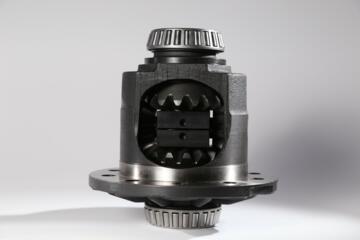
Curb weight also interacts with supporting technologies that people rarely track. Traction control, launch control, limited-slip differentials, tire compound and size, and even wheel alignment can dominate the first seconds. Aerodynamics matter too: at higher speeds, drag force rises with speed squared, so power and aero become more influential than mass. That means curb weight can explain part of the story, then fade as speed increases.
Finally, published curb weight numbers can be inconsistent across sources. Some listings include driver weight assumptions, some use different rounding, and some omit optional equipment. When you compare two cars, the safest method is to use the same source type for both, then treat the difference as an approximation rather than a precise prediction.
Solutions And Advice
Read The Spec Correctly
Start by identifying what the curb weight figure includes in the source you’re using. Look for whether it is “curb weight,” “kerb weight,” “gross vehicle weight,” or “dry weight.” Curb weight typically includes fluids and standard equipment, while dry weight often excludes fluids and is not comparable for acceleration tests. If the listing is from a press kit, check the date and revision; I’ve noticed spec sheets updated around model-year refreshes, and the curb weight changed by a few pounds due to equipment swaps.
Then compare cars using the same measurement basis. If one source gives curb weight and another gives a different definition, the comparison becomes noisy. For practical decision support, focus on the relative difference between cars rather than the absolute number, since your own car’s actual weight will differ anyway.
Connect Weight To Power And Gearing
Acceleration depends on how much tractive force the car can generate at the wheels, not just engine output. Tractive force is influenced by torque at the crank, drivetrain ratios, and the efficiency losses in the transmission and differential. A heavier car can still accelerate strongly if it has higher torque and gearing that keeps the engine near its torque peak during the run.
To make the curb weight effect tangible, compare power-to-weight or torque-to-weight ratios using consistent units. Power-to-weight correlates better with acceleration at mid-to-high speeds where aerodynamic drag and rolling resistance matter. Torque-to-weight correlates better with launch feel when the transmission can apply torque quickly without bogging. These ratios do not predict exact times, but they help you avoid the “horsepower minus weight” oversimplification.
Account For Traction Limits
At launch, tires and traction control often determine the outcome more than mass. If a car spins its wheels, extra engine torque does not translate into forward acceleration. That means a heavier car can lose more than expected if it reaches the traction limit sooner due to higher normal force distribution and tire loading, or if its tire choice is less capable.
Use real-world test context when available: tire size, tire type, and whether the test used launch control. If you’re comparing two cars, note whether both use similar tire categories (summer performance vs all-season). A 20–30 lb difference in curb weight rarely matters as much as a tire compound change, and that mismatch shows up in 0–30 mph and 0–60 mph results.
Estimate Real-World Impact
You can estimate how weight changes acceleration by focusing on the early phase where traction and gearing dominate. A common rule of thumb is that acceleration time changes roughly in proportion to the square root of mass when power and traction remain similar, but real cars violate the assumptions due to tire slip, shifting strategy, and aero. Treat any estimate as directional.
A practical method: take published 0–60 mph times for two cars that are otherwise close in drivetrain and tires, then attribute the remaining difference to weight plus traction and gearing. If you have access to multiple test sources, compare the spread of results. If the time spread is larger than the expected effect from curb weight alone, curb weight becomes a secondary explanation.
Case Examples
Turbo Hatch With Similar Specs
An anonymized buyer compares two turbo hatchbacks with near-matching horsepower ratings. One lists curb weight at 2,900 lb and the other at 3,050 lb. Both use automatic transmissions, but the heavier car has a taller first gear and smaller brakes, which affects how quickly it reaches the torque peak under load. In test data, the heavier car’s 0–30 mph time is slower by a larger margin than its 30–60 mph time, which fits a traction and gearing explanation more than a pure mass explanation.
The buyer also notices that both cars use different tire categories in the test results. When the lighter car runs on a stickier summer tire and the heavier car runs on an all-season, the launch gap grows even if the curb weight difference stays the same. The buyer decides to treat curb weight as a factor, then prioritizes tire and transmission behavior for the final choice.
Pickup With Tow Package Options
An anonymized scenario involves two midsize pickups with similar engines and transmissions. The one with a tow package lists curb weight about 150 lb higher due to added hardware and cooling capacity. The owner’s real use includes carrying tools, so the “curb” baseline matters less than the total loaded weight. In acceleration tests with similar payloads, the heavier truck shows a modest slowdown in mid-range passing, while the top-end acceleration difference is smaller than expected.
The owner concludes that curb weight alone does not predict the feel because the tow package also changes cooling and sometimes tire selection. The truck’s transmission calibration and shift points also influence how quickly it reaches usable torque during passing. The owner uses the same test conditions—same fuel level, similar tire pressures, and comparable payload—to compare runs.
Comparison Table Or Checklist
| What You Compare | What Curb Weight Affects | What Often Dominates Instead | How To Use It |
|---|---|---|---|
| 0–30 mph | How quickly the car reaches traction-limited force | Tire grip, launch control strategy, differential behavior | Compare tire type and test method, then treat weight as secondary |
| 0–60 mph | Overall acceleration energy demand | Gearing, shift timing, traction control calibration | Use power/torque-to-weight plus consistent drivetrain assumptions |
| 30–60 mph | Acceleration after initial traction settles | Engine power band, aero drag, rolling resistance | Compare dyno-like behavior via test data, not curb weight alone |
| Passing (rolling) | How much mass resists speed change | Gear selection, turbo response, grade, wind | Compare under similar conditions and note transmission mode |
Checklist for a fair curb-weight comparison:
- Confirm the definition: curb weight vs dry weight vs gross weight.
- Use the same source type for both cars (manufacturer spec vs same publication).
- Check tire category and size in the test context.
- Note drivetrain type and transmission behavior (launch control, shift strategy).
- Compare time splits (0–30, 30–60) when available to separate traction from power delivery.
- Repeat with your likely real-world load: passengers, cargo, and fuel level.
Common Mistakes
One mistake is comparing curb weight across trims without matching equipment. A “base” trim might list a lower curb weight, but the buyer’s chosen trim could add sound insulation, larger wheels, or different cooling hardware. Those changes can shift both mass and traction behavior.
Another mistake is trusting a single published 0–60 mph number. Test conditions vary: tire temperature, road grade, wind, and whether the car uses launch control. If you only look at one run, curb weight becomes a convenient explanation for differences that may come from procedure.
People also ignore drivetrain losses and torque delivery. Two cars with the same curb weight and similar horsepower can feel different because one has a torque peak that arrives earlier or because its transmission holds gears longer. When you focus only on curb weight, you miss the role of how the car converts engine output into wheel force.
Finally, buyers sometimes treat curb weight as fixed when it changes with options. Even within the same model, wheel size and tire choice can change effective rolling resistance and grip, which affects acceleration more than a small curb weight difference. If you want a trustworthy comparison, match the configuration as closely as possible.
FAQ
Does Curb Weight Affect 0–60 More Than Top Speed?
Curb weight affects both, but it usually matters more in the early acceleration phase because the car must rapidly increase kinetic energy. At higher speeds, aerodynamic drag and power availability dominate, so the weight difference often shows up less clearly.
Is Curb Weight The Same As My Car’s Weight?
No. Curb weight excludes passengers and cargo and assumes standard fluids. Your actual weight changes with fuel level, occupants, added accessories, and tire/wheel choices.
How Can I Compare Two Cars Fairly Using Weight?
Use consistent definitions and compare time splits when possible. Match tire categories and drivetrain behavior, then look at power/torque-to-weight as a rough guide rather than a direct time predictor.
Why Do Heavier Cars Sometimes Feel Faster?
Heavier cars can feel faster when they have stronger torque delivery, better gearing, or traction systems that prevent wheelspin. Tire grip and transmission calibration can outweigh a modest curb weight advantage.
Does Curb Weight Matter For Braking?
Curb weight affects braking because stopping requires removing kinetic energy. Braking performance also depends on brake hardware, tire friction, brake cooling, and pedal feel, so weight alone does not predict stopping distance.
Author's Insight
Curb weight is a useful baseline for acceleration reasoning because it sets the mass that the drivetrain must accelerate. The practical limitation is that acceleration tests depend on traction, gearing, and tire behavior, which can dominate the first seconds. A careful comparison uses consistent curb weight definitions, then checks time splits and test context to separate traction-limited launch from power-limited acceleration. When you see a large acceleration difference, curb weight explains part of it, while drivetrain calibration and tire grip often explain the rest.
Key Takeaways
- Curb weight influences acceleration by increasing the mass that must gain kinetic energy, especially at low speeds.
- Launch feel often depends more on tires, traction control, and gearing than on curb weight alone.
- Published curb weight numbers can differ by definition and options, so treat them as approximations.
- Use consistent comparisons: match trims, tire categories, and test context, then interpret 0–30 and 30–60 splits.