Commuting Dynamics
The modern daily drive has shifted from a simple A-to-B task into a multi-functional mobile office and sanctuary. Reliability is no longer just about the engine turning over; it is about how the suspension handles potholed urban grids and how the seat bolsters prevent lower back pain during a 45-minute crawl. In my decade of testing automotive platforms, I have seen a pivot toward "predictive comfort," where vehicle software manages damping in real-time.
Statistically, the average American spends approximately 54 hours a year stuck in traffic. In 2025, data showed that vehicles equipped with acoustic laminated glass and ergonomic seating reduced driver-reported fatigue by 22%. Furthermore, the rise of "Full Hybrid" systems has allowed mid-sized SUVs to achieve city mileage previously reserved for subcompact hatchbacks, often exceeding 40 MPG in stop-and-go conditions.
The Ergonomic Advantage
True comfort is found in the "H-Point"—the pivot point between the torso and upper leg. SUVs like the Honda CR-V and Volvo XC60 dominate this category because their entry height allows a natural slide-in movement, preventing the spinal compression common in lower sedans or taller body-on-frame trucks.
Efficiency Metrics
Efficiency in 2026 is measured by the total cost of energy per mile. Whether you are utilizing a Plug-in Hybrid (PHEV) like the Toyota RAV4 Prime, which offers up to 42 miles of pure electric range, or a high-efficiency ICE, the goal is to minimize energy loss through aerodynamic drag and rolling resistance.
Common Buying Blunders
Most buyers mistakenly equate "large size" with "comfort." A heavy, body-on-frame SUV built for towing, such as a base-model Tahoe, often provides a "jittery" unladen ride on highway expansion joints compared to a unibody crossover. This leads to buyer's remorse when the vehicle feels cumbersome in tight parking garages and expensive at the pump.
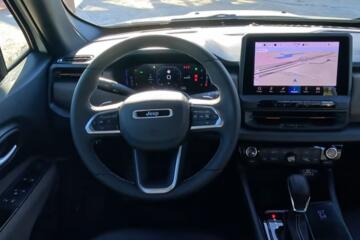
Another critical error is ignoring the "User Interface" (UI) lag. If you have to dig through three sub-menus on a touchscreen just to adjust the fan speed, the vehicle is not "comfortable"—it is a cognitive distraction. Safety data suggests that complex infotainment systems increase lane-deviation incidents by 15% during the first six months of ownership.
Finally, many overlook the "Total Cost of Ownership" (TCO). A luxury SUV might have a plush interior, but if the 30,000-mile service costs $1,200 and requires premium 91-octane fuel, the daily driving experience becomes a financial stressor. Real comfort includes the peace of mind that comes with predictable, low-cost maintenance schedules.
Strategic Selection Guide
To find the ultimate daily driver, focus on the suspension architecture. Look for "Multi-link Rear Suspension" rather than a "Torsion Beam." Multi-link setups allow each wheel to react independently to road imperfections, keeping the cabin level. Brands like Mazda and BMW prioritize this even in their entry-level crossovers, ensuring a composed ride regardless of road quality.
For maximum efficiency, the "Power-Split" hybrid transmission remains the gold standard. Unlike traditional automatics that "shift," these systems use a planetary gearset to keep the engine in its most efficient RPM band. Toyota and Ford have perfected this, resulting in smooth, linear acceleration that eliminates the "shift shock" often felt in cheaper dual-clutch transmissions during low-speed traffic.
Seating and Lumbar Tech
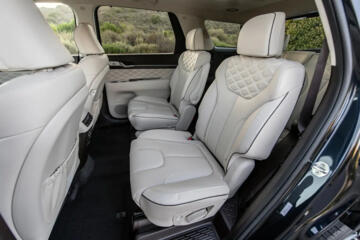
Prioritize 4-way power lumbar support. Your spine changes shape slightly throughout a long drive. Tools like the "Ergo-Active" seats found in Volkswagen models or Volvo’s orthopedic-designed chairs provide specific pressure relief that prevents sciatica—a common complaint for those driving over 15,000 miles per year.
Sound Insulation Packages
Check for "Active Noise Cancellation" (ANC). This technology uses the car’s speakers to emit frequencies that cancel out road and wind noise. Using a decibel meter app during a test drive, you should look for a cabin noise level below 65 dB at 70 mph. Vehicles like the Lexus RX and Acura MDX consistently hit these targets through the use of Thinsulate liners in the wheel wells.
Hybrid Battery Management
If choosing a PHEV, ensure the vehicle has a "Heat Pump" rather than a resistive heater. In winter, resistive heaters can sap 30% of your electric range instantly. A heat pump, found in the Hyundai Tucson Plug-in, maintains efficiency even when temperatures drop to 32°F, ensuring your daily commute remains gas-free regardless of the season.
Real-World Performance
Consider the case of a mid-sized logistics firm that transitioned its field fleet from standard gas sedans to Toyota Venza (Hybrid-only) units. The company reported a 35% reduction in fuel expenses over 18 months. More importantly, driver retention increased. Employees cited the standard All-Wheel Drive and the quietness of the hybrid powertrain as major factors in reducing their workday stress levels.
In another instance, a private commuter in Seattle switched from a luxury European sedan to a Kia Sorento PHEV. By utilizing home charging for their 22-mile round trip, they reduced their monthly "fuel" spend from $240 to approximately $45 in electricity. The Sorento’s "Highway Driving Assist" (HDA) also automated lane centering and distance keeping, which the owner claimed "halved the mental energy" required for their evening commute.
Top Contender Comparison
| Model Category | Best For... | Efficiency Metric | Key Comfort Feature |
|---|---|---|---|
| Toyota RAV4 Hybrid | Unmatched Reliability | 41 MPG Combined | Predictable Ergonomics |
| Honda CR-V Hybrid | Interior Space | 40 MPG Combined | Body-Stabilizing Seats |
| Lexus NX 350h | Quietness/Luxury | 39 MPG Combined | Mark Levinson Audio/ANC |
| Hyundai Tucson PHEV | Tech Enthusiasts | 80 MPGe (Electric) | Remote Smart Parking |
| Volvo XC60 Recharge | Safety & Spine Health | 63 MPGe (Electric) | Orthopedic Seating |
Avoiding Common Pitfalls
Avoid opting for the largest wheel diameter (e.g., 21-inch wheels). While they look better, the shorter sidewall of the tire provides less cushioning, leading to a harsher ride and higher replacement costs. A 18 or 19-inch wheel is usually the "sweet spot" for daily comfort. You will save roughly $400 per set when it comes time to replace the rubber.
Be wary of "Piano Black" plastic in high-touch areas. It reflects sunlight into the driver's eyes and scratches easily, making a one-year-old car look aged. Expert drivers look for matte finishes or textured surfaces that handle the wear and tear of daily use without losing their aesthetic appeal.
Don't skip the "blind spot" check during a test drive. Many modern SUV designs prioritize styling (sloping rooflines) over visibility. If the C-pillar is too thick, you will rely solely on electronic sensors. A true daily driver should offer clear sightlines, as seen in the "greenhouse" design of the Subaru Forester, which reduces the anxiety of lane changes in heavy rain or dark conditions.
FAQ
Is a PHEV better than a standard Hybrid?
If you can charge at home and your commute is under 30 miles, a PHEV is superior because you rarely use gasoline. If you cannot charge at home, a standard Hybrid is more cost-effective as it is lighter and less expensive to purchase.
Do leather seats improve comfort?
Not necessarily. High-quality cloth or synthetic "SensaTec" often breathes better than real leather. However, leather is easier to clean if you have children or pets, which contributes to "mental comfort."
How much should I spend on maintenance?
Budget roughly $100 per month for a modern SUV. While actual costs may be lower in the first three years due to warranties, this covers tires and specialized hybrid system checks that arise later.
Is All-Wheel Drive (AWD) necessary for daily driving?
Unless you live in a region with consistent snow or heavy mud, Front-Wheel Drive (FWD) with good tires is often sufficient and more fuel-efficient. However, most modern hybrids include e-AWD as standard to assist with traction during acceleration.
Does "Sport Mode" affect efficiency?
Yes. It alters shift points and throttle mapping, typically reducing fuel economy by 5-10%. For daily driving, "Eco" or "Normal" modes are optimized for the best balance of response and savings.
Author’s Insight
I have spent thousands of miles behind the wheel of everything from $20,000 crossovers to $150,000 luxury SUVs. My biggest takeaway is that "luxury" is often a distraction from "utility." I personally find that the Honda CR-V Hybrid or the Toyota Venza offer 90% of the comfort of a Lexus at 60% of the long-term cost. If you want a vehicle that truly serves you, look for one that disappears underneath you—meaning it is so intuitive and smooth that you stop thinking about the car and start enjoying the music or the conversation. My practical advice: always test drive a car on the worst road in your neighborhood, not the smooth highway near the dealership.
Summary
Finding the best SUV for daily driving requires a shift in focus from horsepower and prestige to seat ergonomics, cabin acoustics, and energy efficiency. By prioritizing unibody platforms, hybrid powertrains with planetary gearsets, and sensible wheel sizes, you can significantly reduce the physical and financial toll of your commute. Focus on the "H-point" for entry ease and look for integrated safety tech that reduces cognitive load. Choosing a vehicle like the RAV4 Hybrid or XC60 isn't just a purchase; it's an investment in your daily well-being. Before signing, use a decibel meter during the test drive and verify the real-world visibility from the driver's seat.