Electric Economics 101
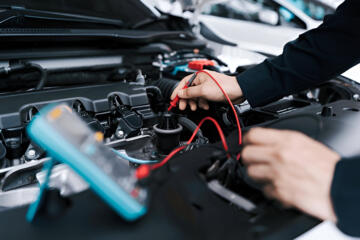
To understand if a battery-powered vehicle saves you money, you must look beyond the "sticker price." Traditional car buying focuses on the MSRP, but the electric shift requires a "Total Cost of Ownership" mindset. This includes the purchase price minus federal tax credits (like the IRC 30B in the US), energy costs per mile, and significantly lower mechanical maintenance requirements. For instance, an internal combustion engine has over 2,000 moving parts, while a typical electric drivetrain has about 20.
Practical examples show that a high-mileage driver (covering 15,000+ miles annually) can save roughly $1,200 to $1,800 per year on fuel alone, depending on local utility rates. A 2024 study by Consumer Reports found that EV owners spend about 50% less on repair and maintenance over the life of the vehicle compared to gas-car owners. These aren't just theoretical projections; they are realized gains for those who choose the right segments.
The TCO Pitfalls
The most common mistake is ignoring the "Depreciation Curve." Many first-generation electric models lost 50% of their value in just two years because the technology moved so fast. If you buy an EV with a high MSRP and low demand in the secondary market, the fuel savings won't cover the loss in equity. Another major pain point is relying solely on public Level 3 fast-charging stations like Electrify America or Tesla Superchargers, which can cost nearly as much as gasoline per mile.
Furthermore, buyers often fail to account for "Cold Weather Range Degradation." In climates like Chicago or Oslo, range can drop by 30% in winter, forcing more frequent charging sessions. Real-world situations show that without a dedicated Level 2 home charger, the convenience factor vanishes, and the cost-benefit ratio tilts back toward hybrids. Ignoring the insurance premium hike—which can be 15% to 25% higher for EVs due to repair complexity—is another oversight that drains the wallet.
Strategic Purchase Path
Target High-Residual Models
To maximize savings, you must buy vehicles that hold their value. The Tesla Model 3 and Model Y currently dominate this space because of their massive software ecosystem and frequent "Over-the-Air" (OTA) updates that keep the car feeling new. When the hardware remains relevant, the resale value stays high. Data from iSeeCars consistently places these models at the top of the retention list, meaning your "cost to own" over five years is significantly lower than a cheaper, less popular alternative.
Master the Charging Hierarchy
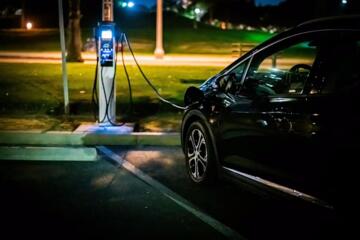
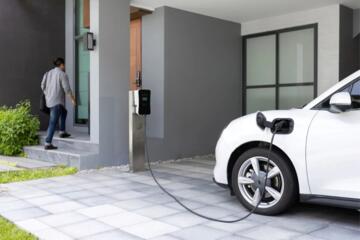
Financial success in the EV world depends 80% on where you charge. Home charging at off-peak rates (typically $0.10–$0.15 per kWh) is the "gold standard." At this rate, "filling up" costs about $7–$10 for 300 miles of range. Compare this to a gas car getting 30 MPG; at $3.50 per gallon, that same distance costs $35. To achieve this, install a UL-certified Level 2 charger like the ChargePoint Home Flex or Wallbox Pulsar Plus, which pays for itself via energy savings within the first year.
Leverage Used Market Incentives
In the US, the Used EV Tax Credit provides up to $4,000 for vehicles priced under $25,000. This is the "sweet spot" for savings. Buying a three-year-old Chevrolet Bolt or a Hyundai Kona Electric allows someone else to take the initial depreciation hit. You end up with a vehicle that has most of its 8-year/100,000-mile battery warranty intact but at a price point that makes the per-mile cost lower than almost any new subcompact gasoline car on the market.
Optimize Insurance with Telematics
Since EV insurance is higher, use specialized providers or telematics programs like Tesla Insurance or Progressive’s Snapshot. These services track your actual driving behavior. Because EVs have regenerative braking and advanced driver assistance systems (ADAS), safe drivers can often negate the "EV premium" by proving they are low-risk. This can save $300–$500 annually, reinforcing the vehicle's role as a money-saving tool rather than a luxury expense.
Focus on Efficiency
Not all EVs are created equal. A heavy electric SUV like the GMC Hummer EV is inefficient, whereas a Lucid Air or a Hyundai Ioniq 6 is a "hyper-miler." Efficiency is measured in miles per kilowatt-hour (mi/kWh). Aim for a vehicle that achieves at least 3.5 mi/kWh. Higher efficiency means you need a smaller battery to go the same distance, which reduces the weight of the car and the cost of the electricity needed to move it.
Real-World Savings Cases
Consider a delivery professional in Phoenix, AZ, who switched from a Toyota Corolla to a used Chevrolet Bolt EV. The driver covers 25,000 miles a year. With gas at $3.80/gal and the Bolt charging at home for $0.12/kWh, the annual fuel savings amounted to $2,450. After three years, including the $4,000 used EV credit, the Bolt essentially paid for half of its own purchase price through operational savings alone.
In another case, a suburban family replaced their luxury gas SUV with a Tesla Model Y. While the insurance rose by $20 a month, they eliminated $150 monthly oil changes and brake services (due to regenerative braking). Over a 60-month ownership period, their Total Cost of Ownership was $12,000 lower than a comparable BMW X3, even when accounting for the slightly higher initial purchase price of the electric model.
EV Economic Checklist
| Factor | Optimal Choice for Savings | Cost Impact |
|---|---|---|
| Home Charging | Installed Level 2 (240V) | Reduces fuel cost by ~70% |
| Battery Size | 60kWh - 75kWh (Standard Range) | Lower MSRP; lighter weight |
| Resale Value | High-volume brands (Tesla, Hyundai) | Minimizes depreciation loss |
| Tires | EV-specific (low rolling resistance) | Increases range by 5-10% |
| Maintenance | Cabin filter & tires only | Saves ~$600/year vs ICE |
Avoiding Costly Mistakes
Never buy an EV without checking your local "Time-of-Use" (TOU) electricity rates. If your utility company charges $0.40/kWh during the evening, your savings disappear. Always schedule charging for after midnight. Another mistake is buying "too much range." If your daily commute is 40 miles, you don't need a 100kWh battery that adds $15,000 to the car's price. You are paying for weight and capacity you will rarely use.
Be wary of "Compliance Cars." These are EVs built by traditional manufacturers just to meet regulations (like older versions of the Fiat 500e or early VW e-Golfs). They often lack liquid-cooled battery thermal management, leading to faster battery degradation and poor resale value. Stick to dedicated EV platforms like Hyundai’s E-GMP or Tesla’s architecture to ensure the longevity of your investment and the health of the battery pack over 10+ years.
FAQ
Are EVs really cheaper to maintain long-term?
Yes. They eliminate oil changes, spark plugs, timing belts, and oxygen sensors. Regenerative braking also means brake pads can last over 100,000 miles because the electric motor does most of the slowing down, converting that kinetic energy back into electricity for the battery.
How much does a replacement battery actually cost?
Current prices range from $5,000 to $15,000 depending on the model. however, most manufacturers provide an 8-year/100,000-mile warranty. Degradation data shows most modern batteries retain 80-90% of their capacity after 150,000 miles, making a full replacement unlikely for the first owner.
Do I save money if I can't charge at home?
Rarely. Public fast-charging is expensive. If you live in an apartment without a charger, an EV might be more about the experience or environment than saving money. Look for workplaces that offer free Level 2 charging as a perk to make the math work in your favor.
What is the "break-even" point for an EV?
For a new Model 3 versus a Toyota Camry, the break-even point is typically between 3 and 5 years. This depends on your annual mileage and local gas prices. The more you drive, the faster the EV pays for its higher upfront cost through cheaper "fuel" and lack of maintenance.
Does the cold weather really ruin the savings?
It doesn't ruin them, but it reduces them. Heating a cabin with a resistive heater is energy-intensive. To mitigate this, look for an EV with a "Heat Pump" (standard on many newer models like the Kia EV6). A heat pump is 3x more efficient than a traditional heater in moderately cold weather.
Author’s Insight
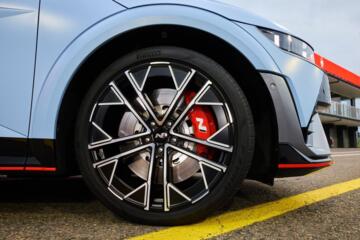
In my years analyzing automotive fleets, I’ve found that the most satisfied EV owners are those who treat the car like a smartphone—charging it while they sleep. My personal tip: don't overspend on the "Performance" trims. They come with larger wheels and thinner tires that wear out 30% faster and are much more expensive to replace. Stick to the base wheels and the standard battery if you want to see your bank account actually grow. The true "luxury" of an EV isn't the 0-60 speed; it's never having to visit a gas station again.
Summary
Owning an electric vehicle is a winning financial strategy only if you optimize for home charging, choose models with high residual value, and utilize available tax incentives. Focus on the cost per mile rather than the monthly payment alone. To start saving today, audit your daily mileage and local electricity rates to find your specific break-even point. If you drive more than 10,000 miles a year and can charge at home, the transition to electric is no longer just a green choice—it is the smartest fiscal move you can make.