Industrial Transformation
For decades, the environmental impact of a vehicle was measured almost exclusively by its tailpipe emissions. However, as the global fleet shifts toward electrification, the "burden of impact" moves from the operational phase to the manufacturing phase. An electric vehicle (EV) starts its life with a higher carbon debt than an internal combustion engine (ICE) counterpart, primarily due to the energy required to produce the battery pack.
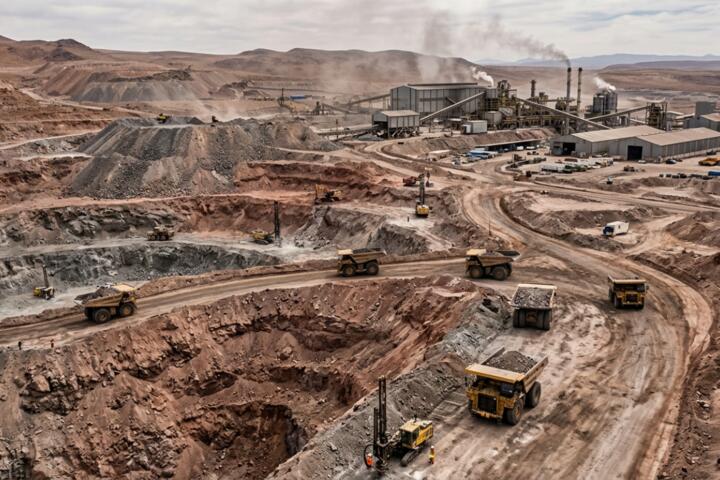
In practice, producing a 75 kWh battery involves processing tons of earth to extract lithium, cobalt, manganese, and nickel. For example, a single battery pack requires moving approximately 250 tons of raw earth to yield the necessary refined minerals. While a typical ICE car emits most of its lifetime CO2 while driving, approximately 40% to 60% of an EV’s total lifecycle emissions are "baked in" before it ever leaves the showroom floor.
Recent data from the International Energy Agency (IEA) indicates that mineral demand for clean energy technologies will quadruple by 2040. In 2023 alone, lithium demand reached over 180,000 metric tons, a 30% increase year-over-year. This surge places immense pressure on regions like the "Lithium Triangle" in South America and the Democratic Republic of Congo (DRC), where the ecological and social stakes are highest.
Systemic Vulnerabilities
The primary issue in current production cycles is the reliance on carbon-heavy power grids in manufacturing hubs. When a factory in a region powered by coal-fired plants produces a battery, the initial "carbon debt" is so high that it can take a driver up to 30,000 miles of operation to reach carbon parity with a gasoline vehicle. Failing to account for the grid mix of the manufacturing site is a critical oversight in many corporate sustainability reports.
Water scarcity is another overlooked consequence. In the Salar de Atacama, lithium extraction consumes nearly 65% of the region’s water, leading to soil contamination and the displacement of local agricultural communities. This isn't just an environmental issue; it is a supply chain risk. Companies that ignore these localized impacts face regulatory backlash and "greenwashing" accusations that can devalue their ESG (Environmental, Social, and Governance) ratings.
Furthermore, the "dirty" processing of nickel through High-Pressure Acid Leaching (HPAL) in Indonesia generates massive amounts of toxic tailings. If these tailings are disposed of in the deep sea (a practice known as DSTD), it can irreversibly damage marine ecosystems. The rush to secure minerals at any cost often leads to a "race to the bottom" regarding environmental standards, which ultimately undermines the climate goals the industry claims to support.
The Energy Intensity of Cathode Active Material Production
The cathode is the most expensive and energy-intensive component of the cell. Manufacturing cathode active materials (CAM) requires high-temperature kilns that often run 24/7. To reduce the footprint, leaders like Northvolt are placing factories in regions with abundant hydroelectric power, such as northern Sweden. This strategic placement can reduce the carbon footprint of cell production by up to 70% compared to traditional fossil-fuel-reliant facilities.
Lithium Brine vs. Spodumene Mining Trade-offs
Not all lithium is created equal. Extraction from hard-rock spodumene (common in Australia) is faster but requires significant energy for crushing and roasting. Brine extraction (common in Chile) uses solar evaporation but consumes vast amounts of water. Companies like Albemarle are now testing direct lithium extraction (DLE) technologies to minimize water loss, aiming for a 90% reduction in water usage compared to traditional evaporation ponds.
The Cobalt Conundrum and Ethical Supply Chains
Cobalt mining, particularly in the DRC, is plagued by artisanal mining issues and hazardous runoff. The industry is responding with "cobalt-free" chemistries like Lithium Iron Phosphate (LFP). Tesla and BYD have significantly increased LFP adoption, which not only lowers costs but eliminates the ethical and environmental baggage associated with cobalt and nickel mining, though it comes with a slight trade-off in energy density.
Graphite Anodes and the Problem of Synthetic Production
Graphite production is split between natural mining and synthetic manufacturing. Synthetic graphite involves heating petroleum coke to temperatures above 2,500 degrees Celsius. This process is incredibly energy-intensive. Syrah Resources is one company attempting to bridge this gap by using natural graphite from Mozambique and processing it in the US with a lower carbon footprint than traditional Chinese synthetic sources.
Logistics and the "Midstream" Emissions Gap
The geography of the battery supply chain is currently inefficient. A mineral might be mined in Australia, shipped to China for refining, sent to Europe for cell assembly, and then installed in a car sold in North America. This "midstream" logistics chain adds significant transport emissions. Localized "mine-to-factory" clusters, such as those being developed in Ontario, Canada, aim to truncate these routes and slash the associated transportation footprint.
Deep-Sea Mining: A Risky New Frontier
With land-based reserves under pressure, some firms are eyeing the Clarion-Clipperton Zone for polymetallic nodules. However, the potential for sediment plumes to disrupt mid-water ecosystems is high. Organizations like the Sustainable Ocean Alliance are lobbying for a moratorium, arguing that the environmental cost of destroying deep-sea biodiversity may outweigh the benefits of the minerals recovered.
The Role of Traceability and Digital Product Passports
Transparency is the new currency. The Global Battery Alliance is developing "Battery Passports" that track the social and environmental history of a battery. Using blockchain services like Circulor, manufacturers can now verify that their nickel didn't contribute to deforestation or that their lithium was produced using fair labor practices. This data is becoming mandatory under new EU battery regulations coming into effect in 2025.
Lower Impact Lifecycle
To mitigate the impact, manufacturers must transition to "Closed-Loop" systems. This means designing batteries for recyclability from day one. Currently, many packs are glued together, making them nearly impossible to disassemble without damaging the cells. By switching to modular designs and mechanical fasteners, companies can ensure that 95% of the copper, cobalt, and nickel can be recovered at the end of the vehicle's life.
Recycling is no longer a futuristic concept; it is a necessity. Hydrometallurgical recycling, pioneered by companies like Redwood Materials and Li-Cycle, allows for the recovery of battery-grade minerals with a fraction of the energy required for primary mining. In fact, recycled lithium has a carbon footprint roughly 60% lower than mined lithium. These facilities are scaling rapidly, with Li-Cycle's Rochester Hub designed to process up to 35,000 tonnes of black mass annually.
Another high-impact solution is the "Second Life" application. Before a battery is shredded for minerals, it can be repurposed for stationary energy storage. An EV battery that has lost 20% of its capacity is no longer ideal for a car but is perfectly adequate for storing solar power for a residential grid. Startups like B2U Storage Solutions are already deploying hundreds of used EV packs to support the California power grid, extending the functional life of the battery and amortizing its initial carbon cost over 20 years instead of 10.
Sustainability Case Studies
Case Study 1: The Northvolt Hydro-Powered Gigafactory
Northvolt set out to build the "world's greenest battery." By locating their Ett factory in Skellefteå, Sweden, they tapped into 100% renewable hydroelectric and wind power.
Result: They achieved a production carbon footprint of approximately 33kg CO2-equivalent per kWh, compared to the industry average of 60-100kg. This 50%+ reduction proves that the energy mix of the factory is the single most important factor in the initial ecological debt.
Case Study 2: BMW and Sustainable Lithium Sourcing
BMW Group recognized the water risk in the Atacama Desert. They commissioned independent studies and shifted their sourcing strategy to only work with suppliers who meet the IRMA (Initiative for Responsible Mining Assurance) standard.
Result: By investing in DLE (Direct Lithium Extraction) pilots in Argentina, they are on track to reduce water consumption in their lithium supply chain by over 70% by 2030, while ensuring a stable supply for their "Neue Klasse" electric lineup.
Mining/Refining Methods
| Impact Category | Traditional Open-Pit Mining | Brine Evaporation | Hydrometallurgical Recycling |
|---|---|---|---|
| Energy Intensity | Very High (Crushing/Heat) | Low (Solar assisted) | Moderate |
| Water Usage | Moderate (Dust control) | Critical (Extremely High) | Low (Closed-loop water) |
| CO2 Footprint | High (Diesel equipment) | Moderate | Lowest (up to 70% less) |
| Land Disruption | Large-scale scarring | Significant (Salt pans) | Minimal (Industrial site) |
Evaluating Battery Impact
One major error is using "static" data. Many critics cite 2017 studies that used 150kg CO2/kWh as the benchmark. In reality, modern manufacturing efficiency and cleaner grids have brought that number down to 60-80kg in most regions. Relying on outdated data leads to a false narrative that EVs are just as dirty as gas cars. Always look for "cradle-to-gate" assessments published within the last 24 months for accuracy.
Another mistake is ignoring "Scope 3" emissions. Companies often report their own factory emissions (Scope 1 and 2) but hide the emissions of their mineral suppliers. To avoid this, investors should look for companies that adhere to the Greenhouse Gas (GHG) Protocol and provide full transparency into their upstream supply chain. Failure to do so often masks the true environmental cost of the product.
FAQ
Is it true that EV batteries are not recyclable?
No. While it was difficult in the past, modern hydrometallurgical processes can recover up to 98% of the essential minerals. The challenge is currently the volume of batteries reaching end-of-life, not the technology itself.
Which battery chemistry is the most eco-friendly?
Lithium Iron Phosphate (LFP) is generally considered the most sustainable as it avoids cobalt and nickel, which have the highest environmental and ethical risks, though it offers slightly lower range for the vehicle.
How long does it take for an EV to "pay back" its production emissions?
Depending on the local electricity grid, it usually takes between 15,000 and 35,000 miles of driving to offset the manufacturing emissions compared to a 30 MPG gasoline car.
Does mining for batteries use child labor?
This has been a documented issue in "artisanal" cobalt mines in the DRC. However, major manufacturers now use blockchain tracking and IRMA audits to ensure their supply chains are free from such practices.
Will we run out of lithium?
There is plenty of lithium in the earth’s crust. The "shortage" is actually a lack of processing and refining capacity to meet the rapid spike in demand, not a physical absence of the mineral.
Author’s Insight
Having analyzed the lifecycle of energy systems for over a decade, I’ve seen the narrative shift from "blind optimism" to "cautious realism." The truth is that no industrial process is zero-impact. However, my experience shows that the "EV impact" is a front-loaded cost. If we focus on three levers—grid decarbonization, LFP chemistry, and domestic recycling—we can reduce the initial carbon debt of a battery by 80% by 2035. My advice: don't let the "perfect" be the enemy of the "better."
Summary
The environmental impact of battery production is significant but rapidly evolving. By prioritizing renewable energy in gigafactories, adopting water-efficient extraction like DLE, and mandating end-of-life recycling, the industry can fulfill its promise of sustainable mobility. For the consumer and policymaker alike, the focus must remain on transparency and the continuous improvement of the supply chain. Transitioning to electric transport is not just about changing the fuel; it's about reinventing how we extract, use, and reuse the Earth's resources.