A hybrid never plugs in, a plug-in hybrid runs on battery power first and gasoline second, and an EV runs on electricity alone. Which one fits depends mostly on two things: how many miles you drive on a typical day, and whether you can charge where the car sleeps.
Key takeaways
- A conventional hybrid cannot be plugged in; it recharges its battery through regenerative braking and the engine, so it needs no change in habits.
- A plug-in hybrid saves the most fuel only if it is charged often and your daily miles fit within its electric range.
- An EV's label range is an estimate for combined city and highway driving, and cold weather and cabin heating can cut it substantially.
- Home charging access, more than the car itself, often decides whether an EV or plug-in hybrid works day to day.
- The EPA label's cost figures assume 15,000 miles a year, about 41 miles a day, so check how your own mileage compares.
How each one gets its power
All three types use a battery and an electric motor to some degree. They differ in whether an engine is present and whether the battery can be filled from the grid.
Hybrid
The U.S. Department of Energy says a hybrid electric vehicle pairs a gasoline engine with one or more electric motors and a traction battery, and that it "cannot be plugged in to charge the battery." The battery refills through regenerative braking and through the engine. Fueleconomy.gov lists the features that save fuel: regenerative braking recaptures energy normally lost while braking or coasting, the engine shuts off when the vehicle stops, and the motor assists the engine when accelerating, passing or climbing hills.
Plug-in hybrid
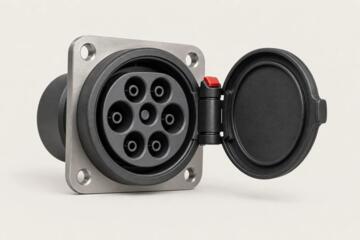
A plug-in hybrid adds a charge port. It runs on electric power until the battery is nearly depleted and then switches to the engine. The battery can be charged from a wall outlet or charging equipment, by the engine, or by braking.
Designs differ. In series plug-ins, only the electric motor drives the wheels and the engine just generates electricity; for short trips these may use no gasoline at all. In parallel or blended plug-ins, the engine and motor both drive the wheels, and electric-only driving generally happens at low speeds. Because of this, two plug-in hybrids with similar batteries can behave differently on a highway commute.
All-electric vehicle
An EV runs only on electricity, using one or more motors powered by rechargeable battery packs. Fueleconomy.gov says EVs convert over 77% of the electrical energy from the grid into power at the wheels, compared with about 12% to 30% of the energy in gasoline for conventional vehicles. Those are general figures, not a promise for any one car. For how battery size and charging power are written on a spec sheet, see this explanation of kW and kWh.
What the EPA label tells you
The window sticker presents all three types in a common format, but the figures mean different things on each.
- MPGe stands for miles per gallon of gasoline-equivalent: how far the vehicle goes on a quantity of energy equal to that in a gallon of gasoline. EPA states that a gallon of gasoline has the energy equivalent of 33.7 kWh of electricity, and that its MPGe values include charging losses, measured at the wall outlet.
- Driving range on the EV label is the approximate distance in combined city and highway driving on a full charge. The page says a vehicle may not actually travel that far.
- kWh per 100 miles is the estimated electricity use, which ties directly to cost.
- Charge time is for an empty battery on 240-volt service; a standard 120-volt household outlet takes longer.
The plug-in hybrid label has two fuel economy boxes. The left shows electric MPGe and the right shows gasoline MPG after the battery is depleted. Both are combined figures, a weighted average of city (55%) and highway (45%). It also shows an electric range, defined as the approximate distance on a fully charged battery. A conventional hybrid gets the standard gasoline label, with city, highway and combined MPG and no electric figures, since it never runs on grid electricity.
The mileage behind the cost figures
The labels' annual fuel cost and five-year comparison with the average new vehicle both assume 15,000 miles per year, with electricity and gasoline prices projected by the Energy Information Administration. Fifteen thousand miles a year is about 41 miles a day (15,000 ÷ 365). If you drive much less or much more, the label's dollar figures will not match yours, but the efficiency figures (MPG, MPGe and kWh per 100 miles) still apply.
Illustrative example of MPGe and cost
The Department of Energy's home charging page gives an example: a vehicle using 27 kWh per 100 miles, with electricity at 10.7 cents per kWh. These are the page's example figures, not a specific car or your local price.
MPGe = 33.7 ÷ (kWh per 100 miles ÷ 100)
     = 33.7 ÷ 0.27 = about 125 MPGe
Cost per mile = 0.27 kWh × $0.107 = about $0.029
Per 15,000 miles = 15,000 × 0.27 × $0.107 = about $433
Because EPA figures already include charging losses, your local electricity rate and your driving conditions are what move the result. The point is the method: the label's kWh per 100 miles, multiplied by your local rate, gives a per-mile cost you can compare against gasoline.
Match the drivetrain to your miles
EPA says that in the 2022 National Household Travel Survey, over 73% of passenger trips were 10 miles or less and over 98% were under 75 miles, and that EV range is "more than enough for typical daily use." Trips are not the same as days, since several trips add up, but the data shows that most single trips are short.
Illustrative example for a plug-in hybrid
Compared with a regular hybrid, a plug-in hybrid saves gasoline mainly on the miles it covers on electricity. Assume a hypothetical plug-in hybrid with a 40-mile electric range, charged fully every night, and a hypothetical year of 365 days:
300 days at 30 miles = 9,000 miles, all electric   -> 9,000
 50 days at 80 miles = 4,000 miles, 40 electric/day -> 2,000
 15 days at 200 miles = 3,000 miles, 40 electric/day -> 600
Total = 16,000 miles; electric = 11,600 miles
Electric share = 11,600 ÷ 16,000 = 72.5%
On the 80-mile days the car covers half the miles on electricity (40 ÷ 80), and on the 200-mile days only one fifth (40 ÷ 200). This example ignores cold weather, highway speed and blended operation, all of which can shorten electric range. If the same driver skipped charging, the electric share would fall toward zero, and the car would behave like a hybrid carrying a larger battery. The fueleconomy.gov plug-in hybrid page, which shows no date, says a plug-in hybrid can cost roughly $4,000 to $8,000 more than a comparable non-plug-in hybrid. It adds that fuel savings may or may not offset that cost, depending on the vehicle, the share of miles driven on electricity, fuel costs and how long you keep the car.
| Your situation | Hybrid | Plug-in hybrid | EV |
|---|---|---|---|
| Daily miles within electric range, charging at home | Works, but never uses grid electricity | Can cover most miles on electricity | Covers all miles on electricity |
| Daily miles often beyond electric range | No range limit; refuel with gasoline | Engine takes over when the battery is nearly depleted | Needs a charging stop on those days |
| No place to plug in at home or work | Needs no plug | Runs mostly as a hybrid | Depends on public charging |
| Frequent long trips | Gas stations only | Gas stations, with electric miles at each end | Needs fast-charging stops |
The table follows how each type is built, not any one model. Your own usage pattern matters more than any average.
Where you charge decides the fit
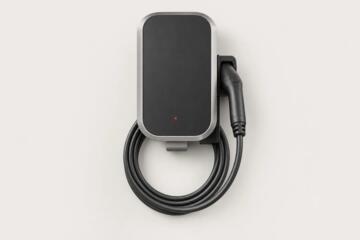
EPA says most EVs can charge from a standard 120-volt (Level 1) outlet, while a dedicated 240-volt (Level 2) outlet or system charges faster. The home charging page lists Level 2 equipment at 240 V. For charging times at home and on the road, see this look at how long an EV takes to charge.
Apartment and condo residents are in a different position. The Department of Energy says charging at multifamily housing "requires additional considerations" and may resemble public charging more than charging at a single-family home. EPA notes that some buildings offer charging stations as an amenity. If your parking space has no outlet, your building has no plans for one and you can't charge at work, a plug-in hybrid will mostly run on gasoline, and a conventional hybrid is the type that needs nothing from the building.
Purchase incentives have also changed. The IRS says the new clean vehicle credit is not available for vehicles acquired after September 30, 2025. For the background, read what happened to the federal EV tax credit, and check current state and utility programs before counting on any amount.
Cold weather and long trips
Cold affects all three, but by different amounts. According to fueleconomy.gov:
- Hybrids: city fuel economy can drop about 30% to 34% at 20°F compared with 77°F, according to an Oak Ridge National Laboratory analysis cited on the page. On short city trips, the typical loss is 25% to 45%, because the car spends more of a short trip at less-than-optimal temperatures.
- EVs: in mixed driving, fuel economy drops roughly 39% and range roughly 41%, from a 2019 AAA study. About two-thirds of the extra energy goes to heating the cabin. With the heater off, range at 20°F is about 12% lower than at 75°F.
- Plug-in hybrids: the page gives no percentage, but says cold weather also weakens battery performance, which affects regenerative braking, and suggests preheating while plugged in.
These figures are for tested conditions and vary by model. For a closer look at why real range differs from the sticker, see why your EV gets less range than the sticker says.
On long trips, a hybrid or a plug-in hybrid with an empty battery uses gasoline and refuels in minutes at any station. EVs need fast charging; fueleconomy.gov notes that even a fast charge to 80% of capacity can take 30 minutes. An EPA page last updated in June 2026 counts 219,000 public charging ports in the US. Whether those ports are on your route is something to check before buying.
Frequently asked questions
Does a hybrid need to be plugged in?
No. The Department of Energy states that a hybrid electric vehicle cannot be plugged in to charge its battery. It recharges through regenerative braking and the engine.
Does a high MPGe mean the EV uses gasoline?
No. An EV uses no gasoline. MPGe expresses the electricity used in terms of the energy in a gallon of gasoline, which EPA sets equal to 33.7 kWh, so you can compare vehicles that use different fuels.
Can an EV charge from a regular wall outlet?
Most EVs can, according to EPA, through a standard 120-volt (Level 1) outlet. A 240-volt outlet or system charges faster, and the label's charge time is measured on 240-volt service.
Will a plug-in hybrid run out of power?
Not as long as there is gasoline in the tank. After the battery is nearly depleted, the car switches to its engine, and the label's gasoline MPG figure applies. The engine and braking can also add some charge to the battery.
Is an EV realistic in an apartment?
It can be harder. The Department of Energy says charging at multifamily housing needs additional considerations, and EPA says charging stations are becoming a more common building amenity. Without a charger at home, you would rely on workplace or public charging.
A checklist before you shop
- Write down your typical weekday miles, your longest regular trip, and how many long trips you take in a year.
- Confirm where the car will park overnight and whether an outlet or a 240-volt circuit is available there or at work.
- Look up each candidate's label figures on fueleconomy.gov: electric range, MPGe or MPG, kWh per 100 miles and charge time.
- Apply your local electricity and gasoline prices to those per-mile figures instead of relying on the label's 15,000-mile estimate.
- Allow for winter: cut an EV's label range by a wide margin if your winters are near or below 20°F and you use the cabin heater.
- Check public charging on your regular long routes, and read the battery section of the warranty; see what an EV battery warranty covers.
This article is general education about vehicle types and EPA label figures. It is not financial advice, and figures from the Department of Energy and EPA are examples or estimates that vary by vehicle, location and driving.
Sources
- How Do Hybrid Electric Cars Work? U.S. Department of Energy, Alternative Fuels Data Center
- How Do Plug-In Hybrid Electric Cars Work? U.S. Department of Energy, AFDC
- Charging at Home, U.S. Department of Energy, AFDC
- Hybrid vehicle technology, fueleconomy.gov (DOE and EPA)
- Plug-in hybrids, fueleconomy.gov
- All-electric vehicles, fueleconomy.gov
- Learn more about the plug-in hybrid label, fueleconomy.gov
- Learn more about the electric vehicle label, fueleconomy.gov
- Cold weather and fuel economy, fueleconomy.gov
- Learn more about the gasoline vehicle label, fueleconomy.gov
- Fuel Economy and EV Range Testing, U.S. EPA
- Electric Vehicle Myths, U.S. EPA
- Credits for New Clean Vehicles Purchased in 2023 or After, IRS