Modern Pickup Landscape
The truck market has shifted significantly over the last decade. Mid-size trucks have grown to the size of full-size trucks from the late 1990s, while modern full-size pickups have become luxury mobile offices with immense capabilities. To choose correctly, you must look past the aesthetic and focus on the "duty cycle"—how often you actually need the maximum capacity of the vehicle.
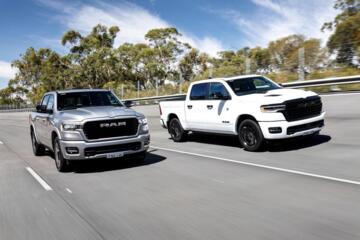
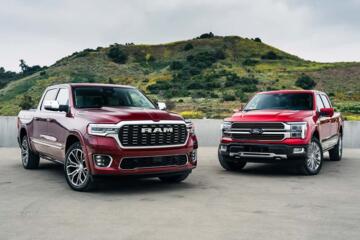
In practice, a mid-size truck like the Toyota Tacoma or Chevrolet Colorado is designed for those who prioritize off-road agility and urban parking. Conversely, a full-size Ford F-150 or Ram 1500 is a tool for heavy-duty labor and long-distance family hauling. According to 2024 market data, full-size trucks consistently lead sales in North America, yet mid-size sales are surging among "lifestyle" buyers who find full-size dimensions impractical for standard 20-foot suburban garages.
A key technical distinction lies in the width. A typical mid-size truck is roughly 73 to 75 inches wide, whereas a full-size truck pushes 80 inches or more. Those five to seven inches are the difference between comfortably navigating a tight drive-thru or multi-story parking garage and scraping your side mirrors. Statistically, full-size trucks offer roughly 25-40% more interior volume, making them the default choice for crews of four or more adults.
Miscalculating Capacity
The most common mistake buyers make is "buying for the 1%." This occurs when a consumer purchases a massive heavy-duty truck because they might tow a boat once a year, despite spending 364 days a year struggling to find parking in the city. This leads to excessive fuel costs and accelerated depreciation if the vehicle is used primarily for short-distance commuting.
Underestimating needs is equally dangerous. Attempting to tow a 6,500-lb trailer with a mid-size truck rated for 7,000 lbs may be legally possible, but it is physically taxing on the transmission and brakes. In a crosswind on a highway, the lower mass of a mid-size truck allows the trailer to "boss" the vehicle around, leading to dangerous sway. Real-world situations often involve owners burning through brake pads every 15,000 miles because they pushed their mid-size platform beyond its comfort zone.
Furthermore, "Payload Creep" is a silent killer of truck longevity. Many buyers look at towing capacity but ignore the payload (the weight of people, fuel, and gear inside the truck). A mid-size truck with four adults and a bed full of camping gear can easily exceed its 1,100-lb payload limit before a trailer is even attached. This results in bottomed-out suspension and compromised steering geometry.
Solutions for Every Case
Prioritize Maneuverability and Trail Performance
If your weekends involve tight wooded trails or technical off-roading, the mid-size segment is objectively superior. The narrower track and shorter wheelbase allow for a tighter turning radius—often 3 to 5 feet less than a full-size counterpart. Using tools like OnX Offroad to map trails will quickly show that many "Level 3" trails are impassable for wider full-size rigs without significant "trail stripes" (scratches).
Maximize Interior Ergonomics for Families
For those using a truck as a primary family vehicle, the full-size segment is non-negotiable. Full-size "Crew Cab" models offer rear legroom comparable to luxury limousines (often exceeding 43 inches). This allows for rear-facing car seats without pushing the driver’s seat into the dashboard. In contrast, many mid-size rear seats are upright and cramped, making them unsuitable for passengers over six feet tall on long trips.
Calculate the Real Cost of Towing
When towing more than 5,000 lbs regularly, the full-size truck's wider footprint provides a more stable lever against the trailer. Modern full-size trucks offer integrated tech like Ford’s Pro Trailer Backup Assist or GMC’s Transparent Trailer View. These systems use multiple camera feeds to "see through" the trailer, a feature rarely found with the same level of sophistication in the mid-size segment.
Optimize Fuel Economy and Daily Expenses
While full-size trucks have improved, mid-size trucks generally win at the pump. A Chevrolet Colorado with a 2.7L Turbo engine will consistently outperform an F-150 with a V8 in city stop-and-go traffic. Over a 5-year ownership period, the 3–5 MPG difference can save an owner upwards of $4,000 in fuel costs, depending on current gas prices and annual mileage.
Evaluate Bed Utility and Cargo Volume
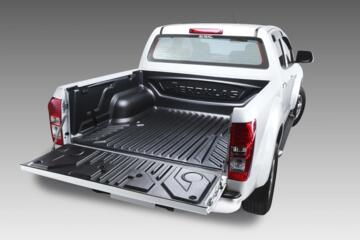
The "standard" bed on a mid-size truck is usually 5 feet long, which cannot fit a standard 4x8 sheet of plywood flat. Full-size trucks offer wider beds (50+ inches between wheel wells) that allow construction materials to lay flat. If you are a DIY enthusiast frequently visiting Home Depot or Lowe's, the time saved in securing loads in a full-size bed is a major efficiency gain.
Factor in Insurance and Maintenance Premiums
Insurance premiums are typically 10-15% higher for full-size trucks due to higher replacement costs and the potential for greater liability damage. Maintenance on full-size trucks also involves larger, more expensive tires (often $300+ per tire) and higher oil capacities. Using a service like CarEdge to compare 5-year maintenance costs reveals that mid-size trucks remain the more budget-friendly long-term asset.
Real-World Case Studies
Case Study 1: The Independent Landscaper
A small landscaping startup in Austin, Texas, initially purchased a mid-size fleet to save on upfront costs. However, they found that their 3,500-lb equipment trailers, when combined with bags of mulch in the bed, caused the trucks to overheat in the summer. They traded for two full-size RAM 1500s. The result: fuel efficiency stayed nearly identical because the larger engines weren't straining, and their maintenance downtime decreased by 22% over 18 months.
Case Study 2: The Weekend Overlander
A software engineer wanted a vehicle for commuting and weekend trips to the Rockies. They bypassed the popular full-size trucks for a mid-size Nissan Frontier PRO-4X. Because the truck fit into their apartment’s parking garage (which had a 6’6” height limit), they avoided $200/month in off-site parking fees. The smaller dimensions allowed them to access secluded campsites that larger trucks had to pass by.
Comparative Analysis
| Feature | Mid-Size Trucks | Full-Size Trucks |
|---|---|---|
| Max Towing Range | 5,000 – 7,700 lbs | 8,000 – 14,000 lbs |
| Average Width | 73 – 75 inches | 79 – 81 inches |
| Rear Legroom | 30 – 35 inches | 40 – 44 inches |
| Payload Capacity | 1,000 – 1,600 lbs | 1,500 – 3,300 lbs |
| Best For | City driving, trails, light DIY | Towing, families, heavy work |
Common Pitfalls to Avoid
Don't fall for the "Max Towing" marketing trap. Manufacturers often list a maximum towing capacity that is only achievable with a specific, stripped-down base model with a regular cab. The highly-optioned luxury trim you actually want will likely have a significantly lower capacity because the weight of the sunroof, leather seats, and premium audio eats into the Gross Combined Weight Rating (GCWR).
Another error is ignoring the "Garage Test." Measure your garage depth before buying a full-size truck. Many modern suburban garages are 20 feet deep, while a full-size Crew Cab with a standard bed can be 19.5 to 20.2 feet long. Leaving a $60,000 vehicle in the driveway because it’s two inches too long for the garage leads to premature weathering and increased theft risk.
Finally, avoid skipping the "blind spot test" during a test drive. Full-size trucks have massive hoods that create a significant blind spot immediately in front of the vehicle. If you live in a neighborhood with many pedestrians or small children, ensure the truck is equipped with front-facing cameras or 360-degree bird's-eye view systems like those found in the Toyota Tundra.
FAQ
Can a mid-size truck tow a camper?
Yes, but keep it under 5,000 lbs loaded. While many are rated for more, the aerodynamic drag of a tall camper trailer creates significant strain. For heavy, dual-axle campers, the stability of a full-size truck is much safer.
Is the fuel economy difference really that big?
In highway driving, the gap is narrowing due to 10-speed transmissions and cylinder deactivation. However, in city driving, a mid-size truck typically saves 15-20% on fuel compared to a V8 full-size truck.
Which is better for resale value?
Mid-size trucks, particularly the Toyota Tacoma, historically hold their value better than almost any other vehicle class. Full-size trucks also have high resale, but they are more sensitive to fluctuations in gas prices.
Do full-size trucks last longer?
Not necessarily. While full-size components (axles, transmissions) are "beefier," they also carry more weight. Longevity is more dependent on maintenance schedules and the quality of the specific powertrain than the size of the chassis.
Which is easier to drive for beginners?
The mid-size truck is far more intuitive. The visibility is better, the braking distances are generally shorter, and it feels less "boaty" when taking corners or changing lanes on the interstate.
Author’s Insight
After a decade of testing pickups across the American Southwest, I’ve found that most people who think they need a full-size truck are actually better served by a well-equipped mid-size. I’ve seen too many owners regret the daily stress of navigating a massive heavy-duty rig through a crowded downtown just for the sake of "having enough truck." My rule of thumb: if you aren't towing more than 5,000 lbs at least once a month, go mid-size and enjoy the thousands of dollars you'll save in fuel and frustration. The modern mid-size platform is more capable than most people realize.
Summary
Choosing between a mid-size and full-size truck comes down to a honest assessment of your space constraints and your most frequent tasks. A mid-size truck offers the agility and efficiency needed for urban life and off-road adventures, while a full-size truck remains the king of the job site and family road trips. Before signing any papers, measure your garage, check the payload sticker on the door jamb, and prioritize the features you will use daily over the capacities you might only use once a year. Make your decision based on your 90% use case for the most satisfying ownership experience.