200k Mile Threshold
The 200,000-mile mark is a psychological barrier for many, but in the world of heavy-duty and full-size pickups, it is often just the midway point of a vehicle’s lifecycle. Modern metallurgy and synthetic lubricant technology have shifted the definition of "high mileage." Where a truck from the 1970s was considered exhausted at 100,000 miles, today's top-tier engines—particularly naturally aspirated V8s and inline-six turbodiesels—are designed with B10 lives that target much higher figures.
In my experience inspecting fleet vehicles, the difference between a truck that dies at 150k and one that hits 300k isn't just luck; it’s the architecture. For instance, the transition from timing belts to chains and the use of cast-iron blocks versus early aluminum alloys significantly impact long-term fatigue. Statistics from iSeeCars frequently show that the Toyota Tundra and Honda Ridgeline lead the pack, with over 15% of some model years reaching the 200k milestone, nearly double the industry average for all vehicles.
One notable fact: The legendary 5.9L Cummins diesel engine, found in older Ram trucks, is known for a "B50" life of 350,000 miles. This means 50% of these engines are expected to reach that distance before needing a major overhaul, provided basic maintenance is performed. This level of over-engineering is what creates the "bulletproof" reputation sought by contractors and long-haul towers.
High-Mileage Buying
The most frequent mistake buyers make is prioritizing low odometer readings over comprehensive service history. A truck with 220,000 miles and a stack of oil change receipts is objectively a better purchase than one with 140,000 miles and an unknown past. Neglect in the first 100k miles—such as extending oil intervals beyond 7,500 miles on conventional oil—leads to sludge buildup that restricts oil flow to variable valve timing (VVT) solenoids and cam phasers.
Another critical pain point is the "deferred maintenance cascade." When a water pump or thermostat fails, many owners limp the truck home. This slight overheating can warp heads or compromise head gaskets, leading to "mystery" coolant loss months later. In many modern engines, like the Ford 5.0L Coyote or GM 5.3L EcoTec3, cooling system integrity is the primary gatekeeper of the 200k+ club.
Furthermore, buyers often overlook the transmission. A robust engine is useless if the 6L80 or 10R80 transmission fails due to heat. Failure to install or maintain an auxiliary transmission cooler in towing applications is the number one killer of otherwise reliable pickups. The consequences are stark: a $5,000 to $7,000 replacement bill that often exceeds the residual value of the truck itself.
Engineering Winners
Toyota Tundra (2007–2021) with the 5.7L V8 (3UR-FE)
The 3UR-FE is arguably the most reliable gasoline engine ever put in a full-size pickup. It utilizes a massive timing chain, a forged steel crankshaft, and an overbuilt cooling system. To reach 300,000 miles, owners should replace the secondary air injection pumps early and watch for "valley plate" coolant leaks. Using high-quality 0W-20 synthetic oil is non-negotiable to protect the intricate VVT-i system.
Ford F-150 (2011–2017) with the 5.0L "Coyote" V8
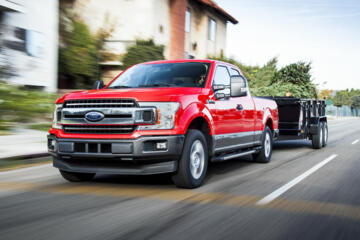
While the EcoBoost engines are powerful, the naturally aspirated 5.0L is the longevity king for Ford. It lacks the complex twin-turbo plumbing and high-pressure fuel pump stresses of its siblings. The key to 200k+ miles here is cooling system maintenance. Replace the molded coolant hoses and the water pump every 100,000 miles to prevent the overheating issues mentioned earlier. These trucks regularly see 250,000 miles in municipal fleet service.
Chevrolet Silverado / GMC Sierra (1999–2006) with the 4.8L/5.3L Vortec
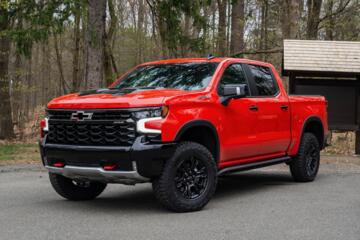
Known as the "GMT800" platform, these trucks are the gold standard for budget-friendly longevity. The LS-based small-block engines are incredibly simple. There is no Active Fuel Management (AFM) to cause lifter failure—a major issue in 2007+ models. If you buy one today, replace the knock sensors and intake manifold gaskets immediately. With these $200 fixes, the engine can easily cruise to 300,000 miles.
Ram 2500/3500 (1994–2007) with the 5.9L Cummins Turbo Diesel
The 12-valve and early 24-valve Cummins engines are industrial-grade powerplants. They utilize a gear-driven timing system (no belts or chains to break). The "Killer Dowel Pin" (KDP) is the only major engine-killing flaw, which can be fixed with a simple $50 tab kit. While the Dodge bodies may rust or the dashboards crack, the mechanical heart of these trucks is frequently found with 400,000+ miles on original internals.
Honda Ridgeline (2006–2014) with the 3.5L V6
Often dismissed by "truck purists," the first-gen Ridgeline is a reliability titan. It’s essentially a ruggedized Pilot with a bed. The J35 engine is legendary for its smoothness and longevity. The critical requirement here is the timing belt and water pump service every 105,000 miles. If you perform that one service, these trucks will hit 250,000 miles with nothing more than basic brake and tire swaps.
Nissan Titan (2004–2015) with the 5.6L VK56DE
The first-generation Titan is a sleeper in the reliability world. The VK56 is a heavy-duty engine with a massive cast-iron block. While early models had issues with rear differential seals and cracked exhaust manifolds, the core rotating assembly is nearly indestructible. Many owner-operators in the Southwest US report 300,000-mile lives with only minor bolt-on repairs.
Longevity Case Studies
Case Study 1: The Delivery Fleet Specialist
A regional delivery company in Ohio operated a fleet of ten 2013 Ford F-150s with the 5.0L V8. By 2022, eight of the ten trucks had surpassed 240,000 miles. Their secret? A strict 5,000-mile oil change interval using Motorcraft Semi-Synthetic oil and a proactive transmission fluid flush every 60,000 miles. Total unscheduled downtime across the fleet was less than 4% over nine years.
Case Study 2: The Million-Mile Tundra
Victor Sheppard’s 2007 Toyota Tundra is a famous industry example. He clocked over 1,000,000 miles on the original engine and transmission. While this is an extreme outlier, teardown analysis by Toyota engineers revealed that the engine internals were still within factory tolerances. The primary factor was consistent highway cruising and over 117 documented dealership service visits, proving that the machine's limit is often defined by the owner's discipline.
Reliability Leaders
| Model & Engine | Longevity | Risks & Maintenance |
|---|---|---|
| Toyota Tundra 5.7L | 350,000+ Mi | Check valley plate leaks; starter access is difficult. |
| Ford F-150 5.0L | 250,000+ Mi | Refresh coolant system; monitor water pump. |
| GM 1500 V8 | 300,000+ Mi | Apply anti-corrosion; watch fuel pump and rust. |
| Ram 2500 Diesel | 500,000+ Mi | Upgrade trans cooler; protect 47RE/48RE trans. |
| Honda Ridgeline 3.5L | 250,000+ Mi | Mandatory timing belt change every 100k miles. |
Avoiding Costly Errors
The biggest error is ignoring the "ancillaries." A reliable engine is frequently killed by a $15 serpentine belt that snaps and wraps around the fan, or a $40 radiator cap that fails to hold pressure. When a truck passes 150,000 miles, the rubber components are the primary risk. Inspecting for dry rot in vacuum lines and coolant hoses can prevent "limp mode" incidents that leave you stranded.
Another mistake is using the wrong fluids. Many high-mileage GM and Ford trucks require very specific transmission fluids (Dexron VI or Mercon V/LV). Mixing these with "universal" fluids from a big-box store can lead to shuddering and clutch plate degradation. Always cross-reference the owner's manual with the specific VIN to ensure fluid compatibility.
Finally, do not ignore the differential. Most owners never change the gear oil in the rear end. By 200,000 miles, that oil is often a metallic slurry. A simple drain and fill with 75W-90 synthetic gear lube can extend the life of the ring and pinion gears indefinitely, saving you a $1,200 rear-end rebuild.
FAQ
Is it worth buying a truck with 200,000 miles?
Yes, if the price reflects the mileage and there is proof of maintenance. Specifically, look for models like the Toyota Tundra or pre-2007 Chevy Silverados, which have documented histories of reaching 300k+ miles without engine overhauls.
Which engine is better for long-term use: Diesel or Gas?
Historically, diesels like the 5.9L Cummins lasted longer. However, modern diesels (post-2007) have complex emissions systems (DPF, DEF, EGR) that are very expensive to repair at high mileage. For most users, a naturally aspirated gasoline V8 is now the lower-risk long-term option.
What is the first thing I should do after buying a high-mileage truck?
Perform a "Baseline Service." Change the oil, coolant, transmission fluid, and differential oil. Replace the engine air filter and inspect the spark plugs. This resets the maintenance clock and allows you to spot potential issues early.
How do I check for engine health without a mechanic?
Check the oil fill cap for "milky" residue (indicates head gasket failure). Listen for "ticking" at idle (could be lifters or exhaust leaks). Finally, look at the color of the transmission fluid; it should be red/pink, not black or smelling burnt.
Does 4WD affect reliability?
4WD adds complexity, such as a transfer case and front CV axles. While generally reliable, these parts require their own fluid changes. If you don't need 4WD, a 2WD model is simpler and cheaper to maintain over 200,000 miles.
Author’s Insight
In my two decades of analyzing automotive durability, I’ve found that the "best" truck is the one that was owned by a meticulous individual rather than a corporation. While fleet trucks are maintained, they are often driven hard. My personal recommendation for anyone seeking a 200,000-mile hero is to find a single-owner Toyota Tundra or a "Cateye" Chevy Silverado. These platforms were built during an era where mechanical simplicity was prioritized over complex cabin electronics, making them much easier and cheaper to keep on the road today.
Summary
Reaching the 200,000-mile mark is no longer an anomaly for well-engineered pickups like the Toyota Tundra, Ford F-150 (Coyote), and older GM Vortec models. The key to success lies in selecting naturally aspirated engines, avoiding early-generation cylinder deactivation systems, and adhering to a rigorous fluid-management schedule. To maximize your investment, prioritize a documented service history over aesthetic perfection. If you are looking for a high-mileage workhorse, start by inspecting the cooling system and transmission health—these are the true gatekeepers of automotive longevity.