A minivan and a three-row SUV can both carry six to eight people, so the choice comes down to details that spec sheets rarely compare: how a child gets into the third row, how many car seat anchors the vehicle has and where they are, and what is left of the cargo floor with every seat in use. Federal rules set only a minimum for child seat anchors, so two vehicles of the same size can differ a lot. The sections below show what to check on any specific vehicle, whichever body type it is.
Key takeaways
- Federal rules require only two full child seat anchor sets (two lower anchors plus a tether anchor) in a vehicle with three or more forward-facing rear seating positions, plus a tether anchor at a third position. Extra positions are the manufacturer's choice.
- A third row is not guaranteed to have any anchors: the third required tether anchor can sit in the second row. Count the actual positions in the owner's manual before assuming a car seat fits there.
- The IIHS LATCH rating measures how easy anchors are to use, not whether an installation is safe, and it applies only to the trim and seat type IIHS evaluated.
- Lower anchors have a weight limit: for car seats made on or after February 27, 2015 whose weight plus maximum child weight tops 65 pounds, the label states the maximum child weight for a lower-anchor installation.
- AWD availability and towing ratings differ by model and trim in both body types, so check them for the exact vehicle instead of by body style.
How the two body types are defined
EPA sorts vehicles for fuel economy purposes by gross vehicle weight rating (GVWR), the vehicle's own weight plus its carrying capacity. According to the fueleconomy.gov FAQ, minivans are a class under 8,500 lbs GVWR, while sport utility vehicles split into small SUVs (under 6,000 lbs) and standard SUVs (6,000 to 9,999 lbs) as of 2013. Those ranges overlap, so GVWR sets weight limits within each class rather than deciding whether a vehicle is a minivan or an SUV. Either way, a class label is a regulatory category, not a promise about seating or doors.
What families notice is more practical. Minivans normally have sliding rear side doors; three-row SUVs normally have conventional hinged rear doors. Seat layouts also vary inside each body type: a second-row bench and second-row captain's chairs give different anchor counts and different paths to the third row. Treat everything in this article as a "check this on the vehicle" item rather than a rule about body type.
Doors and third-row access
A sliding door swings nothing into the next parking space, and a hinged door does. That much follows from how they work. How easy the third row is to reach depends on the specific seat design: whether the second row slides or tips forward, whether it can do so with a car seat still installed, and how wide the opening is. No federal agency publishes a comparable measure, so the test is a hands-on one.
- Install the family's own car seat in the second row, then try to reach the third row as an older child and as an adult would.
- Check whether the second-row seat can still tip or slide with the seat installed, and whether the owner's manual allows it.
- Try the third-row seat belt buckles: some are easy for a child to reach, others sit low between cushions.
- Open each door in the narrowest space where the vehicle is usually parked.
Car seat anchors: the legal minimum
LATCH stands for Lower Anchors and Tethers for Children. Under federal standard FMVSS 225, a child restraint anchorage system is two lower anchorages plus one tether anchorage at the same seating position. The current rule, as written in 49 CFR 571.225, sets these minimums:
- Three or more forward-facing rear seating positions: at least two of them must have a full anchorage system, and in a vehicle with three or more rows, one of those must be in the second row if that row has a forward-facing position. A third forward-facing rear position, in any row, needs a tether anchor.
- Two or fewer forward-facing rear positions: each position needs a full system.
The standard does not set a separate third-row count. In a seven-seat vehicle with second-row captain's chairs, the minimum can be met with two full second-row systems and one tether anchor in the third row. In a vehicle with a three-wide second-row bench, the third tether anchor can sit in the middle of that bench, which leaves the third row with no anchors at all. Any extra anchors are a design choice, and design choices differ between models, between trims and between bench and captain's chair layouts. That is why counting positions on the specific vehicle matters more than the body style.
Age matters when buying used. The 1999 final rule phased the requirements in: tether anchors from September 1, 1999 in most passenger cars and from September 1, 2000 in light trucks and multipurpose vehicles, and lower anchors over three years starting September 1, 2000. Lower anchors became required in all new vehicles of the covered types from September 1, 2002, so an older used minivan or SUV may have fewer of them or none.
Federal rules also put the burden of explaining on the manufacturer. The same standard requires written instructions that indicate which seating positions have tether anchors and full anchor systems and that explain the markings used to find them. That usually means the owner's manual, so the manual is the first place to look; a vehicle's online manual can usually be checked before a visit.
Finding anchors, reading ratings
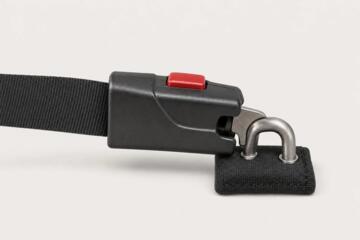
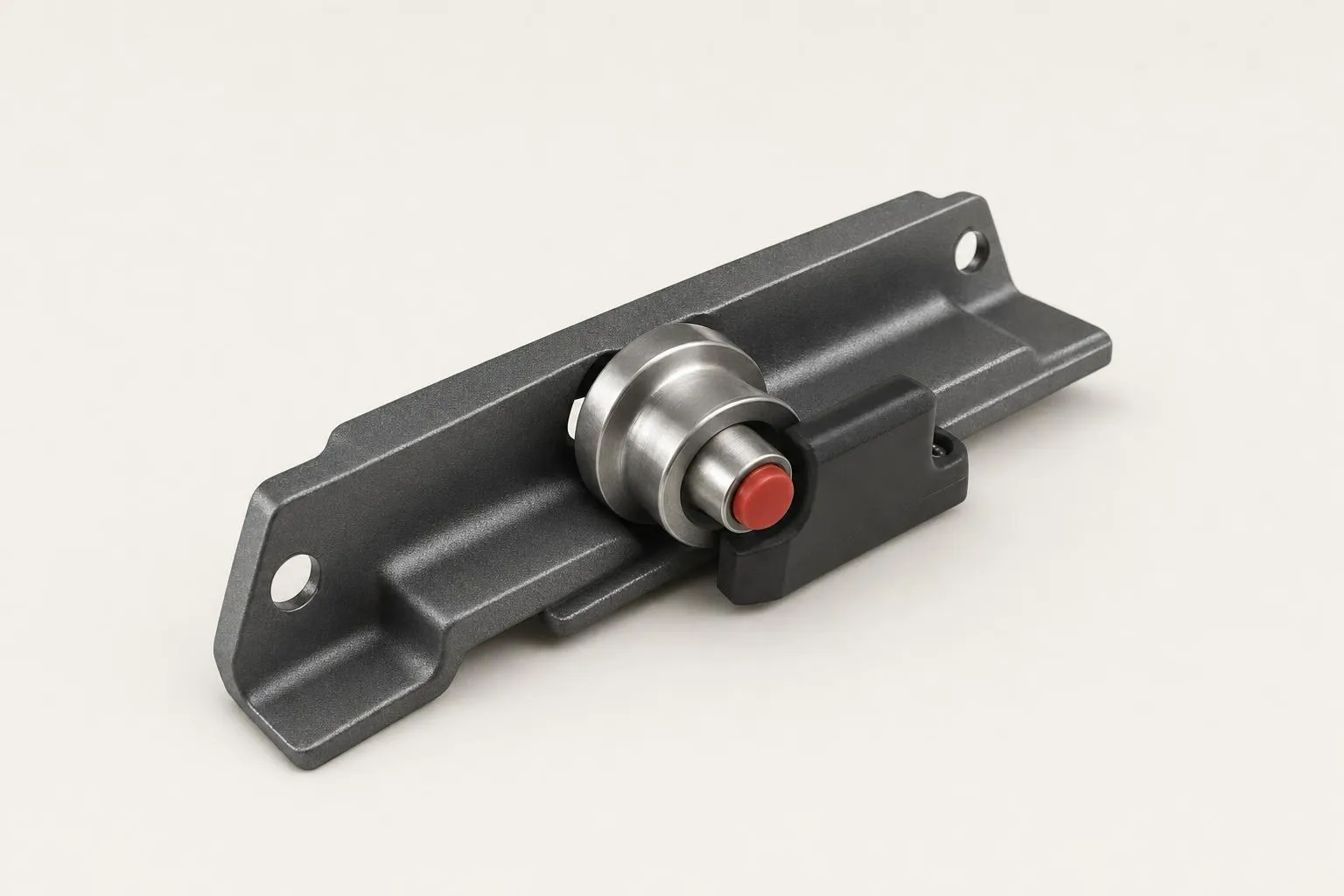
Lower anchors are marked with a circle or symbol on the seat, or placed so the bars are visible without pressing the cushion, and tether anchors carry a pictogram, according to FMVSS 225 (sections S6.4 and S9.5). Covers over anchors are allowed if they carry the marking, and the vehicle's written instructions have to explain what the markings mean. Finding the marking and the manual page before the car seat comes out of the box saves time at the dealership.
The Insurance Institute for Highway Safety (IIHS) adds a layer the law does not: it rates how easy the hardware is to use. The IIHS LATCH page says lower anchors are judged on accessibility, clearance angle and attachment force, and tether anchors on location (rear deck, or in the top 85 percent of the seatback, or within 24 inches of the top) and whether nearby hardware is clearly labeled. A Good rating requires criteria met in two seating positions, plus a third tether anchor if there are more than two rear positions. Good+ needs another LATCH position, and in three-row vehicles tether anchors in all seating positions. IIHS states that a poor rating means installing a child restraint will be harder, not that the connectors are unsafe.
Two limits apply. The IIHS minivan ratings table notes that a LATCH rating applies only to the specific trim level and seat type evaluated, shown on the vehicle details page. And a vehicle may simply be not rated. For an unrated vehicle, the owner's manual and an in-person check are the only tools. A comparison of LATCH and seat belt installation covers when the belt is the better route, and the difference between IIHS and NHTSA crash ratings explains why a crash rating and a LATCH rating answer different questions.
The 65-pound lower-anchor limit
Lower anchors do not carry every child indefinitely. Under FMVSS 213, for child restraints manufactured on or after February 27, 2015, if the seat's weight plus its maximum child weight is greater than 65 lb, the installation diagram label must say not to install by this method for a child weighing more than a stated number. The rule covers rear-facing as well as forward-facing use. Seats whose weight plus maximum child weight stays at or under 65 lb don't need the warning. The basic relationship is simple:
max child weight on lower anchors = 65 lb − weight of the car seat
Here, 65 lb is the combined limit and the seat weight is usually listed in the seat's manual or specifications. Illustrative example, with round seat weights: a forward-facing seat weighing 18 lb leaves 65 − 18 = 47 lb for the child. A 24 lb seat leaves 41 lb, and a 30 lb seat leaves 35 lb. The heavier the seat, the earlier the family has to switch to a seat belt installation as the seat's manual describes. The standard also allows the limit to be taken from weight tables set out in the regulation itself, in 5 lb steps, so the printed number can differ from this subtraction. The lesson is that a bulky convertible or combination seat can reach its lower-anchor limit sooner than expected, so the vehicle's lower anchors are not a long-term plan; the seat's own label gives the actual number, and the manuals for both seat and vehicle are worth reading.
Cargo, AWD and towing
Cargo space behind the third row is where the two body types most often look alike on paper and differ in use. Manufacturers publish a figure in cubic feet, but a single number does not show the shape of the space, whether the third row folds flat or sits in a floor well, or how the stroller fits. Check it with the real items: the stroller, the largest car seat you own, and the weekly groceries. Look at the back of the third row too. The IIHS LATCH criteria say tether anchors should not sit on the vehicle's floor or ceiling and that nearby hardware should be clearly labeled. Match each loop to the tether pictogram and the manual before clipping a tether to it.
Drivetrain is a trim-level question in both body types. The fueleconomy.gov Power Search has a Drive filter (front-wheel, rear-wheel, four-wheel/all-wheel) and a Market Class filter that includes Minivans and SUVs, so you can see which versions exist and compare combined mpg. It has no three-row filter, so the seat count has to be confirmed separately. If the plan includes snow or steep driveways, a plain-language comparison of AWD and 4WD shows what each system does and does not do.
Towing ratings are set per vehicle, and they depend on engine, drivetrain, equipment and trim. A breakdown of where towing ratings come from explains the logic for trucks, and the same habit applies here: read the number in the owner's manual for the exact configuration, not on a general body-type impression, and compare it with the trailer's loaded weight.
Frequently asked questions
Does a third row have to have lower anchors?
No, and it does not have to have a tether anchor either. FMVSS 225 requires a tether anchor at a third forward-facing rear position, but that position can be in the second row, for example the middle of a three-wide bench. Many vehicles provide more than the minimum, so the owner's manual is the place to confirm.
Is a poor LATCH rating a safety problem?
IIHS says a poor rating does not mean the connectors are unsafe; it means installing a child restraint will be harder in that vehicle. A correctly installed seat, by LATCH or by seat belt, is the goal. The rating also covers only the trim level and seat type tested.
How can I tell where the anchors are without removing cushions?
Look for the permanent circle or symbol on the seat for lower anchors and the pictogram for tether anchors, which FMVSS 225 requires. Some lower anchors are left unmarked because the bars are visible without pressing on the cushion. Covers over anchors must carry the marking, and the vehicle's written instructions must explain what the markings mean.
Can I filter AWD vehicles by body type on fueleconomy.gov?
Yes. Power Search lets you combine the Market Class filter (Minivans, SUVs, among others) with the Drive filter, which includes four-wheel/all-wheel. It does not show seat count, so confirm third-row seating on the maker's page.
Does the EPA class show how big a vehicle is?
Not really. The fueleconomy.gov FAQ lists minivans under 8,500 lbs GVWR, small SUVs under 6,000 lbs and standard SUVs from 6,000 to 9,999 lbs. Those ranges overlap, and GVWR is a weight rating, not a measure of seats or cargo room, so seating and cargo space have to be checked on the vehicle itself.
A dealership checklist
This is educational information, not individual child-safety advice; a vehicle's and a car seat's own manuals decide what is allowed for a particular child.
- Open the owner's manual online and write down which seating positions have lower anchors and which have tether anchors, especially for a used vehicle built before September 2002.
- Look up the vehicle on the IIHS LATCH page and note the trim and seat type that were rated, or that it is not rated.
- Bring the family's real car seats and install them in the positions the family will use; try the third-row route with them in place.
- Subtract each seat's weight from 65 lb (a 24 lb seat leaves 41 lb) for a rough idea, then use the child-weight limit on the seat's label, which is the number that applies.
- Load the stroller and cargo behind the third row with every seat up.
- Use Power Search for the drivetrain and mpg of the exact version, and read its towing figure in the manual if a trailer is planned.
Sources
- 49 CFR 571.225, Standard No. 225, Child restraint anchorage systems (eCFR)
- NHTSA final rule on child restraint anchorage systems, Federal Register, March 5, 1999 (GovInfo)
- 49 CFR 571.213, Standard No. 213, Child restraint systems (eCFR)
- IIHS, LATCH ease-of-use evaluation
- IIHS, current vehicle ratings for minivans
- fueleconomy.gov, Frequently asked questions (vehicle classes)
- fueleconomy.gov, Power Search