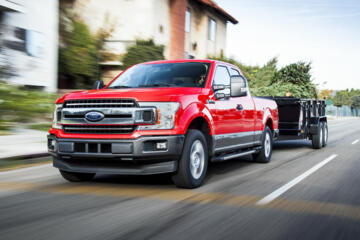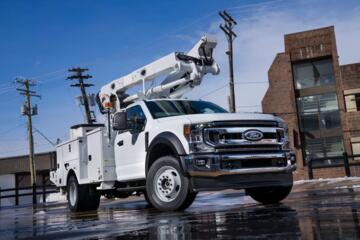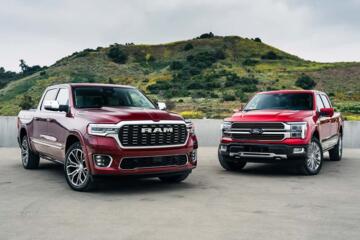
Half-Ton vs 3/4-ton
“Half-ton” and “three-quarter-ton” are marketing labels tied to payload class, not a strict curb-weight rule. In practice, the difference shows up in axle ratings, suspension tuning, and the truck’s ability to carry weight without running out of margin.
Skip the badge guessing. It hides the real limits. A typical half-ton might be rated around 1,500–2,300 lb payload, while a three-quarter-ton often lands closer to 2,500–3,500 lb, depending on configuration.
Skip the towing brochure math. It ignores payload. Many buyers discover that a “10,000 lb tow rating” still leaves only a few hundred pounds of payload after passengers, hitch weight, and cargo.
Real-world usage matters because heat and wear scale with load. A long grade at highway speed can push transmission temperatures and engine coolant temps higher, especially when the truck is near its maximum payload.
Industry practice also matters: SAE J2807 defines how manufacturers rate towing on modern pickups, including test procedures and equipment assumptions. That rating still doesn’t cover every trailer setup, tire choice, or how you drive.
Fuel economy is another hard number. A loaded 3/4-ton often returns noticeably lower mpg than a similarly driven half-ton, because the engine, gearing, and curb mass differ.
What Buyers Get Wrong
People often assume “3/4-ton” means “twice as strong,” then buy based on towing numbers alone. The more common mistake is ignoring payload and axle limits, which are what you feel day to day.
Skip the “it tows fine empty” test. It lies about stability. A truck that feels steady without a load can feel busy when the trailer’s tongue weight and cargo shift the center of gravity.
Consequences show up as earlier maintenance and faster wear. Higher loads increase brake temperatures, accelerate tire wear, and can shorten service intervals for transmission fluid and differentials if you tow frequently.
Fleet managers see the pattern: trucks used for repeated towing cycles tend to rack up higher brake and tire costs per mile than trucks used for light-duty hauling. That cost gap can show up even when the truck’s purchase price difference looks small.
Real-world situations are predictable. A contractor towing a 7,000–9,000 lb equipment trailer every weekend may run a half-ton near its payload limit, then switch to a 3/4-ton after brake fade complaints and tire replacements arrive too soon.
Another common issue is cab practicality. A 3/4-ton often comes with different seat heights and wider turning radius, which can matter in tight job sites and school drop-offs.
How to Choose with Numbers
Start with payload math
Do the payload worksheet before you compare tow ratings. Use the truck’s door-jamb payload figure, then subtract passengers, tools, and cargo.
Skip the “tow rating only” mindset. It misses the hitch-weight reality. Trailer tongue weight commonly lands around 10–15% of trailer weight, so a 9,000 lb trailer can put 900–1,350 lb on the hitch.
In practice, a half-ton with 1,900 lb payload may leave you with only a few hundred pounds after passengers and hitch weight. That’s when you start feeling the rear suspension squat and the headlights aim higher than you want.
Use a simple tool: a spreadsheet with your typical load weights. I’ve seen buyers forget that a toolbox and fuel cans add up faster than they expect, especially on work weeks.
Outcome target: buy the truck so your typical loaded payload stays at or below about 70–80% of the published rating for repeat towing. That margin reduces brake heat and keeps transmission shifting calmer.
Match axle and gearing
Check the axle ratio and gross axle weight rating (GAWR) in the spec sheet. A 3/4-ton often pairs heavier axles and different gearing, which can help with towing on grades.
Skip the “engine horsepower only” comparison. It ignores how the truck multiplies torque. Lower numerical axle ratios can feel fine empty, then hunt on hills when the transmission searches for the right gear.
In practice, a truck with a 3.73 or 4.10 axle ratio may hold lower gears longer under load. That can reduce engine lugging but may cost some highway mpg.
Look for the towing package hardware too: transmission cooler size, integrated trailer brake controller, and wiring harness routing. Those details affect how consistently the truck manages heat.
Numbers to watch: if two trucks share similar engines but one has a lower axle ratio, expect different shift behavior and different mpg on a 5–7% grade.
Compare cooling and brakes
Cooling systems and brakes are where “near max” towing shows up first. Transmission heat rises with load and towing frequency, not just peak trailer weight.
Skip the “it didn’t overheat once” logic. It delays the problem. Repeated pulls can still cook brake pads and rotors even when the engine stays within temperature.
In practice, a 3/4-ton may use larger brake rotors or heavier calipers, and it often has more thermal headroom for repeated stops.
Use a maintenance log approach. If you tow monthly, plan for earlier brake inspections and more frequent tire rotations, because towing loads change wear patterns.
Outcome target: budget for brake service sooner on the truck that runs closer to its payload limit. Tire replacement intervals can also shorten by thousands of miles when you tow with aggressive tires.
Fuel-cost reality check
Compare fuel economy under load, not just EPA combined mpg. EPA testing uses standardized conditions, and towing changes aerodynamics and rolling resistance.
Skip the “same engine, same mpg” assumption. It rarely holds with different curb weight and axle ratios. A 3/4-ton often carries more mass and may run different gearing.
In practice, towing can cut mpg dramatically for both classes, but the heavier truck usually lands lower. If you tow 8,000 lb for 500 miles a month, a 2–3 mpg difference becomes noticeable.
Do a quick cost model: miles × (1/mpg difference) × fuel price. I’ve seen buyers ignore that step, then feel surprised when the monthly fuel bill climbs.
Numbers to anchor: if fuel is $3.50/gal and you drive 6,000 towing miles yearly, a 2 mpg gap can cost roughly $1,000–$1,500 in fuel, depending on actual mpg.
Maintenance and wear items
Plan for wear items that scale with towing: tires, brakes, and fluids. Differential service intervals vary by manufacturer, but towing often pushes owners toward earlier inspections.
Skip the “factory interval only” plan. It can be too long for frequent towing. Many owners shorten transmission fluid service when towing is regular, because heat accelerates fluid breakdown.
In practice, a 3/4-ton may have higher-cost parts, but it can also run cooler and wear slower when you stay within its margin. That’s why the right comparison is cost per mile under your use, not cost per part.
Use a parts-and-labor estimate from your local shop. Ask for brake rotor and pad labor pricing and tire mounting costs for the sizes you’d actually buy.
Outcome target: compare annualized costs using your expected towing miles. If the 3/4-ton reduces brake and tire replacements by even one cycle per year, it can offset a higher purchase price.
Cab size and child-seat fit
Cab practicality affects daily life more than people expect. A 3/4-ton may have a taller step, different seat height, and a wider door opening depending on cab style.
Skip the “work truck, who cares” attitude. It matters for school runs. Child-seat compatibility depends on rear-seat space, anchor points, and whether the seat base fits without forcing the front seat too far forward.
In practice, rear legroom can feel tighter in some crew cab layouts, especially with a bench seat and a tall floor hump. Test-fit matters because LATCH anchor locations vary by model year.
Use the owner’s manual for anchor locations and weight limits. If you use a rear-facing seat, check whether the seat’s recline angle conflicts with the seatback geometry.
Outcome target: verify that you can install the seat and still reach the pedals comfortably for the driver. That’s the kind of detail that shows up after the first week.
Warranty and resale math
Warranty terms vary by manufacturer and model year, but powertrain coverage often lasts longer than bumper-to-bumper coverage. Towing-heavy use can also influence how quickly you reach wear-based service needs.
Skip the “warranty covers everything” belief. It doesn’t cover normal wear like brake pads and tires. If you tow often, those items become your recurring cost.
Resale value trends also differ. Trucks that are spec’d for towing—proper hitch hardware, integrated brake controller, and the right axle ratio—tend to attract buyers who tow.
Use listing data from your local market. Look at how often similar trucks sell and at what mileage, then compare how many are equipped with towing packages.
Numbers to watch: depreciation often accelerates in the first 2–3 years, then slows. If you plan to keep the truck 5–7 years, the purchase price gap matters less than your maintenance and fuel costs.
Test the tow mode, not just the truck
Use the truck’s towing modes and trailer brake controller settings during a controlled test. The goal is to see how the transmission and brakes behave when the trailer is loaded.
Skip the “it drives fine empty” conclusion. It hides how the truck downshifts. Under load, you want predictable gear selection and stable brake feel.
In practice, a good tow setup reduces hunting on grades and keeps the engine in a workable rpm band. If the truck repeatedly hunts between gears, you may be over the payload margin or using the wrong tow mode.
Bring a simple checklist: confirm trailer wiring, verify brake controller gain settings, and check that the trailer level is correct. I keep a small digital tire gauge in the glove box, because trailer tire pressure changes with temperature.
Outcome target: after 20–30 minutes of loaded driving, check for unusual brake smell and confirm the transmission isn’t staying at high temperatures for long periods.
Mini Case: Contractor Switch
A regional contractor ran a half-ton crew cab with a 7,500–8,500 lb equipment trailer every weekend. After 18 months, they replaced front brake pads and rotors twice and went through tires earlier than expected, with brake inspections showing heat-related wear.
They switched to a three-quarter-ton with a higher payload margin and a towing-focused axle ratio. The truck’s fuel economy dropped, but the brake and tire replacement cadence improved.
Result: brake service frequency fell from about every 12–15 months to roughly every 18–24 months, and tire replacements stretched by several thousand miles per set. Their annual maintenance spend shifted from brakes and tires toward higher fuel costs.
They also adjusted loading: they kept tongue weight in a narrower range and stopped overpacking the bed. That reduced rear squat and improved trailer stability on uneven job sites.
Numbers matter here: the contractor’s monthly towing miles stayed similar, so the cost change came from wear rates, not from driving less.
Mini Case: Family Towing
A family used a half-ton to tow a 6,000 lb travel trailer for weekend trips, then added a second child and more gear. Payload math became tighter, and the truck’s rear suspension sat lower with the same trailer.
They didn’t change the trailer weight, but they changed the truck. The three-quarter-ton they chose had more payload headroom and a more forgiving stance when loaded.
Result: the family reported fewer “busy” moments on hills and less brake fade during longer descents. Fuel economy dropped by a few mpg while towing, but the trip felt less stressful because the truck stayed farther from its limits.
They also used the trailer brake controller more consistently and checked tire pressures before every trip. That small habit reduced uneven tire wear on the trailer and improved braking consistency.
Outcome estimate: if towing fuel cost rose by about $100–$200 per month, the savings came from reduced tire and brake wear and fewer roadside issues tied to overheating.
Checklist for the Right Class
| Check | Half-ton focus | 3/4-ton focus | What to write down |
|---|---|---|---|
| Payload margin | Stay under 70–80% of door-jamb payload | Use extra margin for passengers and gear | Loaded payload estimate (lb) |
| Hitch weight | Confirm tongue weight is realistic | Confirm stance stays level | Tongue weight (lb) |
| Axle ratio | Check shift behavior on grades | Expect different gearing and cooling | Axle ratio and tow mode |
| Brake wear | Plan earlier inspections | Thermal headroom may be higher | Pad/rotor interval estimate |
| Fuel cost | Estimate mpg under towing | Budget for lower towing mpg | Annual towing fuel cost |
| Child-seat fit | Check rear legroom and anchors | Verify seat base clearance | LATCH/seat fit notes |
Common Mistakes to Avoid
Buying on peak tow rating is the most common slip. It ignores that tow rating assumes specific conditions and that your trailer’s tongue weight counts against payload.
Skip the “I’ll just upgrade later” plan. It rarely works. Once you’ve bought a trailer and loaded it for months, the truck choice becomes the bottleneck.
Another mistake is ignoring tire size and load rating. A half-ton on lighter-duty tires can feel fine empty, then wear faster and run hotter under towing.
Skip the “same engine means same towing” assumption. It ignores axle ratio, transmission calibration, and cooling package differences. Two trucks with similar horsepower can behave very differently on long descents.
People also forget that cab choice changes practicality. A longer bed or different cab configuration can reduce rear-seat space, and that affects child-seat installation and passenger comfort.
Finally, buyers sometimes skip a loaded test drive. A 15-minute empty drive won’t show brake feel, gear hunting, or how the truck holds speed on a grade.
FAQ
Is a three-quarter-ton always better for towing?
Not always. A three-quarter-ton often brings more payload headroom and sometimes more thermal margin in brakes and cooling, but it also costs more to buy and usually costs more to fuel. If your trailer weight plus tongue weight plus passengers stays well under the half-ton’s door-jamb payload, the half-ton can tow without living near its limits. The deciding factor is your typical loaded numbers, not the maximum tow rating printed on the window sticker.
How do I calculate payload for my trailer?
Start with the truck’s door-jamb payload rating, then subtract the weight of passengers and cargo. Add estimated tongue weight to the calculation because tongue weight counts toward payload. A common rule of thumb places tongue weight around 10–15% of trailer weight, but you should confirm with a scale or a tongue-weight scale. After that, compare your result to the truck’s published payload and leave margin for real-world trips.
Do half-ton trucks have weaker engines?
Engines vary by model and year, and horsepower alone doesn’t determine towing ability. Transmission gearing, axle ratio, cooling package, and how the truck manages heat under load matter as much as the engine’s peak output. Some half-tons use turbocharged V6 or V8 engines with strong torque, but they can still run closer to payload limits depending on configuration. The right comparison is how the truck behaves when loaded, including gear selection and brake feel.
Will towing hurt resale value?
Frequent towing doesn’t automatically reduce resale value, but it can change what buyers expect. Trucks with documented maintenance—especially transmission service, brake inspections, and tire replacement—tend to sell more easily than trucks with vague service history. A truck that spent years near its maximum payload may show wear sooner, which affects buyer confidence. Spec matters too: towing packages, integrated brake controllers, and correct axle ratios can help resale even if fuel economy was lower.
What should I check before buying either class?
Verify the door-jamb payload, GAWR, and the axle ratio tied to the towing package. Confirm the trailer brake controller is integrated or compatible, and check tire load ratings for the sizes you plan to run. If you have children, test-fit the child seat and check anchor locations and rear-seat space. Then do a loaded test drive with the trailer or a close simulation, focusing on gear hunting, brake feel, and how level the truck sits.
Author's Insight
Half-ton and three-quarter-ton trucks differ most in payload headroom and how the truck manages heat and wear when loaded. The “right” choice depends on your typical tongue weight, passengers, and cargo, not the maximum tow rating. I’ve seen buyers fix the problem by doing a simple payload worksheet and then choosing the axle ratio and towing package that match their grade profile.
Skip the spec sheet only approach. It misses how brake feel changes with load. If you tow monthly, plan for earlier brake and tire inspections and track costs per mile rather than per part.
Key takeaways
Choose the truck class that keeps your loaded payload and tongue weight within a margin, not one that only meets the peak tow number. Half-ton trucks can work well when your typical loads stay comfortably under the door-jamb payload, while three-quarter-ton trucks often reduce wear when towing is frequent or loads are heavier.
Next step: write down your trailer weight, estimated tongue weight, passenger count, and cargo weights, then compare to the truck’s payload and GAWR. Do a loaded test drive and confirm trailer brake controller behavior. If you’re seeing brake fade, transmission heat concerns, or rear sag, stop and reassess the load math before buying.
Limits exist on both sides: a three-quarter-ton usually costs more to fuel and maintain, and a half-ton can still tow safely when used within its margin. For any recurring overheating, warning lights, or brake performance issues, have the truck inspected by a qualified technician rather than adjusting driving habits alone.