The Missing Roof
Ask a child to draw the perfect sports car and there's a decent chance the roof never makes it onto the page. The windshield gets exaggerated. The wheels become enormous. Flames may shoot from the sides for reasons no engineer could ever justify. But the roof? That's optional.
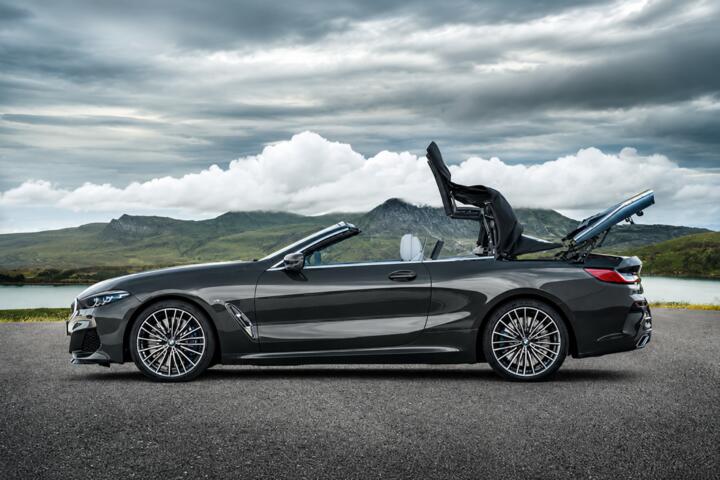
For generations, convertibles have occupied a special corner of automotive fantasy. They promise sunshine, exhaust notes unhindered by steel, and the simple joy of feeling connected to the world rather than sealed off from it. A good convertible can make a trip to the grocery store feel like the opening sequence of an action movie.
Engineers, however, tend to view the missing roof somewhat differently.
To them, the roof isn't merely a weather shield. It's a structural component. Remove it, and the entire vehicle suddenly loses one of its most important load-bearing elements. Imagine removing the lid from a shoebox. The sides that once felt reasonably sturdy now flex and twist with alarming enthusiasm. Cars experience a similar problem, albeit with considerably more mathematics involved.
This challenge explains why convertible development remains one of the automotive industry's most fascinating engineering balancing acts. The mission sounds simple: remove the roof without destroying everything that made the original car good in the first place.
Why Roofs Matter
A modern automobile is essentially a giant structural loop. Loads travel through the floor, pillars, firewall, roof rails, and rear structure in a continuous network designed to resist bending and twisting forces.
The roof serves as the upper section of that loop. When a vehicle corners aggressively, encounters uneven pavement, or absorbs impacts, the roof helps distribute forces throughout the body structure.
Take that piece away and the remaining structure must work significantly harder. Suddenly, loads that were once shared across a complete framework become concentrated in fewer areas. Engineers describe this challenge in terms of torsional rigidity—the body's resistance to twisting forces.
Torsional rigidity might sound like something discussed only by engineers wearing pocket protectors and carrying clipboards, but drivers experience its effects constantly. Every steering input, braking maneuver, and cornering load passes through the chassis before reaching the tires.
If the structure flexes excessively, suspension tuning becomes less effective. Steering precision suffers. Ride quality deteriorates. Unwanted vibrations begin appearing throughout the cabin like party guests who refuse to leave.
The difference between a rigid chassis and a flexible one can be dramatic. One feels carved from a single block of metal. The other feels like several components engaged in an ongoing debate about where the car should be pointing.
The Convertible Tax
Building a convertible often requires engineers to pay what enthusiasts sometimes call the convertible tax. Not a financial penalty, but a collection of compromises imposed by physics.
The most obvious cost is weight.
To compensate for the missing roof, manufacturers reinforce the floorpan, door sills, firewall, transmission tunnel, rear bulkhead, and numerous other structural areas. These reinforcements add mass, sometimes hundreds of pounds worth.
Think of a championship boxer who suddenly loses the support of a training staff and responds by bulking up everywhere else. The result may remain effective, but efficiency inevitably suffers.
That additional weight affects acceleration, braking, fuel economy, and handling. Engineers spend countless hours minimizing these penalties, but they rarely disappear entirely.
The challenge becomes especially difficult for performance cars. Sports-car engineers spend years fighting to remove ounces wherever possible. Then the convertible program arrives and requests reinforcements substantial enough to survive the absence of the roof.
The conversation probably contains fewer smiles than a warranty meeting.
When Rigidity Disappears
Early convertibles often displayed their structural shortcomings with all the subtlety of a marching band.
Drive over railroad tracks and the rearview mirror would vibrate. Hit a pothole and the windshield frame might shimmy visibly. Corner aggressively and the body could twist enough to influence the suspension itself.
This phenomenon became known as cowl shake. The dashboard, steering column, and windshield structure would oscillate after impacts because the chassis lacked sufficient rigidity to absorb the energy cleanly.
The sensation could range from mildly annoying to genuinely alarming. Some older convertibles felt as though the front half and rear half of the vehicle were connected by an optimistic handshake.
Enthusiasts often tolerated these shortcomings because the open-air experience compensated for them. The sound, visibility, and sense of occasion transformed every drive into an event.
Still, nobody would mistake severe structural flex for a performance enhancement.
Even today, body rigidity remains one of the quickest ways engineers evaluate structural quality. A powerful engine can disguise many sins. A flexible chassis usually exposes them.
Modern Engineering Tricks
Fortunately, modern convertibles are dramatically better than their ancestors.
Advances in materials science, computer-aided engineering, and manufacturing techniques have allowed engineers to create open-top vehicles that would have seemed impossible a few decades ago.
High-strength steel plays a major role. These advanced alloys provide greater structural strength without requiring massive increases in thickness or weight. Strategic reinforcement can now achieve results that once demanded much heavier solutions.
Aluminum has also become a valuable tool. By reducing mass in certain areas, engineers gain flexibility to strengthen others without turning the vehicle into a rolling dumbbell.
Computer simulation has arguably been even more transformative. Engineers can analyze torsional loads, stress concentrations, and vibration behavior long before the first prototype ever leaves a workshop.
Instead of discovering weaknesses through expensive trial and error, development teams can identify structural vulnerabilities in the virtual world and address them early.
Some modern convertibles achieve rigidity figures astonishingly close to their coupe counterparts. In a few cases, only specialized instrumentation can reveal the difference.
That achievement represents decades of relentless engineering effort hidden beneath paint, leather, and marketing slogans.
Performance Consequences
Rigidity affects nearly every aspect of vehicle behavior.
A stiff chassis allows suspension components to perform their intended functions with greater precision. Springs, dampers, bushings, and anti-roll bars can manage vehicle dynamics without simultaneously compensating for structural flex.
The result is improved steering response, more predictable cornering behavior, and better communication between driver and machine.
Imagine trying to write with a pencil attached to a rubber ruler. Your inputs reach the paper, but some precision disappears along the way. A flexible chassis creates a similar disconnect between driver commands and vehicle responses.
Brake performance benefits as well. Under heavy deceleration, structural rigidity helps maintain suspension geometry and tire contact consistency. The vehicle feels more stable and confidence-inspiring.
Ride quality can improve, too. This may seem counterintuitive, but a rigid structure often allows engineers to tune suspension systems more effectively. Instead of using spring and damper rates to compensate for body movement, they can focus on controlling wheel movement.
The best modern convertibles no longer force buyers to choose between comfort and structural integrity. They deliver both, which was once a remarkable achievement.
The Road Ahead
The future may prove especially interesting for convertible engineering.
Electric vehicle architectures often place large battery packs within the floor structure. These battery enclosures can contribute substantial rigidity, effectively creating a giant reinforced backbone beneath the passenger compartment.
In theory, this could help offset some of the structural disadvantages traditionally associated with removing the roof.
Engineers are already exploring new materials, advanced bonding techniques, and innovative structural layouts that further blur the line between coupe and convertible performance.
The goal remains unchanged: preserve the emotional appeal of open-air driving while minimizing the compromises historically associated with it.
Physics, of course, continues to demand its payment. Remove a major structural element and challenges inevitably follow. No amount of marketing copy can negotiate with torsional loads.
But modern engineering has become remarkably skilled at bending those challenges into submission.
Open-Air Reality
The irony of convertible ownership is that most drivers never think about rigidity until it's missing.
They notice the sunshine. They notice the engine note bouncing off nearby buildings. They notice the scent of freshly cut grass on a summer evening and the way distant mountains suddenly feel closer without a roof overhead.
Those experiences are precisely why convertibles continue to exist despite the engineering headaches they create.
Every reinforcement hidden beneath the floor. Every additional weld. Every carefully tuned structural brace. Every hour spent chasing vibrations through prototype vehicles serves a single purpose: making the missing roof feel effortless.
The best convertibles perform this trick so convincingly that drivers forget how difficult it is. They feel solid, precise, and refined while simultaneously delivering an experience no fixed-roof car can replicate.
That's the magic. A convertible begins life by losing one of the most important structural components a vehicle can have. The engineering challenge is enormous. The compromises are real.
Yet when the road opens up, the sky stretches overhead, and the horizon feels just a little bit wider, all that hidden structural wizardry disappears into the background. And that's probably the highest compliment a convertible engineer can receive.