Cargo Access Engineering
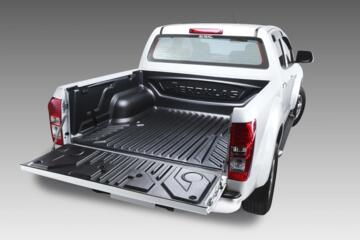
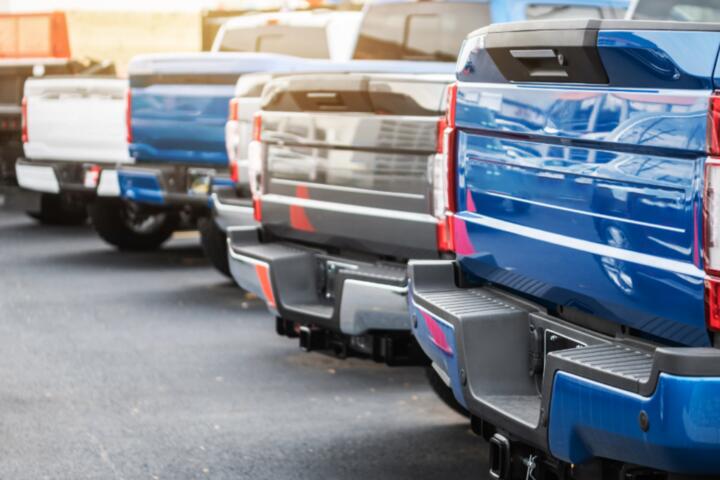
Twenty years ago, a tailgate was a heavy slab of steel held by two cables; today, it is a motorized, multi-hinged workstation. The shift toward "smart" beds is driven by the increasing height of modern trucks—with average bed rails now sitting significantly higher than those of the 1990s—making traditional loading a physical liability. Manufacturers are no longer just selling a door; they are selling a mobile office and an ergonomic solution. In practice, this looks like a contractor using an integrated ruler and clamp pockets to cut PVC pipe directly on the truck, or a camper using built-in speakers and 120V outlets to power a site. For example, the latest iterations of these systems can support over 350 lbs on their auxiliary steps, effectively turning the rear of the vehicle into a staircase. Industry data shows that utility-focused features are a top-three secondary purchase driver for heavy-duty truck buyers, alongside towing capacity and cabin tech.
Modern Tailgate Design
The primary failure in tailgate utility is "over-engineering at the expense of longevity." Owners often struggle with multi-function gates that become jammed with grit, salt, or construction debris. When a tailgate has six different folding positions, a single dent in one panel can render the entire mechanism inoperable, leading to repair bills that can exceed $3,000 for a fully electronic assembly. Another major pain point is the "hitch collision" error. If a user deploys a multi-step tailgate while a trailer hitch is installed, the gate can swing directly into the metal ball, causing immediate structural damage. This isn't just a theoretical risk; it is a common insurance claim for modern truck owners. Furthermore, the increased weight of these complex systems—despite the use of aluminum—can slightly reduce the net payload capacity of the vehicle, a crucial factor for those operating near GVWR (Gross Vehicle Weight Rating) limits.
Mechanical Insights
Ford’s Smart Hitch and Pro Access Design
Ford has moved toward a lateral opening solution with the Pro Access Tailgate. Unlike traditional drop-down gates, this system features a central 100-degree swinging door. This allows the user to stand closer to the bumper, reducing the reach-in distance by approximately 25 inches. For those towing, the swing door can open even with a trailer attached, provided the tongue weight doesn't interfere with the swing radius.
The RAM Multifunction Lateral Split
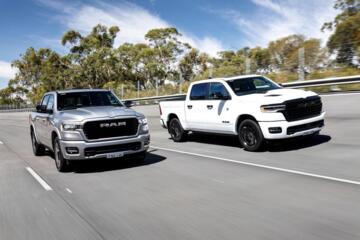
RAM’s approach utilizes a 60/40 split, allowing the gate to open like "barn doors." This is particularly effective for forklift loading, as the doors swing completely out of the way, allowing a pallet to be dropped directly over the rear axle. This mechanical choice prioritizes strength, maintaining a 2,000-lb load rating even when the doors are used in a traditional fold-down manner.
GM’s Multi-Flex and MultiPro Architecture
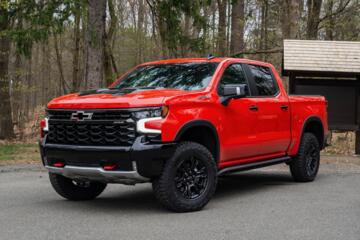
The MultiPro (Chevy/GMC) is the "Swiss Army Knife" of the group, offering six distinct positions including a full-width step, a load stop for long lumber, and a standing desk. It utilizes a gate-within-a-gate design. This is best suited for users who frequently haul diverse cargo like dirt bikes or drywall, where the "load stop" feature prevents sliding without the need for additional ratcheting straps.
Integrated Power Systems and Work Surfaces
Beyond the hinges, the "Work Surface" is now standard. This includes molded-in grain patterns to prevent tools from sliding, integrated cup holders, and tablet stands. For instance, Ford’s Pro Power Onboard provides up to 7.2kW of exportable power through the bed outlets, turning the tailgate into a literal power station for circular saws or battery chargers.
Durability and Material Science in Tailgates
The use of high-strength, military-grade aluminum alloys has allowed brands to add motors and hinges without adding 100+ lbs to the vehicle's rear. However, the hinge points are now reinforced with galvanized steel to prevent the "sag" common in older trucks. Chevy’s use of roll-formed high-strength steel in the bed floor complements the tailgate tech by ensuring the pivot points don't warp under heavy shear stress.
Practical Field Cases
Case Study 1: Residential Contracting Efficiency
A mid-sized siding company in Ohio replaced their fleet of standard-gate trucks with Ford F-150s equipped with Pro Access gates. By allowing workers to reach tools in the bed without lowering a 2-foot tailgate, they calculated a time saving of approximately 15 minutes per man-day. Over a 20-day work month with 10 employees, this resulted in 50 hours of reclaimed labor, valued at roughly $2,500 in productivity gains.
Case Study 2: Recreational Payload Management
An adventure tour operator used GMC Sierras with MultiPro tailgates for mountain bike excursions. The "inner gate" function allowed for easier loading of 50-lb e-bikes by providing a mid-level step. This reduced workplace injury claims related to back strain by 30% over an 18-month period, as staff no longer had to lift bikes to chest height to clear the tailgate.
Utility Systems
| Feature | Ford Pro Access | RAM Multifunction | Chevy/GMC MultiPro |
|---|---|---|---|
| Primary Action | Center-swing (100°) | 60/40 Lateral Split | Fold-within-Fold |
| Max Step Capacity | 350 lbs | N/A (Uses bumper step) | 375 lbs |
| Trailer Compatibility | High (Swing-out) | High (Side-opening) | Caution (Hitch collision) |
| Power Options | Up to 7.2kW | 115V Outlet | 120V Outlet |
| Work Surface | Integrated Ruler/Clamps | Minimalist | Multi-tier Desk |
Common Operational Errors
The most frequent mistake is neglecting the "tailgate damper" or electronic sensors. Many owners force a motorized gate closed manually, which can strip the internal gears of the lift-assist motor. It is vital to let the actuator complete its cycle. Additionally, users often forget to clean the camera lens integrated into the tailgate handle. In high-tech trucks, the 360-degree camera view relies on this sensor; mud buildup here can disable the "hitch view" assist, making solo trailer hookups impossible. Finally, always verify the clearance of your aftermarket hitch before deploying a multi-folding gate. Companies like Curt and B&W now sell "short-shank" hitches specifically designed to prevent MultiPro damage.
FAQ
Can I retrofit a multi-function tailgate onto an older truck model?
Generally, no. These systems require specific wiring harnesses for the electronic latches and reinforced pillar mounts that are not present on older frames. It is more cost-effective to trade in the vehicle than to attempt a structural retrofit.
Do these complex tailgates lower the truck's resale value?
On the contrary, high-trim utility features typically see a 60-70% value retention in the used market. Buyers specifically look for the "Step" or "Multifunction" designations in listings on platforms like Autotrader or Cars.com.
How do these systems perform in freezing ice/snow conditions?
Ice can jam the hinges of the MultiPro and RAM split-gates. It is recommended to use a silicone-based lubricant on the seals before winter and to clear the "drainage channels" at the base of the gate to prevent ice expansion from popping the plastic trim.
Are motorized tailgates slower than manual ones?
Yes, an electronic drop usually takes 2-3 seconds, whereas a manual gate is instantaneous. However, most brands now include "power up" features, allowing you to close the gate via a key fob, which is a major benefit when your hands are full.
What happens if the electronic latch fails?
All three manufacturers include a manual override or a hidden physical release. It is usually located behind a plastic panel on the interior of the tailgate to ensure you can still access your cargo if the battery dies.
Author’s Insight
In my years testing heavy-duty equipment, I've found that the "best" tailgate depends entirely on your height and your hitch. If you are under 5'10", the GM MultiPro step is a literal life-saver for your knees. However, if you are a heavy-duty hauler who never unplugs the trailer, the RAM or Ford swing-out designs are the only ones that actually make sense in the field. My tip: always opt for the spray-in bedliner that extends over the tailgate's top edge to prevent the metal-on-metal scratching that leads to premature rust.
Summary
Choosing between Ford, RAM, and Chevy's tailgate technology requires balancing the need for a mobile workstation against the mechanical simplicity of a traditional gate. Ford leads in power integration, RAM in structural simplicity for forklift access, and Chevy in versatile ergonomics. For the best results, evaluate your daily loading height and the frequency of your towing needs before committing to a specific system. Proper maintenance of electronic sensors and mechanical hinges will ensure these high-tech tools remain an asset rather than a repair liability.