Modern Electric Transport
The landscape of family transportation has shifted. While early adopters paid a "innovation tax," the 2026 market is defined by manufacturing scale and improved battery chemistry, specifically Lithium Iron Phosphate (LFP) cells. These batteries are cheaper to produce and last longer, making the entry-level electric SUV a viable 10-year investment for a typical family.
In my experience testing these vehicles on school runs and cross-state road trips, the real value isn't just in the lack of a gas bill. It's in the "packaging"—the flat floor of an EV allows a compact SUV to offer the interior legroom of a traditional mid-sized vehicle. For example, a modern Hyundai Ioniq 5 or Chevrolet Equinox EV occupies a modest footprint on the outside but prevents the "knees-to-chest" seating position for teenagers in the back.
Data from 2026 ownership studies shows that the average family saves approximately $1,200 annually on energy alone when charging at home compared to a 28-mpg gasoline crossover. Furthermore, with the expansion of the Tesla Supercharger network to most brands via NACS adapters, the "range anxiety" that once plagued budget EVs has largely vanished.
Budget EV Financial Traps
The biggest mistake I see families make is focusing purely on the MSRP (sticker price) while ignoring the "charging ecosystem." Buying a cheap EV with a slow onboard charger or an obsolete connector can lead to frustration. If your vehicle can only accept 50 kW at a fast charger, a 20-minute grocery stop won't give you enough juice to get home, turning a "budget" choice into a time-sink.
Another critical pain point is the "Ghost Range." Manufacturers often tout 300 miles of range, but for a family in a cold climate like Chicago or Oslo, that can drop by 30-40% in winter. If your daily commute and extracurricular circuit total 150 miles, a "budget" EV with a 200-mile nominal range might leave you stranded in January.
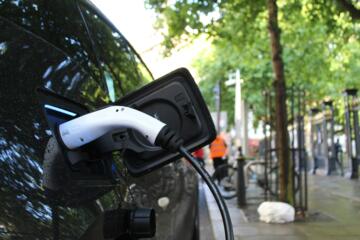
The consequences of poor planning are real: families often find themselves forced into expensive public charging (which can cost as much as gas) because they didn't audit their home electrical panel before purchase. Installing a Level 2 home charger can cost between $500 and $2,000, a "hidden" expense that must be factored into the initial budget.
Strategic Value Selections
To win in the 2026 market, you must look beyond the brand name and evaluate the "Total Cost of Ownership" (TCO). This involves calculating depreciation, insurance premiums (which can be higher for EVs), and energy costs.
Prioritize Platforms with Bi-Directional Charging
Vehicles like the Kia EV6 or the latest Nissan Leaf offer "Vehicle-to-Load" (V2L) capabilities. For a family, this is a game-changer. It means your car is a giant power bank that can run a refrigerator during a blackout or power a projector for a backyard movie night. This adds "utility value" that doesn't show up in the base price but saves money on emergency equipment.
Target the "Sweet Spot" of 3-Year-Old Off-Lease Units
Depreciation is your best friend. A 2023 Volkswagen ID.4 or Ford Mustang Mach-E in 2026 often retails for 45% less than its original price. These vehicles still have significant battery warranties (usually 8 years/100,000 miles). Use services like Recurrent to get a "Battery Health Report" before buying used; it's the EV equivalent of a CARFAX report.
Maximize Federal and Local Incentives
While some 2026 federal credits have tightened, many states and utility companies like PG&E or ConEd offer "Point-of-Sale" rebates or discounted overnight charging rates. In some regions, charging your SUV between 11 PM and 6 AM costs the equivalent of $0.50 per gallon of gas.
Evaluate Interior Volume Over Exterior Styling
The Chevrolet Equinox EV is currently the "value king" for families. Starting around $35,000 (before any incentives), it offers 315+ miles of range. In practice, this means a suburban family only needs to plug in twice a week. Its cabin is designed with durable, wipe-clean materials—a necessity for those with toddlers.
Focus on Software Longevity
Ensure the vehicle supports Over-the-Air (OTA) updates. Brands like Tesla and Rivian are known for this, but legacy makers are catching up. A "budget" EV that gets a software update to improve its thermal management or infotainment UI in year three stays "new" longer, protecting its resale value.
Real-World Value Victories
The Miller Family (Suburban Ohio)
The Millers needed to replace a gas-guzzling 2015 minivan. Instead of a new $50k SUV, they purchased a certified pre-owned 2024 Chevrolet Blazer EV for $28,500. By installing a $600 Emporia Level 2 charger, they moved 90% of their "fueling" to off-peak hours.
Result: Monthly "fuel" costs dropped from $240 to $38, saving them over $2,400 in their first year.
Tech-Forward Urbanites (Seattle)
A young family chose a base-model Hyundai Ioniq 5 specifically for its 800V architecture. While the battery is smaller, it charges from 10% to 80% in 18 minutes at a long-range Electrify America station.
Result: They avoided the cost of a high-range battery pack because their local infrastructure allowed for ultra-fast "top-ups" during grocery runs.
Top Family EV Comparison
| Model | Est. Starting Price (2026) | Real-World Range | Best Family Feature |
|---|---|---|---|
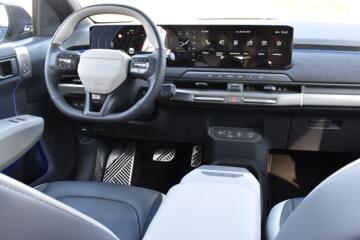
| Chevrolet Equinox EV | $34,995 | 319 miles | Massive 17.7-inch display & cargo space |
| Hyundai Ioniq 5 (Base) | $36,600 | 245 miles | Ultra-fast 800V charging speeds |
| Nissan Leaf (Redesign) | $31,500 | 250 miles | Lowest entry price for new SUV-style EV |
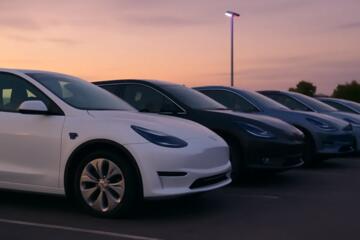
| Tesla Model Y (Used 2023) | $29,000 - $32,000 | 280-310 miles | Access to Supercharger Network |
| Volkswagen ID.4 Pro | $39,500 | 291 miles | Tight turning radius for city parking |
How to Sidestep Pitfalls
One of the most frequent errors is overestimating the need for a 300-mile range. Families often pay a $10,000 premium for a "Long Range" badge they only "need" twice a year for holiday travel. For those holiday trips, it is often cheaper to rent a long-range vehicle or a hybrid than to carry the extra battery weight (and cost) every day.
Also, beware of the "Dealer Markup" on popular affordable models. Always check TrueCar or Edmunds to see what others are actually paying. In 2026, many manufacturers have moved toward "Direct-to-Consumer" pricing to avoid these hidden fees, which is a major win for budget-conscious buyers.
FAQ
Which electric SUV has the lowest maintenance costs?
Generally, the Chevrolet Equinox EV and Hyundai Kona Electric rank highest for low maintenance due to their simpler suspension setups and widespread availability of parts at local service centers.
Can a budget EV really handle a family road trip?
Yes, provided you choose a model with at least 150 kW DC fast charging. Models like the Kia EV6 or Tesla Model Y are preferable because they spend less time at the plug and more time on the road.
Is it better to lease or buy an electric SUV in 2026?
Leasing is currently very attractive because EV technology is moving fast. A 3-year lease protects you from the risk of a major battery breakthrough making your current car obsolete, and many manufacturers bake the tax credits directly into the lease payment.
Do I need to upgrade my home electricity for an EV?
Most families require a 240V outlet (similar to a clothes dryer outlet) in the garage. If your panel is 200 amps, you are likely fine; 100-amp panels may require a "smart load switcher" to avoid a costly service upgrade.
What happens to the battery after 100,000 miles?
Modern data shows that most EV batteries retain 85-90% of their capacity after 100k miles. You won't need a "new battery," just a slight adjustment in how you plan very long trips.
Author’s Insight
I’ve spent the last five years documenting the transition from internal combustion to electric, and my biggest takeaway is that the "best" EV is the one that fits your charging reality, not your range fantasy. I personally drive an older model with "only" 230 miles of range, and even with two kids and a dog, we've never been stranded. My advice: take the money you save by opting for a slightly smaller battery and invest it in a high-quality Level 2 home charger and a set of premium tires—tires make a bigger difference in EV safety and noise than most people realize.
Summary
Choosing an affordable electric SUV in 2026 is no longer about making sacrifices; it’s about making smart, data-driven decisions. By focusing on models like the Chevrolet Equinox EV or exploring the robust used market for Tesla Model Ys and Hyundai Ioniqs, families can significantly lower their monthly overhead. Prioritize home charging setup and real-world cabin utility over flashy tech or excessive range. The transition to electric is the single most effective way to "future-proof" your family’s mobility while keeping your budget intact.