Shift to Storage
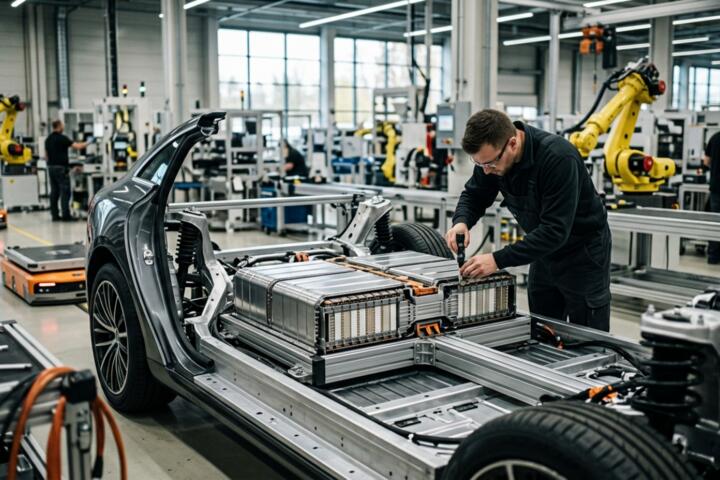
Current electric vehicle (EV) technology relies almost exclusively on lithium-ion batteries featuring liquid electrolytes. While effective, these systems are nearing their theoretical energy density limit, typically around 250-300 Wh/kg. Solid-state technology replaces the flammable liquid medium with a solid separator made of ceramics, polymers, or sulfides. This allows for the use of a lithium-metal anode, which can theoretically double energy density. In practice, this means a vehicle like the Tesla Model S, which currently achieves roughly 405 miles of range, could potentially travel over 700 miles on a single charge without increasing the battery pack's physical size. Beyond range, the primary advantage is safety. Liquid electrolytes are volatile; solid separators are inherently non-flammable, significantly reducing the risk of thermal runaway during high-impact collisions or rapid discharge cycles. The industry has already seen prototype success. For example, Toyota has filed over 1,000 patents related to solid-state tech, claiming a breakthrough that could allow for a 10-minute charge providing a 1,200 km range. Meanwhile, the QuantumScape (QS) "A0" prototype samples are already in the hands of automotive partners for rigorous testing, marking the move from lab-scale theory to pre-production reality.
Battery Pain Points
The primary failure of existing liquid-based systems is the "energy-safety trade-off." To increase energy density in liquid batteries, manufacturers often use thinner separators or more volatile chemistries, which increases the likelihood of internal shorts. This creates a ceiling for performance that prevents long-haul trucking and regional aviation from fully electrifying. Furthermore, current charging infrastructure is hampered by the physics of liquid ions. Fast-charging generates immense heat. To prevent the battery from degrading or catching fire, charging speeds are throttled, often taking 30 to 50 minutes to reach an 80% charge. This "time cost" remains the biggest deterrent for internal combustion engine (ICE) loyalists who are used to a five-minute refueling stop. Finally, the manufacturing process for liquid batteries is environmentally taxing and expensive. The "slurry" coating process and long "aging" periods required for liquid electrolytes take up 30% of a factory's footprint and energy consumption. Failure to solve these issues results in high MSRPs for consumers and lower margins for manufacturers, stalling the mass-market adoption of zero-emission vehicles.
Strategic Solutions
Implementing Dendrite-Resistant Ceramic Separators
The biggest technical hurdle is the formation of lithium dendrites—microscopic needle-like structures that can pierce the separator and cause a short circuit. To combat this, companies like QuantumScape use a proprietary ceramic separator that is flexible enough to handle mechanical stress but hard enough to block dendrite growth. For engineers, focusing on the interface between the solid electrolyte and the lithium anode is the priority; maintaining consistent contact during the expansion and contraction of charging is vital.
Transitioning to Dry-Coating Manufacturing Processes
Traditional "wet" manufacturing is inefficient. Adopting dry-coating technology, similar to what Maxwell Technologies developed (later acquired and refined by industry leaders), eliminates the need for massive drying ovens. This reduces energy consumption by 40% and allows for thicker electrodes, which inherently boosts energy density. Scaling this process is the key to bringing solid-state costs down from the current experimental $800/kWh to the target $100/kWh.
Standardizing Sulfide-Based Electrolytes for Cold Weather
One major drawback of some solid-state designs is poor conductivity at low temperatures. Sulfide-based solid electrolytes offer higher ionic conductivity than oxides or polymers. For fleets operating in northern climates, sulfide-based cells are the recommended solution. They maintain performance at -20°C far better than current liquid cells, which lose significant range in winter due to the increased viscosity of the liquid electrolyte.
Adopting Battery Management Systems (BMS) with Pressure Sensing
Solid-state batteries require external pressure to function correctly, as the materials don't "flow" like liquids. Modern BMS must be redesigned to monitor and manage mechanical pressure within the pack. Using sensors from providers like Bosch or Continental, manufacturers can adjust the compression of the cells in real-time, extending the cycle life of the battery to over 1,000 cycles, which is the gold standard for automotive durability.
Leveraging Silicon-Carbon Anodes as a Bridge
While pure lithium-metal is the end goal, silicon-carbon anodes serve as an excellent intermediate step. They offer higher density than graphite but are easier to stabilize. Companies like Sila Nanotechnologies are already integrating these into consumer electronics. Moving to high-silicon content anodes in a semi-solid state format provides a 20% boost in energy density today while the supply chain for pure lithium-metal matures.
Utilizing AI for Material Discovery
The search for the perfect solid electrolyte involves millions of chemical combinations. Utilizing platforms like Google’s DeepMind or specialized materials informatics software allows researchers to simulate ion transport at the atomic level. This has shortened the R&D cycle from decades to years. By predicting material stability before entering the lab, startups have identified over 20,000 stable solid-state candidates that were previously unknown.
Real-World Examples
Nio and the 150 kWh Semi-Solid State Pack In early 2024, the Chinese EV maker Nio successfully tested a 150 kWh semi-solid-state battery pack in their ET7 sedan. The vehicle traveled 1,044 km (648 miles) on a single charge with energy remaining. This wasn't a lab test; it was a real-world drive broadcasted live. The pack achieved an energy density of 360 Wh/kg, roughly 50% higher than the industry average. Volkswagen and the QuantumScape Endurance Test Volkswagen's battery unit, PowerCo, completed an endurance test of QuantumScape’s solid-state cell. The results showed the cell retained 95% of its capacity after 1,000 charging cycles. For an EV with a 500 km range, this translates to 500,000 kilometers of driving with minimal battery degradation. This data proved that solid-state cells could outlast the vehicle's chassis itself, solving the "battery replacement" fear that plagues the used EV market.
Storage Comparison
| Feature | Liquid Li-Ion | Semi-Solid | All-Solid (ASSB) |
|---|---|---|---|
| Density | 250-300 Wh/kg | 350-400 Wh/kg | 500+ Wh/kg |
| Charge Time | 25-40 min | 15-20 min | <10 min |
| Fire Risk | Moderate | Low | Negligible |
| Maturity & Cost | Mass prod. / $130+ | Pilot / $200+ | R&D / $400+ |
Common Pitfalls
One common mistake is assuming that "Solid-State" is a monolith. There are three distinct paths: polymer, oxide, and sulfide. Investing in a polymer-based system for high-performance cars is often a mistake because polymers require high operating temperatures (60°C+) to conduct ions efficiently. This necessitates a constant heating system, which drains the battery. Another error is ignoring the "stack pressure" requirement. Many early-stage developers successfully create a "button cell" in a lab but fail to realize that when you stack 100 layers for an automotive-grade cell, the mechanical expansion of the lithium anode can crush the ceramic separator. To avoid this, engineering teams must implement "breathing" pack designs that allow for micro-expansions using elastic spacers. Finally, manufacturers often underestimate the complexity of the supply chain. High-purity lithium foil is not produced at the same scale as the lithium carbonate used in traditional cells. Establishing long-term agreements with specialized suppliers like Albemarle or Ganfeng Lithium is essential to avoid production bottlenecks in the late 2020s.
FAQ
Will solid-state batteries make current EVs obsolete?
Not immediately. They will first appear in luxury and high-performance segments (e.g., Porsche, Ferrari) due to high initial costs. Standard lithium-ion will remain the dominant choice for budget vehicles for at least another decade.
When can I actually buy a car with a solid-state battery?
Limited production runs are expected between 2026 and 2028 from brands like Toyota and BMW. Mass-market availability at competitive prices is likely slated for 2030 and beyond.
Are these batteries more environmentally friendly?
Yes, primarily because they require less heavy cooling equipment and have a longer lifespan, meaning fewer batteries need to be produced over the lifetime of a vehicle. Additionally, dry-coating production reduces the carbon footprint of the factory itself.
Can solid-state batteries be recycled?
Yes, and in some ways, they are easier to recycle than liquid cells because there is no toxic liquid electrolyte to drain and neutralize. However, new recycling facilities will need to be built to handle the ceramic and sulfide components.
Do they work in extreme cold?
Sulfide-based solid-state batteries perform significantly better than liquid-ion in the cold. Unlike liquid electrolytes that "freeze" or become sluggish, solid electrolytes maintain higher ionic mobility at low temperatures.
Author’s Insight
Having tracked energy storage trends for over a decade, I’ve seen many "miracle batteries" fail to leave the laboratory. However, the current momentum behind solid-state tech is different because it is driven by manufacturing giants rather than just startups. My practical advice for investors and car buyers: don't wait for a "solid-state revolution" next year, but do pay attention to "semi-solid" releases in 2025. These hybrid batteries are the real bridge that will prove the durability of the technology before we see the 1,000-km-range monsters hit the showrooms.
Summary
The future of the electric vehicle market is inextricably linked to the successful scaling of solid-state technology. By solving the dual problems of safety and energy density, these batteries will allow EVs to finally surpass the convenience and utility of internal combustion engines. For industry players, the focus must now shift from chemical discovery to manufacturing scale-up. Consumers should look for upcoming pilot programs from major automakers as the first indicator that the solid-state era has officially arrived. Focus on the data, ignore the hype, and watch the cycle-life numbers—those are the true metrics of success in this race.