Automotive Economics
The traditional internal combustion engine (ICE) relies on thousands of moving parts, whereas an electric drivetrain is remarkably simple. However, this simplicity shifts the financial burden from frequent, low-cost mechanical repairs to infrequent, high-stakes electronic and structural requirements. While you trade oil changes for software updates, the specialized nature of these vehicles creates a unique economic profile.
In practice, a Tesla Model 3 owner might avoid a $100 oil change but face a $2,500 bill for a proprietary thermal management sensor replacement that requires specialized labor. Real-world data from Consumer Reports indicates that while EV owners spend about 50% less on maintenance over the vehicle's life, the upfront insurance premiums can be 20% to 30% higher than equivalent gas models. These "silent" costs often catch buyers off guard during the second and third years of ownership.
Battery Adoption Points
Many new adopters fail to account for "accelerated depreciation" caused by rapid technological leaps. When a manufacturer slashes the price of new models—as seen with multiple industry leaders in 2023 and 2024—the resale value of existing vehicles plummets. This creates a gap in "gap insurance" coverage that many owners didn't realize they needed until a total loss occurs.
Furthermore, the specialized repair network remains a bottleneck. If you damage the aluminum chassis of an Audi e-tron or a Rivian R1T, you cannot simply go to a local neighborhood body shop. You must use certified collision centers that charge premium labor rates, often exceeding $200 per hour. This limited supply of qualified technicians keeps insurance claims high and repair times long, leading to increased rental car costs during downtime.
The Accelerated Wear of Performance Rubber
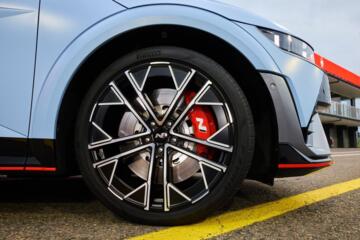
Electric vehicles are significantly heavier than their ICE counterparts due to massive battery packs. A Ford F-150 Lightning weighs roughly 1,600 pounds more than a gas-powered F-150. This extra mass, combined with the instant torque provided by electric motors, results in tire wear that is 20% to 50% faster. Owners often find themselves replacing high-load capacity tires like the Michelin Pilot Sport EV every 20,000 miles, a cost that can exceed $1,500 per set.
The Complexity of Specialized Insurance Underwriting
Insurers like Progressive and GEICO calculate risk based on "repairability." Because EV batteries are often integrated into the vehicle's structural frame (structural battery packs), even a minor fender bender can lead to a "total loss" if the battery casing is slightly dented. This high "totaling" frequency forces insurers to hike premiums to cover the potential $15,000–$25,000 cost of a full battery replacement for a single claim.
Thermal Management System Maintenance
While there is no engine oil, EVs use complex liquid cooling loops to keep the battery and inverter at optimal temperatures. Systems like those found in the Hyundai Ioniq 5 require specific low-conductivity coolants. Replacing this fluid every 40,000 to 60,000 miles is a technical process that can cost between $400 and $700, far more than a traditional radiator flush.
High-Voltage Component Longevity and Out-of-Warranty Risks
Most manufacturers offer an 8-year/100,000-mile warranty on the traction battery. However, the contactors, onboard chargers, and DC-to-DC converters may fall under a shorter general warranty. Replacing an onboard charging unit in a Chevrolet Bolt out of warranty can cost upwards of $3,000, a "hidden" mechanical failure that mimics the cost of a traditional transmission rebuild.
The Hidden Impact of Cabin Air Filtration
High-end EVs often feature advanced HEPA filtration systems, such as Tesla’s "Bioweapon Defense Mode." While excellent for air quality, these filters are significantly more expensive than standard cabin filters and require more labor to access. Neglecting these can lead to strain on the HVAC system, which is a critical component for battery cooling, potentially leading to much more expensive secondary failures.
Mitigating Expenses
To master the economics of EV ownership, you must move from reactive to proactive management. This starts with "insurance shopping" before the VIN is even assigned. Using platforms like Jerry or Gabi allows you to compare specialized EV policies that offer "New Car Replacement" coverage, which is vital for vehicles with volatile resale values.
On the maintenance side, tire rotation is no longer optional; it is a critical cost-saving measure. Rotating tires every 5,000 miles religiously can extend the life of a $1,600 set of Pirellis by an entire year. Additionally, savvy owners use regenerative braking to its maximum potential. By practicing "one-pedal driving," you can make brake pads and rotors last over 100,000 miles, as the electric motor does 90% of the deceleration work, saving roughly $600 in mid-life service costs.
For fleet operators, investing in telematics software like Geotab provides real-time data on battery health and charging habits. Avoiding "DC Fast Charging" as a primary fueling method can reduce battery degradation by 10% over five years. Keeping the battery between 20% and 80% charge significantly preserves the internal chemistry, maintaining the vehicle’s resale value and avoiding the dreaded out-of-warranty battery replacement.
Expenditure Analysis
Case 1: The Logistics Fleet Transition A regional delivery company in Chicago transitioned 10 vans to Ford E-Transits. Initially, they projected a 40% saving on "fuel." However, after 18 months, they realized their insurance premiums rose by 35% because local shops couldn't repair the high-voltage systems after minor backing accidents. By partnering with a dedicated EV-certified repair network and implementing driver training to reduce "jackrabbit starts," they reduced tire wear by 22% and renegotiated insurance rates based on telematics data, ultimately achieving a 15% net TCO reduction.
Case 2: The Individual Commuter An owner of a Polestar 2 in Seattle faced a $2,200 insurance quote. By bundling with home insurance and installing a Level 2 Smart Charger (ChargePoint Home Flex) that provided data logs to the insurer proving "safe charging habits," the premium was reduced by $450 annually. The owner also opted for 19-inch wheels instead of 20-inch performance wheels, which lowered the replacement cost of tires by $400 per set while improving ride quality and range.
Strategy Checklist
| Category | Action Item | Financial Impact |
|---|---|---|
| Insurance | Verify Gap & New Car Replacement coverage. | Saves $5k–$15k on total loss. |
| Tires | Rotate every 5k miles; check alignment. | Extends life by 10k miles ($400). |
| Charging | Use Level 2 daily; limit DC Fast Charging. | Preserves 5-10% battery capacity. |
| Brakes | Service calipers in salt belt states. | Prevents $800 rotor replacement. |
Electric Transition
One of the most expensive mistakes is ignoring the 12V battery. Almost all EVs still use a standard 12V lead-acid or lithium-ion battery to power the computers and lights. When this battery dies, the entire car "bricks," even if the main high-voltage pack is full. Replacing this proactively every 3–4 years for $200 avoids a $500 specialized towing fee to a service center.
Another error is assuming "maintenance-free" means "check-free." Suspension components like bushings and ball joints take a beating from the 5,000-lb curb weight of modern EVs. A squeak ignored in year two can become a $2,000 suspension overhaul in year four. Regular inspections by technicians who understand high-mass vehicle dynamics are essential to catch these issues before they escalate.
FAQ
Why is EV insurance more expensive than gas car insurance?
Insurance is higher due to the high cost of the battery pack and the lack of a widespread, cheap repair infrastructure. If a battery is even slightly compromised in an accident, the car is often written off as a total loss by the insurer.
Do I really need special tires for an electric car?
Yes. EV-specific tires have reinforced sidewalls to handle the weight and specialized tread compounds to manage high torque while minimizing road noise, which is more noticeable in a silent EV.
How often does the battery actually need to be replaced?
Most modern batteries are designed to outlast the vehicle itself (15–20 years). However, "replacement" isn't the risk; "degradation" is. Expect a 10% to 15% loss in range over the first 150,000 miles.
Can any mechanic service my electric vehicle?
No. Standard mechanics lack the "Class 4" high-voltage certification required to safely work on the drivetrain. Most work must be done at the dealership or a specialized EV independent shop.
Does cold weather increase maintenance costs?
Cold weather increases "operational costs" rather than maintenance. It puts more strain on the thermal management system and reduces range, which may lead to more frequent charging cycles and slightly faster battery aging.
Author’s Insight
Having tracked the TCO of various EVs over the last decade, I’ve noticed that the "hidden costs" are most aggressive in the first 24 months of ownership—specifically in insurance and tire wear. My best advice is to treat your EV like a high-performance luxury car rather than a budget economy car, regardless of the brand. If you budget for premium tires and specialized insurance upfront, the actual mechanical reliability will eventually pay you back. The "savings" are real, but they are a marathon, not a sprint.
Summary
Mastering the financial side of electric vehicle ownership requires looking beyond the fuel pump. While the reduction in moving parts offers a clear path to long-term reliability, the increased weight, specialized repair requirements, and insurance complexities represent significant line items in any budget. To maximize your investment, prioritize tire maintenance, choose insurance policies with specific EV protections, and utilize home charging to preserve battery longevity. By addressing these factors proactively, you can ensure that your transition to sustainable transport is as fiscally responsible as it is environmentally conscious.