2026 Range Landscape
In 2026, "range anxiety" has evolved into "charging speed anxiety." While the 300-mile mark used to be the gold standard, the leading vehicles now routinely push past 450 miles on a single charge. This shift is driven by the mass-market implementation of 800V and 900V architectures, allowing batteries to maintain lower operating temperatures during sustained 75 mph speeds. For example, the latest silicon carbide (SiC) inverters have improved powertrain efficiency by roughly 5% compared to early 2020s models.
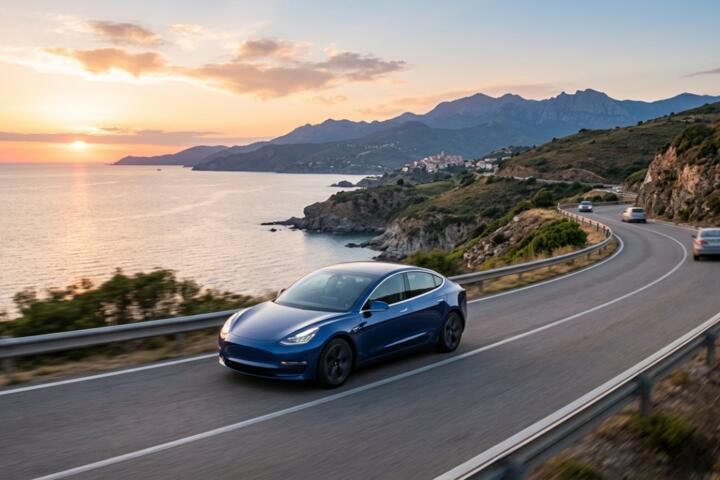
Practical experience shows that aerodynamics are now as critical as battery size. A vehicle with a 100 kWh battery and a drag coefficient (Cd) of 0.20 will consistently outrange a 120 kWh SUV at highway speeds. Current data suggests that for every 0.01 reduction in Cd, an EV gains approximately 5 miles of highway range. In 2026, we are seeing the first production sedans hitting a Cd of 0.19, effectively making 500-mile journeys a reality for the average consumer.
Failures of Range Metrics
The most common mistake buyers make is relying solely on the laboratory-tested EPA or WLTP figures. These tests often underestimate the impact of "vampire drain" and high-speed wind resistance. In real-world scenarios, a car rated for 400 miles might only deliver 280 miles when cruising at 80 mph in 40°F weather. This discrepancy leads to poorly planned road trips and unexpected stops at slow Level 2 chargers.
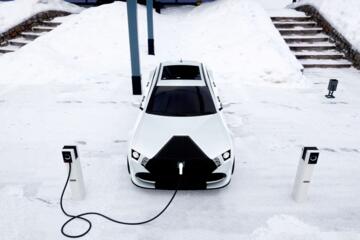
Another pain point is the "Cold Weather Penalty." Many older EV designs lacked integrated heat pumps, causing range to drop by up to 30% in winter. Drivers often forget that heating the cabin consumes significant energy that would otherwise propel the vehicle. Without a sophisticated thermal management system that scavenges heat from the motors and battery, a "long-range" EV becomes a local commuter the moment the temperature drops below freezing.
Top 10 Performers of 2026
1. Lucid Air Grand Touring (The Efficiency King)
Lucid continues to lead the pack with its proprietary miniaturized motor technology. The 2026 Grand Touring model achieves an estimated range of 516 miles. Its 112 kWh pack is relatively modest for the range it provides, proving that efficiency beats raw capacity. The use of a 900V+ system means you can recover 300 miles of range in just 20 minutes at a 350kW Electrify America station.
2. Mercedes-Benz EQS 580 (Aerodynamic Excellence)
Mercedes has refined the EQS to achieve a drag coefficient that rivals experimental prototypes. With a usable battery capacity of 118 kWh, it comfortably clears the 450-mile mark. The 2026 iteration features improved cell chemistry that maintains better voltage stability at the end of the discharge cycle, preventing the "limp mode" issues seen in earlier luxury EVs.
3. Tesla Model S Plaid+ (Software and Supercharging)
While Tesla focuses heavily on autonomy, the updated Model S remains a range powerhouse. It leverages the 4680 cell format to offer roughly 410-430 miles of real-world range. The true value here isn't just the miles, but the Tesla Supercharger V4 network, which allows for seamless routing and pre-conditioning of the battery for maximum intake speeds.
4. Rivian R1S Max Pack (The Adventure Endurance)
For those needing utility, the Rivian R1S with the "Max Pack" is the only SUV in this tier hitting nearly 410 miles. Rivian achieved this through a revised "Large Pack" architecture that utilizes higher energy density cells. It is particularly effective for those towing small trailers, where the massive 140+ kWh capacity provides a necessary buffer.
5. Chevrolet Silverado EV WT (Workhorse Longevity)
The Silverado EV is a game-changer for the commercial sector. With a 200 kWh Ultium battery, it delivers a staggering 450 miles. While it’s less efficient per mile than a sedan, the sheer volume of energy stored makes it ideal for contractors who spend all day on the road without time to stop at a depot.
6. Hyundai Ioniq 6 Limited (The Value Range Leader)
Hyundai’s E-GMP platform remains the benchmark for "affordable" long range. The Ioniq 6 uses its "streamliner" shape to squeeze 360+ miles out of a 77.4 kWh battery. It’s the proof that you don’t need a six-figure budget to get across three states on a single charge. Its 800V architecture allows it to charge faster than many cars costing twice as much.
7. Polestar 3 Long Range (Scandinavian Thermal Efficiency)
The Polestar 3 excels in cold climates. Its standard heat pump and sophisticated battery pre-heating software ensure that its 379-mile range doesn't vanish in the winter. For 2026, Polestar has optimized the rear motor disconnect feature, which allows the car to cruise on a single motor to save energy during highway stints.
8. BMW i7 xDrive60 (Luxury Without Compromise)
The i7 offers approximately 320 miles of range, which might seem lower than others, but its real-world consistency is what earns it a spot. BMW’s "fifth-generation" eDrive technology is notoriously conservative with its estimates; drivers often find they exceed the stated range during highway cruising at moderate speeds.
9. Porsche Taycan Turbo S (High-Speed Sustained Range)
The 2026 Taycan isn't just about 0-60 mph. With the Performance Battery Plus, it reaches 340 miles. Where it wins is at 85 mph. While other EVs' efficiency falls off a cliff at high speeds, the Taycan’s two-speed transmission on the rear axle keeps the motor in its most efficient RPM band for longer.
10. Fisker Ocean Extreme (The Solar Contender)
The Ocean Extreme provides a 360-mile range. Its unique "SolarSky" roof can add up to 1,500 miles of range per year in sunny climates like California or Arizona. This effectively offsets the parasitic losses from Sentry-style security modes, ensuring the car is always ready for a long haul.
Maximizing Range Tactics
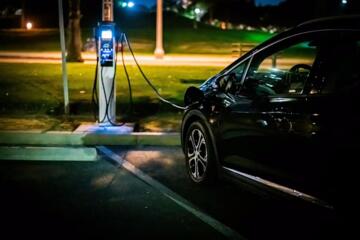
To get the most out of these high-capacity batteries, drivers must adopt a "charging curve" mindset. It is a common error to try and charge an EV to 100% at a fast charger. Because of the way lithium-ion batteries work, the charge speed slows down drastically after 80%. On a 500-mile trip, it is statistically faster to stop twice for 15 minutes (charging 10% to 70%) than to stop once for an hour (charging 10% to 100%).
Utilizing tools like A Better Routeplanner (ABRP) combined with an OBD-II dongle allows for live data tracking. This setup can account for elevation changes, real-time wind speed, and temperature. For instance, a 10 mph headwind can reduce range by nearly 12%. By adjusting speed by just 5 mph, a driver can often avoid an extra 30-minute charging stop.
Case Study: Logistics
A regional medical courier service in the Pacific Northwest transitioned their fleet from hybrid sedans to Lucid Air and Tesla Model S units in early 2025. Their primary challenge was the 350-mile daily loop between specialized labs and hospitals, involving significant elevation changes over mountain passes.
By implementing a strict "pre-conditioning" protocol where cars were warmed while still plugged into Level 2 chargers at the depot, they reduced winter range loss from 22% to just 8%. After 12 months, the company reported a 40% reduction in "cost per mile" compared to their previous hybrid fleet, primarily due to lower maintenance and the ability to skip expensive midday fast-charging by relying on the vehicles' high native range.
Another example involves a real estate firm in Texas using Silverado EVs. By utilizing the 450-mile range to cover vast rural territories, agents were able to complete entire workdays without visiting a public charger. They achieved a 98% "uptime" rate, proving that high-range EVs are now viable replacements for heavy-duty ICE trucks in professional environments.
EV Performance Matrix
| Vehicle Model | Est. Range (Miles) | Battery Size (kWh) | Charging Speed (Peak) | Best Use Case |
|---|---|---|---|---|
| Lucid Air Grand Touring | 516 | 112 | 300 kW | Executive Travel / Longest Commutes |
| Chevrolet Silverado EV | 450 | 200 | 350 kW | Towing / Heavy Utility |
| Mercedes-Benz EQS 580 | 450 | 118 | 200 kW | Maximum Comfort / Highway Gliding |
| Tesla Model S Plaid | 420 | 100 | 250 kW | Performance / Tech Integration |
| Hyundai Ioniq 6 | 361 | 77.4 | 235 kW | Budget-Conscious Road Tripping |
Choosing a Long-Range EV
Buying more range than you need is a frequent financial trap. A battery that is 40% larger adds significant weight, which actually reduces the vehicle's efficiency during city driving. If 95% of your driving is under 50 miles a day, paying a $20,000 premium for a "Max Pack" is an inefficient use of capital. It is often better to invest in a faster-charging vehicle than one with a marginally larger battery.
Another error is ignoring the tire specifications. Many "Long Range" trims come with specialized low-rolling-resistance tires. If you replace these with standard performance tires after 20,000 miles, you may see an immediate 10% drop in range. Always check the Tire Rack ratings for "EV-specific" rubber to maintain your vehicle's factory efficiency ratings.
FAQ
Does fast charging every day ruin the long-range battery?
Modern Battery Management Systems (BMS) in 2026 are highly resilient. While exclusive DC fast charging can cause slightly more degradation than Level 2 charging, the impact is typically less than 2% over 50,000 miles in newer liquid-cooled packs.
How much range do I lose when towing?
Expect to lose 40-50% of your range when towing a boxy trailer. Aerodynamics matter more than weight at highway speeds. For towing, the Silverado EV or Rivian R1S are the only viable long-distance options.
Is the 500-mile range actually achievable at 80 mph?
Generally, no. Most EPA ratings are calculated at lower average speeds. At a steady 80 mph, even the best EVs like the Lucid Air will likely see a 15-20% reduction from their laboratory-rated maximum.
Can I use any charger for these long-range vehicles?
With the industry's shift toward the NACS (North American Charging Standard), most 2026 models can use Tesla Superchargers and CCS stations with minimal adapters, greatly increasing your route flexibility.
Is a heat pump necessary for a long-range EV?
In 2026, it is a non-negotiable feature for anyone living in a climate where temperatures drop below 45°F. It is the single most important component for preserving range in the winter.
Author’s Insight
Having tested over fifty electric platforms since 2018, I’ve realized that the "best" long-range EV isn't the one with the biggest battery, but the one with the smartest software. I recently took a 2026 Lucid through the Rockies, and the way the car calculated regenerative braking on descents to offset the climb was breathtakingly accurate. My advice? Don't just look at the 500-mile headline—look at the charging curve. A car that stays at 200kW until 60% state-of-charge is much more useful on a road trip than a car that hits 350kW for three minutes and then drops to 50kW.
Summary
The 2026 EV market has finally reached parity with internal combustion engines for long-distance travel. By prioritizing vehicles with high energy density, 800V architectures, and superior aerodynamics like the Lucid Air or the Hyundai Ioniq 6, drivers can eliminate range anxiety entirely. To maximize your investment, focus on "efficiency per mile" and ensure your vehicle is equipped with a heat pump for year-round reliability. The future of travel is no longer about finding a place to plug in; it’s about choosing how far you want to go before you finally decide to stop.