Why Kid Safety Varies
Rear-seat crashes and restraint misuse drive many child injuries. In the U.S., the National Highway Traffic Safety Administration reports that child safety seats reduce fatal injury risk by about 70% for infants and 54% for toddlers in passenger vehicles. Vehicle type changes crash geometry, seat access, and how well a child seat locks in place.
Skip the “all cars are the same” assumption. Different platforms place the LATCH anchors at different heights and distances, which changes how tightly a seat base sits. A 2019–2024 compact SUV often has more rear-seat hip room than a small sedan, but that varies by model and seat design.
Skip the “it has airbags” checklist. Side-impact protection matters because children are closer to the door in many seating positions. The Insurance Institute for Highway Safety (IIHS) uses side-impact testing and rates vehicles on how well structures protect occupants; those ratings often correlate with real-world injury patterns.
Rear visibility also changes outcomes. A backup camera helps, but it does not replace checking blind spots before pulling out of a driveway. Many vehicles now include rear cross-traffic alert, and some add pedestrian detection, yet the system’s limits depend on sensor placement and lighting.
Fuel economy affects ownership costs, which affects maintenance schedules. A family that drives 12,000 miles per year spends more on tires and brakes than the same family driving 8,000 miles. Safety systems depend on correct tire pressure and functioning sensors, so cost pressure can indirectly affect safety.
What Buyers Get Wrong
People often shop for the loudest feature name and ignore restraint fit. A child seat that moves more than about 1 inch at the belt path can compromise crash protection. Many parents discover this only after the first road trip, when the seat settles or the vehicle seat cushion changes with temperature.
Skip the “rear seat is always safer” belief. Rear seating reduces exposure to front-end crashes, but side impacts still matter, and children can be struck by intruding structures. In a typical suburban intersection scenario, a vehicle turning left can hit the side of a parked car or a moving car, and the child seat’s shell and side bolsters become the deciding factor.
People also confuse driver-assist with child protection. Automatic emergency braking can reduce rear-end collisions, but it does not prevent a parent from misinstalling a seat or leaving a child unrestrained. Lane-keeping can reduce lane drift, yet it cannot correct for a parent who reaches forward to grab a dropped toy.
Consequences show up in bills and downtime. A replacement child seat after a moderate crash can cost $200–$600 depending on model and whether it is a convertible or booster. Repairs to sensors and cameras after body work can add labor time, and some systems require calibration with a scan tool.
Ownership costs influence whether safety tech stays working. If a vehicle’s battery is weak, some driver-assist features may disable temporarily. That matters because many families rely on those alerts during school pickup traffic, when attention is already stretched.
Features to Prioritize
Correct child-seat anchors
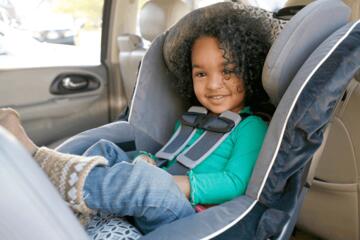
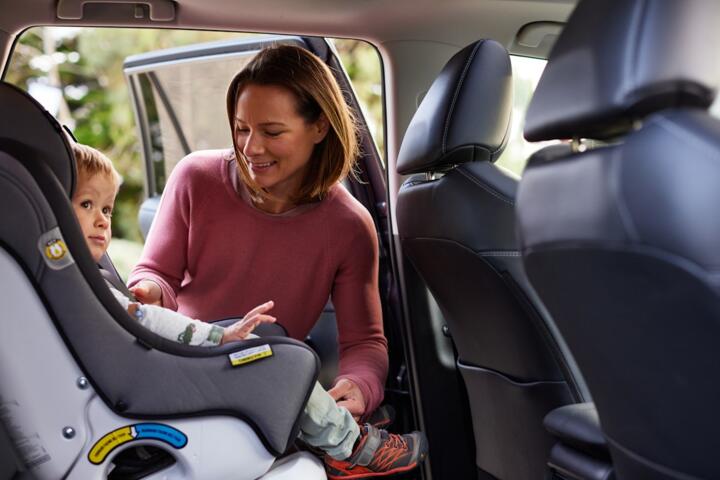
Use LATCH/ISOFIX anchors and verify the seat locks without excessive movement. This works because the lower anchors reduce reliance on seat-belt routing, which varies by vehicle. In practice, you should test for movement at the belt path after tightening; many manuals specify less than 1 inch of movement.
Bring the exact seat to the dealership. A 2024 Graco-style convertible and a 2024 Britax-style booster can fit differently even when both claim “universal” compatibility. I keep a small tape measure in my trunk for this step, because the anchor spacing can surprise you.
Ask for the vehicle’s LATCH anchor location chart if the brand publishes it. Some manufacturers list anchor heights and seat-belt routing diagrams, which helps you predict fit before you buy. If the dealer refuses, you can still compare by installing the seat in the rear and checking the recline angle.
Top-tether for forward seats
Use a top tether for forward-facing seats when the vehicle supports it. The tether reduces forward head excursion in a crash, which is why many forward child seats require it. Look for a tether anchor behind the rear seatback, often with a marked strap point.
Skip vehicles where the tether anchor is hard to access. A tether that requires removing trim or reaching around a seatback can lead to sloppy installation. In practice, you should be able to route the strap without twisting and tighten it until the seat is stable.
Test the tether with the seat installed at the intended recline. Some convertible seats need a specific recline setting for tether use, and the vehicle seatback angle can change that. If you see the seat base floating, the tether may not be doing its job.
Side-impact protection around kids
Prioritize side airbags and strong door structures rated in side-impact tests. This works because children are vulnerable to intrusion and head contact when a door is struck. Look for curtain airbags that cover the rear outboard seating position and for side-impact ratings from IIHS or comparable crash evaluations.
Skip “front airbags only” thinking. A vehicle can have excellent front crash scores and still perform poorly in side tests. In a real-world parking-lot scenario, a low-speed side swipe can still cause head and torso injuries if the structure deforms toward the occupant.
Check whether the rear seat has side airbags for the outboard positions. Many vehicles include them, but some only cover the front seats. If you regularly seat a child in the middle, confirm whether the vehicle has any middle-seat side protection, since coverage varies.
Rear-seat reminders and lockout
Use rear-seat occupant reminders and child-seat lockout features. These work by prompting the driver to check the back seat when the vehicle is turned off, which reduces the risk of leaving a child behind. Many systems use a seat sensor or a manual confirmation step, and the behavior depends on the vehicle’s software version.
Skip systems that require a phone app to function. Some reminders depend on user setup, and the prompt can be missed if the driver forgets to activate it. In practice, you want a reminder that triggers automatically during key-off, not one that depends on a separate workflow.
Verify the reminder works with your child seat type. Some seat sensors detect weight, while others detect belt buckle use. If your seat uses a harness with a buckle that behaves differently, test it during a short drive and key-off cycle.
Forward collision and pedestrian braking
Choose automatic emergency braking with pedestrian detection and good low-speed performance. This works because it reduces the chance of a rear-end collision and can mitigate impacts with people crossing near schools. The system’s effectiveness depends on sensor coverage, calibration, and whether the vehicle can detect a child-sized target.
Skip “AEB exists” as a checkbox. Many vehicles include AEB but limit it to certain speeds or require specific conditions. During a test drive, ask the salesperson to show the driver-assist settings menu and confirm the system is active.
Look for lane departure warning that does not constantly beep. False alarms can train drivers to ignore alerts, which is a safety risk. A mild opinion: if the car nags every 30 seconds on a worn road, the driver will learn to mute it.
Blind-spot and cross-traffic alerts
Use blind-spot monitoring and rear cross-traffic alert for school pickup and driveway exits. This works because kids often move unpredictably near parked cars where mirrors do not cover the area. In practice, you want audible and visual warnings, plus a system that activates when reversing or when changing lanes.
Skip systems that only warn at highway speeds. Some alerts are tuned for higher relative speeds, which matters when a child runs across a driveway at 5–10 mph. Confirm the alert behavior in the settings and test it in a safe area.
Check for sensor cleaning requirements. Cameras and radar can degrade with mud or heavy rain, and some vehicles display a message when sensors are blocked. That message is easy to ignore, so you should know what it looks like.
Seat belt reminders and correct use
Prioritize rear seat belt reminders that actually trigger for the seating positions you use. This works because it reduces the chance of a child riding unbuckled during short trips. Many vehicles remind the driver, but some also remind passengers through a chime or seat sensor.
Skip vehicles where the reminder can be disabled permanently. Some owners disable reminders to avoid noise, and the result is fewer prompts when a child is in the seat. In practice, you can test the reminder by buckling and unbuckling the rear seat belt with the child seat installed.
Confirm the reminder does not interfere with child-seat installation. Some child seats use a seat belt and can trigger the reminder differently. You want a system that still prompts you when a child is not restrained, not one that stays silent because the belt is always buckled.
Head restraint geometry and crash comfort
Choose vehicles with adjustable head restraints and good rear seat geometry. This works because head restraint position affects whiplash risk in rear impacts, and children grow quickly. In practice, a head restraint that cannot move low enough can leave a younger child’s head unsupported.
Skip fixed head restraints that sit too high for boosters. Booster seats often position the child’s head near the vehicle head restraint, so the restraint height range matters. Measure the head restraint height range during the test drive if the vehicle allows it.
Check cabin noise and vibration on rough roads. A child who fights to stay still because the cabin is loud can become more distracted, which increases the chance of unsafe handling. Cabin noise varies widely between models, and it shows up on 30–50 mph expansion joints.
Mini Case Examples
A small logistics company with 2 vans and 1 crossover used for after-school transport faced repeated complaints about rear-seat reminders being ignored. The driver muted alerts after false chimes during deliveries, and the team had no consistent seat-check routine. They switched to a vehicle with rear-seat occupant reminders that trigger at key-off and added a checklist: driver confirms the rear seat before exiting, then locks the vehicle. After 6 months, they reported zero missed checks across 1,800 school runs, and they stopped disabling the reminder.
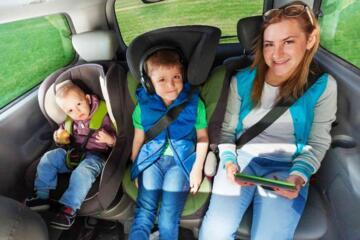
Another case involved a family that replaced a 2017 sedan with a 2022 SUV for two kids in convertible seats. The sedan’s LATCH anchors made one seat base sit at a loose angle, and the seat moved more than 1 inch at the belt path during the first installation. They moved to the SUV, where the tether anchor was reachable without removing trim and the seat base tightened firmly. They spent about $300 on a second installation kit and replacement padding, but they avoided buying a new seat after a minor collision that left the old one with a damaged harness.
Checklist for Shopping
| Item to verify | What “good” looks like | How to test in 10 minutes | Why it matters |
|---|---|---|---|
| LATCH/ISOFIX fit | Seat base stays tight at belt path | Install seat, then push/pull at belt path | Reduces slack during crash forces |
| Top tether access | Tether tightens without awkward routing | Route tether, tighten until seat is stable | Limits forward head movement |
| Rear reminders | Key-off prompt triggers reliably | Drive 2–3 miles, then key-off and watch prompt | Helps prevent unintentional leaving |
| Side airbags | Curtain coverage includes rear outboard | Check spec sheet and airbag label locations | Improves head/torso protection in side hits |
| Blind-spot alerts | Warnings activate at low-speed maneuvers | Test in a safe lot while changing lanes | Reduces missed crossings near parked cars |
| Head restraint range | Adjusts low enough for boosters | Compare head restraint height with child seat | Supports head in rear impacts |
Common Mistakes
Buying a seat first and then hoping the car fits. This happens because the seat is familiar and the car is “close enough.” The impact shows up as slack at the belt path, which can exceed the seat manual’s movement limit. Avoid it by installing the seat in the exact vehicle trim you plan to buy, then re-check after a 10-minute drive.
Skipping tether use for forward-facing seats. This happens when parents cannot reach the tether anchor or the strap routing feels awkward. The impact is higher forward head excursion in a crash, which the tether is designed to reduce. Avoid it by choosing a vehicle where the tether anchor is reachable without removing trim, and practice tightening until it feels repeatable.
Disabling reminders because they beep during errands. This happens when the driver learns to mute alerts rather than fix the cause. The impact is fewer prompts when a child is not restrained, which defeats the reminder’s purpose. Avoid it by checking settings and sensor behavior with your child seat installed, then leaving the reminder enabled.
Assuming driver-assist covers every kid scenario. This happens because marketing materials list features, not limits. The impact is overconfidence during school-zone turns, where AEB may not detect a child against complex backgrounds. Avoid it by treating alerts as a second layer, not a substitute for scanning mirrors and walking the pickup route.
Ignoring calibration after repairs. This happens after windshield replacement or body work, when the car returns with sensors misaligned. The impact is degraded lane-keeping or blocked AEB performance, which can show up as late braking. Avoid it by asking the shop whether it will recalibrate cameras and radar using the manufacturer procedure, and keep the invoice.
FAQ
Do rear-seat reminders work with child seats?
Rear-seat occupant reminders vary by how they detect presence. Some systems use a seat sensor, others use belt buckle logic, and some require a manual confirmation step. With a child seat installed, the reminder may trigger based on the seat’s weight or the buckle state, which can differ from an empty seat. Test it during a short drive: place the child seat as you normally use it, then turn the vehicle off and confirm the prompt appears. If the prompt never triggers, the system may not match your setup.
Which matters more: LATCH or seat belts?
LATCH and seat belts both can be correct, but fit quality matters more than the label. LATCH can reduce installation errors when the anchors line up well with the child seat’s belt path. Seat belts can work just as well when the belt routing and locking mechanism keep the base tight. The practical test is movement at the belt path after tightening, using the child seat manual’s limit. If you see more than about 1 inch of movement, re-route the belt or switch to the other method if the manual permits.
Are side airbags enough for kids?
Side airbags help, but they do not replace strong crash structures and correct restraint fit. Curtain airbags typically cover the head area in side impacts, yet the child seat’s shell and harness routing still control how the child moves. Coverage varies by seating position, so confirm rear outboard coverage if your child rides there. Also check whether the vehicle’s side-impact performance is rated well in independent crash evaluations. If the vehicle has side airbags only for the front seats, the rear outboard child may get less protection.
Do driver-assist systems reduce child injuries?
They can reduce certain crash types, especially rear-end impacts and some pedestrian-related events, but they do not prevent restraint misuse. Automatic emergency braking can reduce impact severity when a vehicle detects a target, yet detection depends on speed, lighting, and background clutter. Lane-keeping can reduce lane drift, but it cannot stop a parent from reaching forward or leaving a child unrestrained. Treat driver-assist as a layer that helps when you are already driving correctly, not as a substitute for seat installation and supervision.
What should I check before a road trip?
Do a quick restraint check after the vehicle warms up and after you load bags. Child seats can shift slightly as the vehicle seat cushion compresses, especially in cold weather. Verify the belt path movement again, confirm the top tether is tight for forward-facing seats, and check that the harness straps lie flat without twists. If your vehicle has rear reminders, confirm they behave normally with your child seat installed. Then plan a stop schedule that matches your child’s needs, because frequent stops reduce the chance of unsafe distractions.
Author's Insight
Safety features matter most when they change how a child seat stays positioned during a crash. The most common failure mode is not the absence of airbags; it is slack installation, wrong recline, or a tether that never gets tightened. I also pay attention to how reminders behave with real child-seat setups, because sensor logic differs across vehicles and seat designs.
Independent crash testing and seat-belt fit checks give more actionable information than feature lists. A vehicle with strong side-impact ratings and rear outboard curtain coverage pairs better with child seats than a vehicle that only scores well in front crashes. For ownership, keep an eye on battery health and sensor calibration after windshield or body repairs, since driver-assist performance can degrade when systems are out of spec.
Key Takeaways
Start with restraint fit: install your exact child seat and measure movement at the belt path. Then confirm tether access, rear outboard side protection, and rear-seat reminders that trigger with your setup. Use driver-assist features as a second layer, not a substitute for scanning and correct harnessing.
Next steps: bring the child seat to the test drive, try both LATCH and seat-belt routing if the manual permits, and re-check after a short drive. Ask the dealer about calibration procedures for camera/radar systems and keep service records. If you have a history of leaving a child behind, treat reminders as one tool and add a physical routine, like a bag or phone placed in the back seat.
Limits exist. No technology compensates for an unrestrained child or a seat installed with excessive slack. If a child has been injured in a crash, seek medical evaluation even when symptoms seem mild, and follow local emergency guidance for head, neck, or abdominal concerns.