Cargo Flexibility First
Maximum cargo volume on a spec sheet rarely predicts how easily you load groceries, tools, sports gear, or luggage. Flexibility comes from how the interior lets you change shape, control movement, and access the space without fighting the vehicle. A car with less total cubic footage can still handle more real loads when the seats fold flat, the opening is wide, and the cargo floor stays usable. When the load fits the geometry, you spend less time rearranging and less time discovering that a “small” item blocks the tailgate.
Consider two common scenarios. A stroller and a week of bags can fit in many compact SUVs by volume, yet only some layouts let you keep the stroller upright and secure it without stacking everything on top. A set of moving boxes might fit by cubic meters, but a high loading lip and narrow opening can make the last box a two-person job. Flexibility reduces those friction points by changing the way the space behaves under real constraints.
Flexibility also affects safety and damage risk. Loose items slide during braking, and sharp edges or gaps between folded seats can become pinch points for bags and cables. A layout that supports tie-downs, keeps the floor level, and reduces gaps helps you restrain loads with fewer improvised solutions. That restraint matters even for short trips around town, not only for highway driving.
Where People Get Misled
People often treat cargo capacity as a single number, then discover the number ignores shape, access, and restraint. The same vehicle can show a large “behind the second row” figure while still forcing you to stack awkwardly because the seatbacks do not fold to a flat plane. Some cars list total volume with the seats down, yet the cargo floor may rise behind the folded seats, creating a step that makes flat boxes rock or prevents full use of the space.
Another frequent mistake involves loading height and opening geometry. A low ceiling and a wide opening can matter more than a few extra liters, because you can slide items in without tilting them. Loading height influences how you lift and how easily you can reach tie-down points. Narrow tailgate openings also change how you place long items, like a ladder, a surfboard bag, or a folded bike frame, which then affects how much of the space remains usable.
Supporting technologies and dependencies shape flexibility. Seat-fold mechanisms determine whether the floor becomes flat, whether the seatbacks fold in one motion, and whether headrests interfere with tall loads. Tie-down systems depend on the presence of factory anchors, their spacing, and whether they sit at usable angles for common straps. Cargo management features such as adjustable cargo floors, removable bins, and side rails can turn a “big box” into a controlled compartment, but only if the parts do not interfere with loading.
Even the vehicle’s trunk design matters. A deep well with a spare tire cover can reduce usable height, while a raised cargo floor can block tall items. Some vehicles offer underfloor storage, yet the underfloor space may not be compatible with bulky items you need to access quickly. Specs rarely capture these tradeoffs, so the buyer ends up learning by trial and error.
What To Measure Before Buying
Check Fold Geometry And Floor
Bring a tape measure and verify whether the second-row seatbacks fold to a flat or near-flat surface. Measure the length from the back of the front seats to the tailgate with the seats down, then measure the height difference between the cargo floor and the folded seat area. If you see a step, test with a flat box or a folded moving blanket to judge whether it will slide or rock. A small step can turn “fits by volume” into “does not sit safely,” which is a daily annoyance.
Also check whether the seatbacks fold in a way that leaves gaps. Some designs create a trough where bags catch, and others leave a narrow channel that traps straps. In a showroom, you can simulate a load by placing a flat board across the folded area and watching for wobble. I once compared two models on the same day and noticed one had a 2–3 cm rise behind the folded seat; it sounded minor until a box kept tipping toward the tailgate.
Test Access And Loading Height
Measure the loading height from the ground to the cargo floor and compare it across vehicles. Then measure the opening width at the narrowest point, not the widest point. If you plan to load from the curb or a driveway, loading height affects how you lift and how often you hit your knuckles on the tailgate. A vehicle with slightly less volume can feel easier if the opening is wider and the lip is lower.
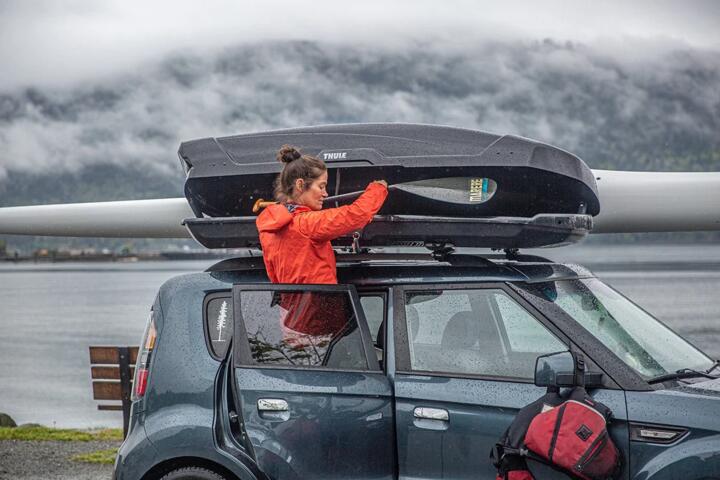
Try loading an item that matches your real use. A 20–25 kg bag of groceries, a duffel with a rigid frame, or a standard cooler reveals whether you need to tilt, twist, or lift over a lip. If you use a roof rack often, check whether the interior cargo space becomes your “staging area” for items you move between roof and cabin. That workflow depends on how quickly you can open and close the tailgate and how much you can reach inside.
Plan Tie-Downs And Restraint
Count the factory tie-down points and check their placement relative to common strap angles. Measure the distance between anchors and whether they sit on the floor, side walls, or rails. If the anchors cluster near one corner, you may struggle to restrain a load that spans the width. Look for features that reduce strap slip, such as textured tie-down surfaces or integrated rails.
Test with a strap you already own. A 2-inch ratchet strap or a cargo net can show whether the anchors support tension without pulling through trim. If you need to route straps around seat hinges or plastic panels, the restraint becomes harder and less consistent. That inconsistency matters when you carry items that shift easily, like tool cases, bottled drinks, or a bag of cat litter.
Use Cargo Management Features
Evaluate whether the cargo management system stays out of your way when seats fold. Some adjustable cargo floors lock into positions that create a level surface, while others interfere with tall items or reduce underfloor storage. Check whether side rails accept hooks and whether removable bins can be removed without tools. A system that works only when the floor is in one position can reduce flexibility during real trips.
In practice, cargo nets and organizers help only when they match the vehicle’s geometry. A net that attaches to weak points can sag and allow movement. A divider that blocks access to tie-downs can slow loading. If you plan to carry mixed items, look for partitions that let you separate fragile goods from heavy ones without turning the trunk into a puzzle.
Case Examples From Real Use
Family Weekend With Mixed Loads
A family shopping for a compact SUV compares two models with similar maximum cargo volume. Vehicle A folds the rear seats flat and keeps the cargo floor level, while Vehicle B leaves a noticeable step behind the folded seat. During a test load with a cooler, a duffel, and a box of snacks, Vehicle A lets the cooler sit flat and strap down across the width. Vehicle B forces the cooler to rest on the step, so the strap angle changes and the cooler shifts during a short drive on a rough road.
The family does not need more cubic liters; they need a stable platform and predictable restraint points. They also value the ability to access the cargo area quickly when the tailgate opens wide enough to reach the far corners without leaning into the vehicle. The spec sheet volume did not predict the difference in how often they re-adjusted items.
Tools And Long Items For Work
An owner hauling tools for weekend jobs chooses between two wagons with different cargo layouts. Vehicle A lists higher total volume with seats down, yet its tie-down points sit higher on the side panels and the floor rises behind the folded seats. Vehicle B has slightly less total volume, but it offers a flatter floor and lower anchors that support a ratchet strap across the load. When the owner loads a long toolbox and smaller parts bins, Vehicle B keeps the toolbox from sliding and reduces the need for improvised wedges.
The owner also notices that the wider opening reduces the time spent maneuvering long items. That time matters because the owner often loads in tight parking spaces, where repeated repositioning increases the chance of scuffing trim or dropping items. Flexibility shows up as fewer workarounds, not as a bigger number on a brochure.
Flexibility Checklist Vs Space
| Decision Factor | What To Look For | Why It Beats Raw Space | Quick Test |
|---|---|---|---|
| Seat-Fold Flatness | Flat or near-flat floor with minimal step | Reduces rocking and improves strap angles | Place a flat box across the folded area |
| Opening Geometry | Wide opening and manageable loading lip | Cuts lifting friction and speeds loading | Load a duffel without tilting it |
| Tie-Down Placement | Anchors at usable height and spacing | Helps restrain loads without improvising | Use your strap and check tension stability |
| Cargo Management | Adjustable floor, rails, bins that don’t block access | Turns space into compartments | Move the floor position and repeat loading |
Common Mistakes To Avoid
Buyers often compare only “max cargo volume” and ignore the floor shape. A vehicle can show a higher number with seats down yet still create a step that prevents flat loads from sitting securely. Another mistake involves assuming that folding seats automatically creates a flat surface; some designs fold in ways that leave a hump or a gap near the hinge line.
People also underestimate how often they need to access cargo while the seats remain up. If you carry a stroller, a pet carrier, or a cooler frequently, the behind-the-second-row space matters more than the total with seats folded. The best layout for weekend trips can become inconvenient for daily errands if the opening is narrow or the tailgate swings in a way that limits reach.
Improvised restraint methods create hidden costs. Using bungee cords on trim that lacks anchor points can fail under load, and tying straps around seat rails can damage components. A mild frustration: many owners discover their “favorite” cargo net does not attach to the vehicle’s anchor locations, so it becomes a storage item instead of a tool. If you plan to restrain loads, match the restraint to the anchor system.
Finally, buyers sometimes ignore the spare tire well and underfloor storage. A deep well can reduce usable height for tall boxes, and a removable cover can shift when you load heavy items. If you often carry items that need quick access, check whether underfloor storage forces you to unload everything to reach the items you use most.
FAQ
Does cargo flexibility matter for small cars
Yes, because compact trunks often have narrow openings and seat-fold steps. Flexibility shows up when you load irregular items like backpacks with frames, tool bags, or a cooler that needs a stable base.
How can I compare two cars without guessing
Measure fold flatness and loading height, then test with one real item you carry often. A flat box and a duffel reveal floor steps, access friction, and whether straps can reach usable anchor points.
What tie-down features should I look for
Look for factory anchors on the floor or side rails with enough spacing to span your typical load width. Check whether anchors remain accessible when seats fold and whether straps can pull without rubbing sharp trim.
Is maximum cargo volume ever enough
Maximum volume helps when your loads are uniform and you rarely need to restrain them. For mixed loads, floor shape and restraint geometry usually matter more than a higher cubic number.
Do cargo nets and organizers improve safety
They can reduce movement when they attach to proper anchor points and fit the vehicle’s layout. A net that sags or attaches to weak points can shift under braking, so test it with your actual items.
Author's Insight
Cargo flexibility beats raw space because real loads behave like shapes, not like cubic numbers. Seat-fold geometry, loading height, opening width, and anchor placement determine whether items sit flat, restrain cleanly, and load without repeated repositioning. Spec sheets measure volume under controlled assumptions, while buyers face steps, gaps, and access limits. When I review cargo layouts, I treat the floor as the “platform” and the anchors as the “control system,” then I check whether common items can be restrained without improvising.
A practical approach starts with one measurement session and one loading test in the showroom. If a vehicle fails that test, the volume number rarely fixes the problem. If it passes, you still confirm that the features remain usable with seats up, since daily errands often use that configuration. I also pay attention to small details like whether the cargo floor has a versioned accessory system and whether it interferes with folded seats; those quirks show up during loading, not in brochures.
Key Takeaways
- Prioritize seat-fold flatness, floor steps, and gap-free loading over maximum cubic volume.
- Measure loading height and opening width, then test with one real item you carry often.
- Check anchor placement and strap angles so restraint works without improvised knots or risky routing.
- Evaluate cargo management features for compatibility with folded seats and quick access needs.
- Use the spec sheet as a starting point, then validate usability with a short, repeatable loading test.