Sustainable Mobility
The automotive landscape has shifted from "if" to "how" regarding electrification. For the average driver, the choice usually boils down to two distinct philosophies: the all-in approach of the Battery Electric Vehicle (BEV) and the transitional versatility of the Plug-in Hybrid Electric Vehicle (PHEV). While a standard hybrid (HEV) like the classic Toyota Prius uses electricity to assist a gasoline engine, a PHEV allows for significant electric-only driving, effectively acting as an EV for short distances.
In practice, a BEV user relies entirely on the electrical grid and chemical energy stored in massive lithium-ion packs. Conversely, a PHEV user manages two separate powertrains. For example, a driver in a cold climate like Oslo might find that while their Tesla Model 3 loses roughly 20% of its range in sub-zero temperatures, a Volvo V60 Recharge can fall back on its internal combustion engine (ICE) to provide cabin heat without draining the traction battery. Statistics show that the average American commute is 41 miles round trip—a distance easily covered by most modern PHEVs on electricity alone, yet 64% of buyers still lean toward full EVs for the lower maintenance profile.
Electrification Hurdles
One of the most frequent mistakes buyers make is overestimating their daily range needs while underestimating their home’s electrical capacity. Many consumers purchase a high-capacity BEV only to realize their garage is limited to a Level 1 outlet (120V), which adds a mere 3-5 miles of range per hour. This "charging bottleneck" leads to reliance on expensive public DC fast chargers, which can cost up to $0.40–$0.60 per kWh, nearly tripling the cost compared to residential charging.
Furthermore, PHEV owners often fail to charge their vehicles at all, treating them as traditional hybrids. This is a massive inefficiency; carrying a heavy battery pack without using it results in worse fuel economy than a standard gasoline car due to the added 400–600 pounds of weight. In corporate fleets, this "dead weight" syndrome has led to real-world fuel consumption being 2-4 times higher than the manufacturer’s stated WLTP or EPA figures. Failing to account for battery thermal management in extreme climates also leads to premature capacity loss, which can tank resale values by 15% faster than expected.
The Level 2 Charging Requirement
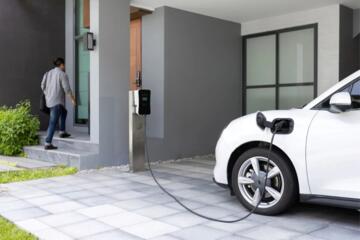
Installing a 240V Level 2 station, such as a ChargePoint Home Flex or Wallbox Pulsar Plus, is non-negotiable for BEV ownership. Relying on standard wall outlets is the primary cause of "range regret" among new owners.
The Weight Penalty of PHEVs
A PHEV carries both a fuel tank and a battery. If you rarely plug in, you are essentially paying to transport an expensive paperweight, which increases tire wear and reduces braking efficiency.
Cold Weather Performance Gaps
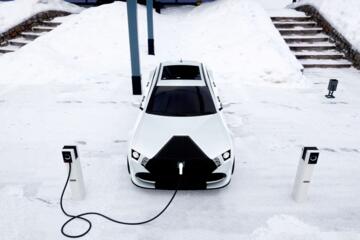
Electric heaters are massive energy drains. In winter, an EV without a heat pump (like older Nissan Leaf models) can see a range drop of 30-40%, whereas a hybrid can utilize waste heat from the engine.
Hidden Insurance Premiums
Insurance for high-end EVs can be 20-30% higher than internal combustion counterparts due to specialized repair requirements and the high cost of battery replacement in minor accidents.
Public Infrastructure Reliability
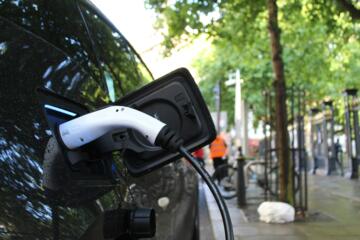
The "broken charger" phenomenon is real. Recent studies indicate that up to 20% of non-Tesla public charging stalls may be non-functional at any given time, making a backup gasoline engine a logical safety net for rural travel.
Depreciation and Technology Cycles
With battery chemistry evolving from NCM (Nickel Cobalt Manganese) to LFP (Lithium Iron Phosphate), older EV models risk faster obsolescence compared to hybrids which retain a more traditional mechanical value.
Data-Driven Choices
The most effective way to choose is to audit your last 90 days of travel. If 95% of your trips are under 250 miles and you have access to a dedicated parking spot with power, a BEV is almost always the superior financial choice over a 5-year horizon. According to Consumer Reports, EV owners spend about 50% less on maintenance because they lack oil filters, spark plugs, timing belts, and complex transmissions.
For those who frequently tow trailers or live in regions with sparse charging infrastructure (the "charging deserts"), a PHEV like the Toyota RAV4 Prime offers the best of both worlds. It provides an EPA-estimated 42 miles of EV range for daily errands but allows for a 600-mile road trip without a single 30-minute stop. Using apps like PlugShare or A Better Routeplanner (ABRP) can help you visualize whether your local routes support a full EV lifestyle before you sign the lease.
Home Infrastructure Readiness
Before buying, check your electrical panel. You need at least a 40-amp circuit for a modern EV charger. Upgrading a panel can cost $1,500–$3,000, a cost that must be factored into your initial investment.
Lifecycle Cost Analysis
Use the 5-year TCO method. While an EV has a higher MSRP, the combination of federal tax credits (like the $7,500 IRA credit in the US) and fuel savings usually creates a "break-even" point at the 36-month mark.
Battery Chemistry Selection
If you plan to keep the car for 10+ years, look for LFP batteries. They can be charged to 100% daily without significant degradation, whereas traditional NCM batteries prefer staying between 20% and 80%.
Regenerative Braking Mastery
Maximize your "one-pedal driving" settings. Learning to let the motor slow the car down can return up to 15-20% of spent energy back to the battery, significantly extending real-world range.
Pre-Conditioning Strategies
Always use the car's app to "pre-condition" (heat or cool) the cabin while it is still plugged into the wall. This uses grid power instead of battery power, preserving your range for the actual drive.
Performance Scenarios
Consider a logistics consultant based in Chicago who transitioned from a gas-powered SUV to a Tesla Model Y. By charging at home during "off-peak" hours (11 PM to 6 AM), their fuel cost dropped from $180 a month to $35. After 40,000 miles, the only maintenance required was a cabin air filter and a tire rotation. The total savings exceeded $4,500 in two years.
In contrast, a regional sales manager in Kentucky chose a BMW 330e (PHEV). Their territory involves 200-mile days through rural areas with zero high-speed chargers. By using the "Battery Hold" mode on highways and "Electric" mode in city traffic, they achieved 65 MPG equivalent, whereas a pure EV would have left them stranded or forced to wait hours at a slow Level 2 public station.
Analysis of Systems
| Feature | Plug-in Hybrid (PHEV) | Battery Electric (BEV) |
|---|---|---|
| Ideal Use Case | Mixed city/highway, no home charging, towing | Daily commuting, home charging, eco-focused |
| Average EV Range | 25–50 miles | 200–400+ miles |
| Maintenance Cost | Moderate (Engine + Battery) | Low (No engine components) |
| Energy Source | Gasoline + Electricity | 100% Electricity |
| Resale Value | Highly stable | Variable (depends on battery health) |
Common Pitfalls to Avoid
Do not buy a BEV if you live in an apartment complex that refuses to install chargers, unless there is a DC fast charger at your workplace or local grocery store. Relying on "opportunity charging" is the fastest way to grow frustrated with green tech. Additionally, avoid the "Size Trap"—buying a massive Hummer EV or Rivian R1T if you only drive in the city. The efficiency of these large vehicles is significantly lower (approx. 2.0 miles per kWh) compared to a sedan (approx. 4.0 miles per kWh), doubling your power bill.
Another error is ignoring the "DC Charge Curve." Most EVs only charge at their maximum advertised speed (e.g., 250 kW) when the battery is nearly empty. As the battery fills up, the speed drops significantly. Planning to charge from 80% to 100% at a public station is a waste of time and money, as that last 20% can take as long as the first 80%.
FAQ
Does frequent fast-charging damage the battery?
Repeated use of DC fast chargers can cause heat buildup, which may degrade the battery slightly faster over several years. It is best to use Level 2 AC charging for 90% of your needs and save fast charging for road trips.
Can I tow a trailer with an electric vehicle?
Yes, EVs have incredible torque, but towing can reduce the range by 50% or more due to aerodynamic drag. If you tow long distances regularly, a PHEV or a Diesel remains more practical for now.
How long do the batteries actually last?
Modern EV batteries are designed to outlast the vehicle. Most manufacturers provide an 8-year/100,000-mile warranty. Real-world data shows many Tesla batteries still have 85-90% capacity after 200,000 miles.
Is it cheaper to "fuel" an EV than a gas car?
Generally, yes. If electricity is $0.15 per kWh, an EV costs about $0.04 per mile. A gas car at 30 MPG and $3.50/gallon costs about $0.12 per mile. The savings are substantial over time.
What happens if I run out of charge on the road?
Just like a gas car, you will need a tow. However, some roadside assistance services, like AAA, now have trucks equipped with mobile chargers that can give you enough "emergency juice" to reach the next station.
Author’s Insight
Having tested over 50 electrified models in the last decade, I’ve realized that the "best" car is entirely dependent on your "garage logic." I personally tell my clients that if you can't plug in where you sleep, don't buy a pure EV yet—the friction of finding chargers will ruin the experience. However, the instant torque and silence of a BEV are addictive; once you make the switch and set up a Level 2 home charger, going back to a vibrating, loud internal combustion engine feels like stepping back into the 19th century. My advice: buy the smallest battery that covers your longest frequent trip to save weight and money.
Summary
The choice between electric and hybrid isn't about which technology is superior, but which one fits the geometry of your life. If you have a dedicated charging spot and a standard commute, the Battery Electric Vehicle offers the lowest operating costs and the most seamless ownership experience. If your life involves unpredictable long-distance travel or lack of residential power, a Plug-in Hybrid serves as a vital bridge, offering emission-free city driving without the logistical constraints of the current charging grid. Audit your driving patterns, verify your home's electrical capacity, and choose the tool that solves your mobility needs today while keeping an eye on the infrastructure of tomorrow.