Charging Math in Plain Terms
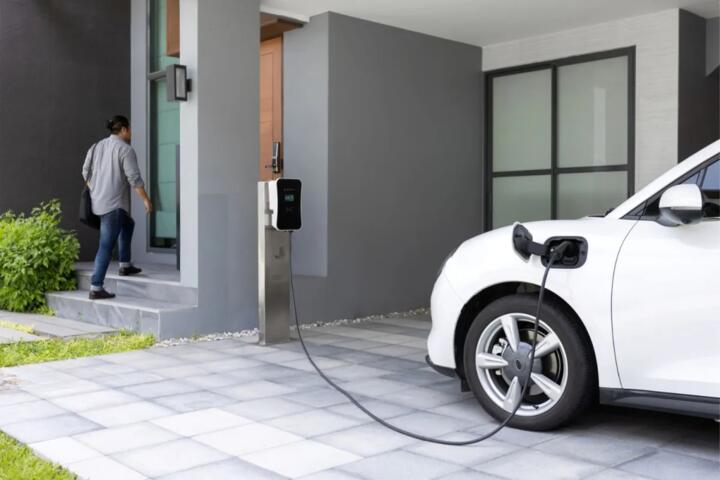
Home charging changes EV ownership math because it replaces frequent public charging with predictable electricity use at home. A typical Level 2 setup can add about 25–35 miles of range per hour, depending on the vehicle and charger output. That timing matters because many utilities price off-peak electricity lower, and your charging schedule can follow those rates.
Skip the “one number” spreadsheet. It hides the real drivers: your kWh rate, your charging losses, and how many miles you drive. The U.S. Department of Energy reports that EVs average roughly 25 kWh per 100 miles, though real-world figures vary with speed, temperature, and vehicle efficiency. The same DOE source also notes that charging losses are commonly around 10% on average, meaning you draw more electricity than the battery gains.
Vehicle type changes the outcome. A compact EV with a 60 kWh battery behaves differently than a larger SUV EV with a 100 kWh pack, even if both show “300 miles” on the window sticker. Range estimates also shift with weather; a winter dip of 20–40% is common in cold climates, and highway speeds raise consumption quickly. If you tow, the math changes again because aerodynamic drag dominates energy use.
Home charging also affects convenience costs. Public charging often includes session fees, idle time rules, and card verification steps that add friction when you’re tired after work. That friction shows up as “I charged less than planned,” which then pushes you toward more expensive charging later.
Where Buyers Miscalculate
People usually start with the car’s advertised range and forget that charging is a cost and a schedule. They also assume every mile costs the same, even though EV efficiency changes with speed, temperature, and battery state of charge. A 75 mph commute can use far more energy than a 55 mph route, even when the distance is identical.
Skip the assumption that public charging is “close enough.” It rarely is when you compare per-kWh pricing plus fees. Many fast-charging networks price electricity differently by time, location, and demand, and they often add session or connection fees. If you drive 12,000 miles a year and rely on public charging for half your energy, the difference between $0.12/kWh and $0.35/kWh can swing annual energy cost by hundreds of dollars.
Battery charging habits also get overlooked. Frequent charging to 100% and leaving the car at high state of charge can accelerate battery wear in some chemistries, and manufacturers often recommend charging to a lower target for daily use. You may not see a dramatic range drop in the first year, but the long-term capacity trend matters for resale value. Warranty coverage varies by brand and battery terms, so the “math” should include the warranty limits, not just the sticker price.
Another misstep is ignoring charger reliability and installation constraints. A Level 2 charger needs correct electrical service, safe wiring, and a location that matches cable length. If the install requires panel upgrades, trenching, or permits, the upfront cost can erase months of savings. And if the charger is undersized for your vehicle’s onboard charging limits, you may not hit the expected miles-per-hour rate.
Real-world situations make the gap obvious. A family with two drivers may share one home charger, and the second driver’s schedule can force more public charging. A commuter who leaves at 6:30 a.m. may need to charge before off-peak windows start. A road-trip driver who uses DC fast charging for long legs still benefits from home charging, but the trip pattern changes the total energy mix.
Specific Ways to Fix the Math
1) Start with your kWh rate
Use your actual utility plan, not the national average. Look up your cents-per-kWh for the hours you can charge, then estimate annual kWh from your miles and the vehicle’s efficiency. DOE’s ~25 kWh/100 miles is a baseline, but your car’s EPA rating and your driving style can move that number. If you drive 10,000 miles and average 28 kWh/100 miles, you’ll use about 2,800 kWh per year before charging losses.
Skip the “battery-only” estimate. It ignores charging losses, which DOE commonly cites around 10% on average. With 10% losses, you’d draw about 3,080 kWh from the wall. Multiply by your off-peak rate, then compare to your current fuel cost per mile.
2) Model charging losses and limits
Charging losses show up as extra electricity use and slightly longer charging sessions. Most home charging is AC-to-DC conversion plus battery charging overhead, and the losses vary with temperature and battery state. If you charge in winter, expect higher consumption because cabin heating and battery conditioning draw power too.
Skip the “range per hour” fantasy. It assumes ideal conditions and full charger output. For example, a Tesla Model 3 Long Range can accept up to 11.5 kW AC on many trims, while a Nissan Leaf may top out around 6.6 kW AC depending on generation. Your charger should match the vehicle’s onboard limit or you’ll pay for capacity you can’t use.
3) Choose Level 2 with the right output
Level 2 charging typically uses 240V and common outputs of 16A (about 3.8 kW) or 32A (about 7.7 kW), with some vehicles supporting higher. A 7.7 kW charger can add roughly 25–35 miles per hour on efficient EVs, while a 3.8 kW unit adds about half that. If your daily driving is 40 miles, a 3.8 kW charger may still work, but only if you have enough hours before departure.
Skip the “bigger is always better” logic. If your vehicle’s onboard charger is 7.7 kW, a 11 kW or 19.2 kW charger won’t increase your real charging rate. The practical win is matching charger output to your vehicle and your schedule, not buying the highest spec.
4) Use off-peak schedules with discipline
Off-peak pricing can cut your energy cost, but only if you actually charge during those windows. Many EVs and chargers support scheduled charging, and some utilities offer time-of-use plans with peak and super-peak periods. If you set a schedule that ends at 7:00 a.m., you may still pay peak rates if your utility changes pricing earlier.
Skip the “set it once” approach. Schedules drift with daylight savings, work changes, and weekend habits. I’ve seen chargers left on a default schedule after a move, and the first bill revealed peak charging for weeks—an expensive lesson that a quick rate check would have prevented.
5) Plan for battery longevity targets
Battery management affects long-term ownership costs through capacity retention and warranty terms. Many manufacturers recommend charging to a lower daily target, often around 70–80% for routine use, and using 100% only when you need it. The exact recommendation varies by model and battery chemistry, so follow the owner’s manual rather than a forum rule.
Skip the habit of charging to 100% every night. It can keep the battery at higher state of charge longer, which can increase stress. You may not notice range loss immediately, but resale buyers often look at reported battery health, and warranty coverage can depend on how the battery is used.
6) Budget installation and permits up front
Home charging savings can be erased by installation surprises. A typical Level 2 install may include a new breaker, conduit, and trenching, and some homes require panel upgrades. If you’re in an older building, the electrical service size can be the limiting factor, not the charger.
Skip the “charger cost only” quote. Ask for a line-item estimate that includes permits, electrical work, and any load management hardware. A small detail like a 2024 utility requirement for a specific inspection can delay installation, and delays can push you back to public charging.
7) Account for maintenance and repair differences
EVs generally reduce some maintenance items compared with gas cars, but they don’t eliminate service. Brake wear is often lower due to regenerative braking, yet brake fluid still needs periodic service and tires still wear based on alignment and driving. Cooling systems for the battery and power electronics need inspection, and cabin filters require replacement.
Skip the idea that “no maintenance” means “no cost.” A home charger also needs occasional attention—firmware updates on smart units, cable inspections for wear, and GFCI protection checks. If your charger fails, you’ll pay for public charging until it’s fixed, and that interruption matters for the ownership math.
8) Include insurance and resale effects
Insurance premiums can differ between EVs and comparable gas models due to repair costs, parts availability, and vehicle value. Repairing high-voltage components and replacing damaged battery packs can raise claim costs, even when the damage is minor. Resale value depends on battery health reporting, model demand, and local incentives that can change over time.
Skip the “energy cost only” spreadsheet. If insurance is $40–$80 per month higher and resale drops faster than expected, the home charging savings may not offset the total cost. Use recent listings and auction data for the exact trim, not just the base model name.
Mini Case: Fleet Depot
A small delivery company ran 12 EVs on routes averaging 85 miles per day each. They initially used mostly DC fast charging at a nearby station, then added Level 2 charging at the depot with scheduled charging during off-peak hours. The fleet estimated 25 kWh/100 miles and applied a 10% charging loss, then compared utility off-peak pricing to the station’s per-kWh plus session fees.
They saw energy cost drop from about $0.32/kWh effective to about $0.14/kWh effective after switching to home charging. Over roughly 12 EVs × 85 miles/day × 365 days, that translated to a reduction on the order of 12,000–15,000 kWh per year per vehicle, depending on winter consumption. The company also reduced downtime because vehicles charged overnight instead of waiting for sessions during peak hours.
They still used DC fast charging for route extensions, but the share of public charging fell sharply. The result was fewer “emergency” fast-charge stops and a more predictable daily schedule, which matters when drivers clock in at fixed times.
Mini Case: Two-Driver House
A two-driver household with one Level 2 charger faced a schedule mismatch. One driver returned at 5:30 p.m., the other at 7:45 p.m., and the utility’s off-peak window started at 9:00 p.m. The family set charging schedules but discovered the second driver’s car often finished after 9:00 p.m., shifting part of the charging into peak rates.
They fixed it by adjusting the charge start time and using a lower daily charge target for the car that didn’t need full range. They also added a second Level 2 unit after a panel upgrade, which cost more than expected, but it removed the shared bottleneck. After the change, their monthly electricity cost stabilized and public charging trips dropped from about once per week to about once per month.
The key lesson was practical: home charging math depends on who plugs in, when they plug in, and how the schedule overlaps with your tariff. A charger that works on paper can still fail the household workflow.
Checklist: Run the Numbers
| Step | What to calculate | Example inputs | What you compare |
|---|---|---|---|
| 1. Annual miles | Your expected driving | 10,000 miles/year | Energy use vs fuel use |
| 2. kWh per 100 mi | Use EPA or your estimate | 28 kWh/100 mi | EV efficiency sensitivity |
| 3. Add losses | Wall electricity vs battery | +10% charging losses | Real utility bill |
| 4. Apply your rate | Off-peak and peak mix | $0.14/kWh off-peak | Public charging fallback |
| 5. Add install cost | Charger + electrical work | Panel upgrade included | Payback timeline |
| 6. Add insurance delta | Monthly premium difference | + $60/month | Total cost of ownership |
| 7. Add resale risk | Battery health and demand | Check local comps | Depreciation trend |
Common Mistakes and Fixes
Skip the “charge to 100% daily” pattern. It happens because the car makes it easy and the dashboard shows full range. The impact is extra battery stress and less flexibility for off-peak scheduling. Avoid it by using a daily charge target in the app or vehicle settings, then raising it only before long trips.
Skip the “public charging never happens” plan. It happens when a buyer assumes home charging covers every scenario. The impact is surprise fast-charging bills when schedules slip or the charger is down. Avoid it by budgeting a small public charging percentage, then checking your utility and charger reliability after the first 2–3 months.
Skip the “charger size doesn’t matter” belief. It happens when the buyer focuses on the car’s range number instead of onboard charging limits. The impact is slower charging than expected, which pushes you into peak rates. Avoid it by matching charger output to the vehicle’s AC acceptance and confirming the miles-per-hour under realistic conditions.
Skip the “installation is always simple” assumption. It happens when quotes omit panel upgrades or permit delays. The impact is delayed charging and extra public charging during the gap. Avoid it by asking for a detailed scope and timeline, then planning for a temporary charging option if the install slips.
Skip the “maintenance is zero” mindset. It happens because EVs have fewer engine-related services. The impact is surprise costs for tires, brake fluid service, cabin filters, and occasional cooling system work. Avoid it by using the owner’s maintenance schedule and pricing common items before purchase.
FAQ
How do I estimate my monthly EV cost?
Start with your miles per month, then estimate kWh per 100 miles for your specific vehicle and driving. A common baseline is around 25 kWh/100 miles, but highway speed and winter weather can push higher. Add charging losses (often around 10% on average) to convert battery energy to wall electricity. Multiply by your utility rate, then split the result into off-peak and peak if your schedule overlaps both. Finally, add insurance and any charger installation payment, since those can outweigh energy savings.
Does home charging always beat public charging?
Home charging usually costs less per mile when you have a favorable time-of-use rate and you actually charge during off-peak hours. Public fast charging can still be cheaper in rare cases, such as promotions or very low local DC pricing, but it often includes session fees and demand pricing. The comparison should use effective $/kWh from your receipts, not the advertised per-kWh rate. If you rely on public charging for more than a small share of your energy, the savings from home charging can shrink quickly.
What charger speed do I need at home?
Match the charger output to the vehicle’s onboard AC charging limit. For example, some EVs accept around 6.6 kW AC, while others accept higher levels near 11 kW AC. If your daily driving is 30–50 miles and you have 6–8 hours overnight, a 3.8 kW or 7.7 kW Level 2 charger can work, but the schedule must fit your departure time. Confirm the vehicle’s maximum AC input in the owner’s manual, then estimate miles added per hour under typical conditions.
How does battery charging to 100% affect ownership?
Charging to 100% every day can increase battery stress because the battery spends more time at a higher state of charge. Many manufacturers recommend a lower daily target and using 100% only when you need maximum range. The effect on capacity varies by battery chemistry, climate, and how long the car sits at high charge. Warranty terms also differ, so check the battery coverage language for your model and region. Use the car’s charge limit setting for daily use.
Will home charging change my maintenance schedule?
EVs reduce some maintenance items, but they still need service. Brake wear is often lower due to regenerative braking, yet brake fluid replacement still appears on maintenance schedules. Tires remain a major cost because EVs can be heavier and deliver instant torque, which can affect tread wear. Cabin air filters and coolant systems for battery and electronics also require periodic inspection. If your home charger fails, the maintenance impact is indirect: you may increase public charging and pay higher energy costs.
Author's Insight
Home charging changes ownership math because it turns energy cost into a controllable variable: your utility rate, your charging schedule, and your share of public charging. The biggest errors I see in buyer spreadsheets come from ignoring charging losses, assuming off-peak windows match their routine, and forgetting installation scope. Battery longevity targets matter too, even when the first-year range looks unchanged. If you want the math to hold up, model your real overlap between plug-in time and your tariff, then sanity-check it against your first two utility bills.
Key Takeaways
Home charging can lower your per-mile energy cost, but only when your schedule matches off-peak pricing and your charger output matches the vehicle’s onboard limits. Build your estimate from kWh per 100 miles, add charging losses, then apply your actual utility rates and a realistic public-charging fallback. Include installation costs, insurance differences, and battery-use habits that affect long-term capacity and resale.
Next steps: pull your utility plan rates, confirm your EV’s maximum AC charging input, and request a charger install quote with permits and electrical scope listed. After you start charging, compare your expected kWh to your utility bill for the first 30–60 days, then adjust schedules if peak charging shows up. If you notice abnormal battery behavior, repeated charging errors, or overheating warnings, follow the owner’s manual and contact a qualified service center rather than guessing.