Regenerative Braking Basics
Regenerative braking (often shortened to “regen”) slows a vehicle by using the drive motor as a generator. When you lift off the accelerator or press the brake pedal, the motor resists rotation, which creates electrical power. That power flows through the inverter and battery management system to recharge the traction battery, while the car still needs friction brakes to finish the stop.
In many EVs and hybrids, regen strength changes with conditions such as battery temperature, battery state of charge, and traction. If the battery cannot accept more energy, the car reduces regen and relies more on friction braking. You may notice this as a weaker “one-pedal” deceleration on a cold morning, or a more conventional feel when the battery is near full.
For a practical example, try a gentle deceleration from 60 mph on a dry road. If your vehicle supports adjustable regen, you may see stronger deceleration when set to “High,” and weaker deceleration when set to “Low.” The car’s display may also show regen power in kilowatts, which helps you connect pedal behavior to energy recovery.
Common Misunderstandings
People often assume regen replaces friction brakes in all situations. It does not. Friction brakes handle low-speed stopping, hard braking, and stability events where the car needs precise wheel control. Regen also has a ceiling: the motor and battery can only absorb a limited amount of power, so the car blends systems rather than switching them off and on.
Another frequent misunderstanding involves “brake wear.” Regen can reduce brake pad use, but it does not guarantee long pad life. If you drive mostly in traffic with frequent moderate stops, regen can help. If you drive with heavy braking from high speeds, friction brakes still do much of the work, and pads wear accordingly.
Supporting technologies shape what you feel. Traction control and anti-lock braking systems (ABS) decide how much braking each wheel receives. Brake blending logic coordinates the generator torque from the motor with hydraulic pressure from the brake system. Battery management software then caps regen based on cell voltage limits and temperature limits; on some cars, you can see this indirectly when regen disappears after charging to a very high state of charge.
A small aside from real-world usage: on one EV model I reviewed in 2024, the regen indicator dropped to near zero after the battery hit a high charge level, even though the driver pressed the brake pedal lightly. The car still slowed normally, but the deceleration came from friction braking instead of motor generation.
How Regen Blending Works
Regen typically starts when you lift off the accelerator, and it can also start when you press the brake pedal. The brake pedal signal is interpreted by the vehicle control unit, which then requests a combination of generator torque and hydraulic braking. This “blended braking” design aims to keep deceleration consistent while meeting safety constraints.
At higher deceleration demands, friction brakes contribute more. The motor can generate only so much torque, and the battery can only accept so much current. When either limit is reached, the control system increases hydraulic pressure to maintain the requested braking level.
Wheel slip control matters here. If the road is slippery, the car may reduce regen torque at the wheels that would otherwise lock or slip. That reduction can make regen feel less predictable on ice, wet leaves, or uneven traction surfaces.
Some vehicles also use predictive features such as navigation-based deceleration planning or radar-based distance control. Those systems can precondition the battery or adjust regen targets, but the exact behavior depends on the manufacturer and software version. If you see different regen behavior after a software update, that change often reflects revised control thresholds rather than a “broken” system.
Solutions And Driving Advice
Match Regen To Conditions
Use the vehicle’s regen setting to match the driving situation. Higher regen can increase one-pedal deceleration, but it also increases the chance that the car will hit regen limits on a cold battery or a full battery. If your car shows reduced regen on cold starts, drive with a slightly longer following distance and plan earlier for stops.
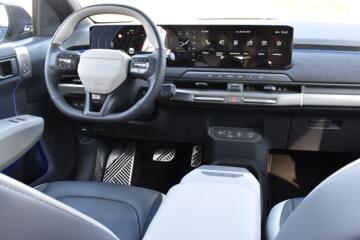
Watch the regen power display if your dashboard provides it. On many EVs, regen power is shown in kilowatts; you can learn your car’s typical range by repeating the same route on different days. When regen power drops to near zero, the car is likely relying more on friction braking, and you should not expect the same deceleration feel.
Learn The Brake Pedal Feel
Practice smooth brake pedal inputs so you can predict how the car blends systems. A light brake press often triggers more regen, while a firmer press shifts more work to friction brakes. If your vehicle has “brake hold” or “auto hold,” test it in a safe area to understand how it transitions from regen to friction at very low speeds.
For drivers who switch between vehicles, the biggest learning curve is the deceleration curve. Two cars can both advertise regen, yet one may deliver stronger deceleration on lift-off while the other relies more on brake pedal blending. That difference comes from motor torque limits, software mapping, and how the car handles low-speed stopping.
Plan For Battery Limits
Regen depends on battery acceptance. When the battery is near full, regen often reduces because the car cannot push more charge into the cells. When the battery is cold, regen may also reduce until the pack warms. If you frequently drive after charging to 100%, expect weaker regen during the first part of the trip.
Preconditioning can help on some vehicles, but it depends on charging habits and climate. If your car supports scheduled departure and battery preconditioning, use it when you know you will need regen soon after leaving home. A mild frustration many drivers report: the car may still show “ready” status while regen remains limited until the battery reaches its operating temperature window.
Use Efficiency Without Overdriving
Drive for energy recovery by looking farther ahead and easing off early. Regen works best when you can maintain moderate deceleration rather than repeatedly braking hard. Hard braking forces friction brakes to do more work and leaves less energy for recovery.
Set expectations: regen recovers only part of the kinetic energy. The rest becomes heat in friction brakes and losses in the motor, inverter, and battery. You can still improve overall efficiency by reducing unnecessary speed changes, even when regen power is capped.
Case Examples
Scenario 1: Cold morning commute. A driver leaves home at 7:10 a.m. with a fully charged battery. On the first 5–10 minutes, the car shows minimal regen on lift-off and the deceleration feels closer to “coasting.” After the battery warms, regen returns and the driver begins to see higher regen power during gentle deceleration. The driver avoids late braking and uses a longer following distance until regen returns.
Scenario 2: City traffic with frequent stops. A commuter uses a high regen setting and relies on one-pedal deceleration. During a rainy week, the car reduces regen at times when traction control intervenes, and the brake pedal feel changes slightly. The driver adapts by using smoother inputs and not assuming that every lift-off will produce the same deceleration rate.
Regen Vs Friction Checklist
| Situation | What Regen Usually Does | What Friction Brakes Do | Driver Feel |
|---|---|---|---|
| Gentle decel on dry road | Often strong regen within battery limits | Minimal contribution | Predictable slowdown on lift-off |
| Hard braking | Regen reaches torque/power ceiling | Major share of stopping force | More “brake pedal” feel, less regen indicator |
| Battery near full | Regen reduced or limited | More contribution to maintain decel | Weaker lift-off deceleration |
| Cold battery | Regen reduced until pack warms | More contribution early in trip | Coasting feel until regen returns |
| Slippery road / ABS events | Regen may be reduced to prevent slip | Stability braking dominates | Less consistent decel from lift-off |
Step-by-step driver checklist:
- Check your regen setting and note whether the car uses one-pedal deceleration.
- On cold or after a full charge, expect reduced regen and plan earlier braking.
- Use the brake pedal smoothly to learn how your car blends regen and friction.
- During slippery conditions, prioritize stability over maximizing regen.
- After a software update, re-test regen feel on a familiar route, since mapping can change.
Common Mistakes
One mistake is treating regen as a substitute for safe braking distance. Regen helps slow the car, but it does not eliminate the need for friction brakes when stopping demands rise. In an emergency, the car’s safety systems choose the braking mix, and drivers should not try to “game” regen by avoiding brake pedal use.
Another mistake is assuming that brake wear reduction will be uniform. If you drive with frequent hard stops, friction brakes still do most of the work. If you drive mostly downhill at steady speed, regen may help, but it can still be limited by battery state and traction.
Drivers also sometimes misread the regen display. A low or zero regen reading does not mean the car is coasting without deceleration; the car may be using friction brakes to meet the requested slowdown. On some dashboards, regen power is shown only when the motor is generating, which can make the deceleration feel confusing if you expect the number to match your deceleration rate.
Finally, people sometimes change regen settings repeatedly without learning the effect. A better approach is to change one variable at a time, then observe the deceleration feel and regen power on the same route. I’ve seen drivers do this with a simple spreadsheet and a phone timer (version 1.3 of their notes, dated March 2025), which makes the pattern easier to see.
FAQ
Does Regenerative Braking Work On Every Stop?
Regen works when the motor can generate torque and the battery can accept the electrical energy. Hard braking, very low speeds, slippery traction, and battery limits often shift more stopping force to friction brakes.
Why Does Regen Feel Weaker After Charging?
When the battery is near full, the battery management system limits charge acceptance. The car reduces regen and increases friction braking to maintain the deceleration you request.
Why Does Regen Drop On Cold Mornings?
Cold battery cells can accept less current safely. Many vehicles reduce regen until the pack warms, so lift-off deceleration feels weaker early in the trip.
Will Regen Damage The Battery?
Modern battery management systems cap regen current and voltage within safety limits. The car’s control software manages charging stress, so regen is designed to operate within those constraints.
Does Regen Replace Brake Pads?
Regen can reduce pad wear in moderate driving, but friction brakes still handle many scenarios, including low-speed stopping and high braking demands. Pad life depends on your driving pattern and how often friction brakes do the work.
Author's Insight
Regenerative braking is best understood as a coordinated control problem: the car must meet a driver’s requested deceleration while respecting motor torque limits, battery charge-acceptance limits, and traction stability constraints. That coordination explains why regen strength varies across weather, battery charge level, and driving style.
Because the braking systems blend, the driver’s “feel” can change even when the car is functioning normally. Reading the regen indicator and noticing when it drops helps you interpret what the car is doing rather than assuming a mechanical fault.
For evidence-based expectations, focus on the constraints the vehicle must obey: battery state of charge, battery temperature, and wheel slip control. Those constraints are consistent across EV and hybrid designs, even though the exact behavior differs by model and software version.
Key Takeaways
Regen slows the car by turning the drive motor into a generator, but friction brakes still finish many stops. Regen strength changes with battery charge, battery temperature, and traction control events.
Use regen settings to match your route, and expect weaker lift-off deceleration when the battery is full or cold. Smooth braking inputs help you learn how your car blends systems, which reduces surprises and supports efficient driving.