One-Pedal Driving Basics
One-pedal driving is a control strategy where lifting the accelerator triggers deceleration, often strong enough to slow to near-stop without touching the brake pedal. Most systems blend regenerative braking with friction braking, so the pedal feel changes as the car approaches low speed. In many EVs, regen strength is adjustable in steps, and the highest setting can produce a noticeable “engine-brake” sensation.
Real-world numbers help set expectations. Regen braking can recover a meaningful share of energy during deceleration, but it rarely returns 100% because of drivetrain losses and battery limits. Battery state of charge matters too: when the pack is near full, regen may be reduced, so the car coasts more than you expect.
Vehicle type changes the feel more than many buyers realize. A heavy SUV with a large battery and high curb weight needs more braking torque to slow at the same rate as a lighter hatchback. A dual-motor EV can also shift torque between axles, which affects how smooth the deceleration feels through corners and uneven pavement.
Try this in a safe test area. Set regen to the highest level, then lift from 30 mph and watch how quickly the speed drops. Many cars will slow far more than a typical gas vehicle’s lift-off, and the transition near 0 mph can feel abrupt if the system uses a stronger “hold” mode.
Skip the stopwatch. Feel first, then measure later.
What People Get Wrong
People often assume one-pedal driving behaves the same in every situation. It does not. Regen strength changes with battery temperature, battery state of charge, traction limits, and even the selected drive mode.
Another misunderstanding is that the brake pedal becomes unnecessary. It still matters, especially for hard stops, slippery roads, and situations where you need predictable deceleration. If you rely on lift-off alone, you can end up too slow for the traffic gap, then add brake late, which makes the ride jerky.
Financial consequences show up in wear and energy habits. If you drive with late, high-force braking because the car didn’t slow enough on lift-off, you lose the energy you expected to recover. On the other hand, if you use lift-off too aggressively, you may increase tire wear from frequent speed changes and reduce comfort for passengers.
In real traffic, the “near-stop” behavior is where it gets tricky. Some systems hold the car at a stop with a light brake pressure, then release when you press the accelerator. Others creep slightly, which can surprise you at red lights and in drive-thru lines.
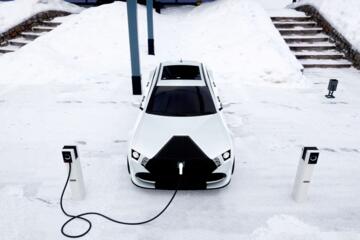
Winter adds another layer. Cold batteries can limit regen, so the car feels like it coasts more than it did on a warm day. That mismatch is why the same EV can feel smooth in summer and less controllable in January.
How To Test And Tune It
Set Regen To A Known Level
Pick one regen setting and keep it for the test drive. Why it works: you remove the variable of changing deceleration strength between runs. In practice, the highest setting usually gives the strongest lift-off slowdown, while lower settings feel closer to coasting. Use the vehicle’s drive-mode menu and note the setting name; on some cars it appears as “High,” “Standard,” or a numbered scale.
Measure the decel rate once. Lift from 25 mph and note how long it takes to reach 10 mph. If the car takes about 6–10 seconds, you’re in a strong regen zone; if it takes longer, the system is likely blending more coasting.
Check The Hold-To-Stop Behavior
Test what happens when you lift at low speed, like 10 mph. Why it works: many systems switch from regen-heavy braking to a different strategy near 0 mph to prevent rollaway. In practice, you may feel a stronger tug as the car transitions into “hold” or “creep.” Try it on level ground and then on a gentle slope so you can feel how the car manages brake hold.
Skip the parking-lot guesswork. Do it on a slope.
Practice Brake Blending With One Finger
Use light brake pedal inputs during the test so you learn how quickly friction braking joins. Why it works: regen alone cannot handle every stop, especially at very low speeds or when traction is limited. In practice, a smooth system blends so the deceleration feels continuous, but the brake pedal may feel different than you expect. If the car has a “brake hold” feature, test it with a short stop and restart.
Watch the brake lights. Some cars trigger them earlier than others.
Account For Battery State And Temperature
Drive once with a partially charged battery and once after charging to a high state. Why it works: regen can be reduced near full charge, so lift-off deceleration may weaken. In practice, you might notice more coasting after a fast charge, especially if the pack is cold. If your EV shows battery temperature or regen limit indicators, note them; if not, you can still infer the change by comparing decel behavior.
Plan for a 10–20% difference. That’s a common feel shift when regen is limited.
Confirm Child-Seat And Cabin Practicality
One-pedal driving changes how often you slow without touching the brake pedal, which affects passenger comfort. Why it works: frequent deceleration can increase head-nod motion for kids in forward-facing seats. In practice, you should test with the seat installed and check that the seatbelt routing and tether clearance do not interfere with your reach to the brake pedal. Verify ISOFIX/LATCH positions and whether the seat base sits low enough for stable installation.
Do a 5-minute test with the seat. Then check for looseness.
Estimate Energy Use On Your Route
Use your usual commute route and compare consumption with one-pedal driving on and off. Why it works: the system’s benefit depends on traffic flow and how often you lift. In practice, you can track “kWh/100 miles” or the car’s energy screen over 2–3 trips. If your route is mostly steady highway speed, one-pedal driving may change little because there are fewer deceleration events.
Expect smaller gains on steady roads. Stop-and-go traffic shows more difference.
Plan For Charging Limits On Road Trips
Road trips often involve fast charging, which can bring the battery close to full. Why it works: near full charge, regen may be limited, so lift-off deceleration feels weaker right after charging. In practice, you may need to brake earlier when leaving a charger. If the car’s navigation preconditions the battery, test whether it improves regen feel on arrival.
Fast charging can cut regen. That’s not a defect.
Mini Case Examples From Fleets
A delivery company running 18 EVs on urban routes switched drivers to a consistent one-pedal setting. The problem was inconsistent driving: some drivers coasted, others braked late, and the result was uneven energy use and passenger complaints. The fleet manager required a short training loop and a rule: lift early for traffic gaps, then use the brake pedal for hard stops. After 6 weeks, the average consumption dropped from about 31 kWh/100 miles to about 28 kWh/100 miles on similar routes, and brake wear inspections showed fewer instances of overheated pads.
Another case involved a service contractor using an EV crossover for mixed suburban driving. The problem was cold-weather behavior: drivers reported “weak slowing” after charging and late braking at intersections. The fix was operational, not software: they scheduled charging to avoid finishing at 100% before leaving, and they warmed the battery using preconditioning when available. Over a winter month, the contractor reduced complaints and improved on-time arrival by a small margin, roughly 1–2 minutes per shift, because drivers stopped guessing decel strength.
Both cases show the same pattern. Training beats assumptions.
One-Pedal Checklist For Buyers
| Test Item | What To Look For | Why It Matters | Pass/Fail Note |
|---|---|---|---|
| Lift-Off Decel | Consistent slowdown from 30→10 mph | Predictable control in traffic | |
| Near-Zero Transition | Smooth hold or creep behavior | Avoids surprises at stops | |
| Brake Blending | Brake pedal feel matches decel demand | Reduces late, jerky stops | |
| Regen Limits | Weaker lift-off when battery is near full | Prevents “why won’t it slow” moments | |
| Energy Screen | kWh/100 miles changes on your route | Shows whether you’ll save money |
Common Mistakes And Fixes
Mistake: Treating It As Brainless
Why it happens: lift-off feels like a built-in brake, so drivers stop reading the road as closely. Impact: you brake late when the system reduces regen, especially after fast charging or in cold weather. Avoid it by practicing early lift and then using the brake pedal for the final approach. If the car shows regen limit behavior, plan for it rather than fighting it.
Skip the “I’ll just lift” habit. It breaks in winter.
Mistake: Ignoring Drive-Mode Differences
Why it happens: some EVs tie regen strength to drive modes like Eco, Normal, or Sport. Impact: you get inconsistent deceleration when you switch modes for comfort or range. Avoid it by testing one-pedal feel in the exact mode you expect to use daily. Write down the setting you like; dealers can reset menus during service.
On a test drive, ask the rep to leave settings unchanged. Small changes matter.
Mistake: Overusing Hard Lift-Off
Why it happens: the strongest regen setting can feel like it “does everything.” Impact: passengers feel more motion, and you may create a stop-and-go rhythm that increases tire wear. Avoid it by using a mid-level regen setting for commuting and reserving high regen for downhill segments. If your EV has adjustable regen levels, start one step lower than the maximum.
Mistake: Forgetting Brake Hold And Creep
Why it happens: some cars hold at stops, others creep slightly, and the difference shows up only when you’re stopped. Impact: rollaway risk on slopes and awkward starts at intersections. Avoid it by testing on a gentle incline and checking whether brake hold engages automatically. If the car requires a button press, practice it until it becomes routine.
Try it twice. The second run reveals the pattern.
Mistake: Not Tracking Real Costs
Why it happens: energy savings are hard to estimate from one trip. Impact: you may spend more on charging than you save if your route forces frequent fast charging. Avoid it by comparing kWh/100 miles over 2–3 weeks and factoring your local electricity rate. If you pay for public charging, the economics can flip quickly.
FAQ
Does One-Pedal Driving Replace The Brake Pedal?
It replaces the brake pedal for many routine slowdowns, but it does not replace it for every situation. Hard stops, slippery surfaces, and very low speeds often require friction braking or a different control strategy. If the battery is near full or cold, regenerative braking can be limited, so lift-off may not slow as strongly. In practice, you still need to use the brake pedal for predictable deceleration, especially when a car ahead brakes suddenly.
Why Does Lift-Off Feel Stronger Sometimes?
Lift-off feel changes because regenerative braking is limited by battery state of charge, battery temperature, and traction. After fast charging, the pack may be near full, so the car reduces regen and you feel more coasting. In cold weather, the battery may not accept charge quickly, which also reduces regen. Even tire grip affects it: when traction is low, the system may blend in friction braking sooner to maintain stability.
Is One-Pedal Driving Harder On Brakes?
For many drivers, it reduces brake use during normal commuting, which can lower brake pad wear. However, brakes still work during hard stops and when regen is limited, so wear does not disappear. The bigger variable is driving style: late braking after weak lift-off can increase friction use. If you inspect pads at regular intervals, you can confirm the effect on your specific vehicle and driving pattern.
How Does It Affect Winter Driving?
Winter changes the sensation because regen can be reduced when the battery is cold or near full. That means lift-off may not slow the car as much, and you may need to brake earlier. Traction control also influences deceleration blending, so the car can feel less consistent on snow or ice. A practical approach is to test one-pedal behavior after the car sits overnight, then adjust your driving distance until you trust the decel you actually get.
Will It Be Comfortable For Kids In Seats?
Comfort depends on how aggressively you lift and how the vehicle transitions near stop. Strong regen can create more head movement for forward-facing child seats, especially if you slow repeatedly in traffic. The seat installation also matters: check that the child seat base sits firmly and that you can reach the brake pedal without twisting. Test with the seat installed for a short loop and watch for looseness after a few stops.
Author's Insight
One-pedal driving feels different across EVs because regen is not a fixed “brake substitute.” It is a torque request that the car limits based on battery and traction conditions. That is why the same setting can feel strong after a warm-up and weaker after a fast charge. The practical way to judge it is to test lift-off at 30 mph, near 0 mph, and after charging to a high state, then compare energy use on your actual route.
Skip the brochure language. Your daily traffic pattern decides whether it saves energy or just changes your workload.
Key Takeaways
One-pedal driving can reduce brake pedal use and change how you modulate speed, but it does not remove the need for braking skills. The feel varies with battery state of charge, temperature, and traction, so test it in the conditions you actually drive. Next step: choose a regen level, practice lift-off from 30→10 mph, and confirm near-zero hold or creep behavior on level ground and a slight slope.
Benefits often show up as smoother routine slowdowns and potentially lower brake wear, but energy savings depend on stop-and-go frequency. Limits show up when regen is constrained, such as after fast charging or in cold weather. If you notice persistent jerks, warning lights, or unusual brake feel, schedule a diagnostic with a qualified technician rather than adjusting settings repeatedly.