Visibility And Stopping Basics
Towing mirrors and trailer brakes are two systems that decide whether a trip stays boring or turns into a roadside problem. Mirrors expand rear visibility for lane changes and passing, while trailer brakes control stopping distance and reduce strain on the tow vehicle’s service brakes.
Many pickup and SUV owners discover the hard way that towing changes sightlines more than they expect. A typical trailer can be 20–30 ft long, and the trailer’s width plus cargo can sit outside the tow vehicle’s normal mirror view. Trailer brakes also matter because a loaded trailer can weigh 3,500–8,000 lb, depending on the setup.
Skip guessing. Measure the trailer’s loaded weight and compare it to the vehicle’s towing rating. They publish towing capacity, but they also publish tongue weight limits, and those limits affect brake performance and stability.
Brake controllers are not one-size-fits-all. Electric trailer brakes usually require a proportional controller or a time-delayed controller, and the trailer’s brake type must match the controller output. In the U.S., many states require trailer brakes on trailers over 3,000 lb, though exact thresholds vary by state and trailer class.
Mirrors also have rules. Some jurisdictions treat towing mirrors as equipment that must not obstruct lights or create unsafe projections. You can find local requirements, but the practical point is simple: if you can’t see the trailer corners clearly, you’re driving blind during turns.
Common Mistakes With Mirrors
People get towing mirrors wrong in two predictable ways: they buy the wrong mirror style, or they mount it but never adjust it for towing. A mirror that works empty can fail with a trailer because the trailer’s position relative to the tow vehicle changes the angle you need.
Another mistake is assuming “bigger” equals “better.” Wide towing mirrors can reduce blind spots, but they can also increase glare at night. If you tow a boat with a tall wakeboard rack, the mirror angle that clears the trailer corner may still leave the upper edge hidden.
Skip the quick adjustment. Adjust mirrors with the trailer hitched and loaded, then re-check after you move a few feet. It rarely works the way the docs say, because suspension sag changes the mirror geometry.
Consequences show up fast. Poor mirror adjustment leads to late lane changes, tighter turns, and more frequent corrections. Those corrections can increase tire scrub and trailer sway, which then raises brake demand when you slow down for traffic.
Financial impact is indirect but real. Extra sway and misalignment can wear trailer tires faster and can accelerate wear on tow vehicle brake pads, especially on long descents where you rely on the service brakes instead of trailer brakes.
Brake Systems: What To Check
Trailer brakes come in different types, and the tow vehicle must match them. Electric brakes use a controller and brake wiring, while surge brakes use hydraulic pressure from trailer coupler movement. If you have electric brakes, the controller settings and wiring quality drive how well the trailer slows.
Brake overheating is a common failure mode. Electric brake magnets can overheat if the controller output is too aggressive or if the trailer brakes are dragging due to wiring issues. A dragging brake can feel like a constant brake smell after a short drive, and it can also reduce fuel economy.
Skip the “set it once” mindset. Re-check controller settings after changes in trailer load, tire pressure, or brake shoe wear. They can drift because brake friction material changes with age.
Real-world numbers help. A typical electric brake axle might use two 12-inch brake drums per axle, and many trailers use 2–4 axles depending on weight. More axles mean more brake torque, but also more wiring points and more places for corrosion to build up.
Also check the tow vehicle’s brake system health. If the tow vehicle’s pads are near the wear limit, the trailer brakes can’t compensate as effectively. That shows up as longer pedal travel and higher brake temperatures on the tow vehicle.
Solutions With Mirror And Brake Tuning
Choose The Right Mirror Style
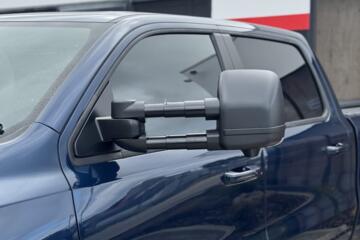
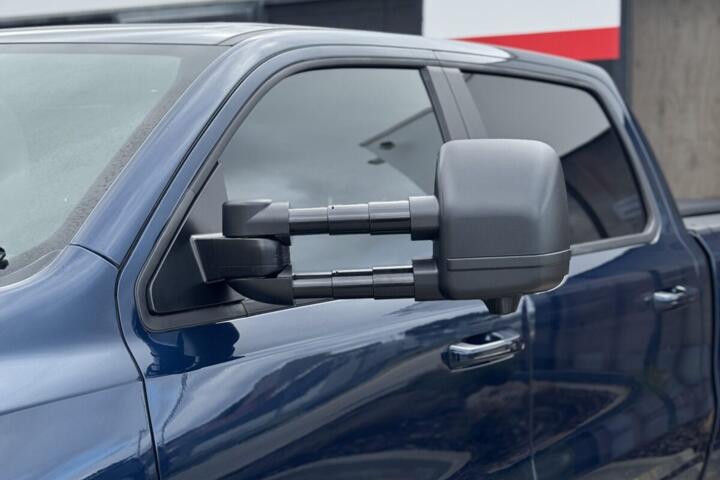
Pick a towing mirror style based on how far the trailer extends beyond the tow vehicle’s fender line. Clip-on mirrors can work for short trailers, but they may not provide enough reach for wide loads. Extendable mirrors with a telescoping arm often give more corner visibility for longer trailers.
In practice, you want to see the trailer’s outer corner and at least a slice of the trailer side in the mirror. If you can’t see the corner, you’ll compensate with shoulder checks, which slows lane changes.
Use a tape measure during setup. Measure from the tow vehicle’s mirror housing to the trailer corner, then adjust until the corner sits near the mirror’s outer edge. That measurement step saves time later.
Adjust Mirrors With The Trailer Hitched
Adjust mirrors after hitching and loading, not before. Suspension sag changes the mirror angle, and a 2–3 in drop can shift the view enough to hide the trailer corner.
Set the mirrors so the trailer side appears in the mirror without forcing you to lean. Then do a slow lane change in an empty lot and verify you can still track the trailer edge.
Skip the “good enough” adjustment. Re-check after you tow 10–20 miles, because tire pressure and load shift can settle the suspension.
Match Brake Controller Type To Trailer
Electric brakes require a compatible controller, and the controller type must match the trailer’s brake design. Proportional controllers react to deceleration signals, while time-delayed controllers apply a preset ramp.
In practice, proportional controllers often feel more consistent when you brake from different speeds, but they still need correct wiring and a proper ground. If the controller is mismatched, the trailer can lock early or lag behind.
Check the trailer’s brake wiring diagram and the controller’s output range. Many controllers specify a maximum brake load in amps, and exceeding it can cause overheating or reduced braking.
Set Output Using A Controlled Test
Start with a conservative controller setting and increase gradually. A common approach is to begin at a low output level, then test braking in a safe, empty area at 20–25 mph.
Look for signs of over-braking: a locked trailer wheel, a harsh jerk, or a strong trailer “push” that feels like the trailer is braking too hard. Under-braking feels like the tow vehicle slows first and the trailer follows.
Use a phone stopwatch or a simple deceleration test. If you can repeat the same stop from the same speed, you can compare pedal feel and trailer response. I’ve seen people dial output up too far after one panic stop, then wonder why brakes smell later.
Inspect Wiring, Grounds, And Connectors
Brake performance depends on wiring integrity. Loose connectors, corroded grounds, and damaged harnesses can cause intermittent braking or uneven axle braking.
Before a trip, inspect the 7-pin connector and the brake feed wire for corrosion. Clean with an appropriate contact cleaner and check that the connector seats firmly.
Skip the “it worked last season” assumption. Trailer wiring often fails after winter road salt, and a 30-minute inspection can prevent a week of troubleshooting.
Service Trailer Brakes Before Long Trips
Brake maintenance affects both stopping distance and brake temperature. For electric drum brakes, check adjustment, inspect magnet condition, and verify that the backing plates move freely.
For surge brakes, check the coupler movement and fluid condition if the system uses hydraulic components. A surge system that binds can drag and overheat.
Plan service around mileage and time, not just calendar dates. Many owners inspect brakes every 6,000–10,000 miles of towing, then replace friction material when wear indicators show it’s time.
Use Tow/Haul Modes And Engine Braking
On many trucks and SUVs, tow/haul mode changes shift strategy and can reduce how often the transmission hunts. That matters because fewer downshifts and steadier engine braking reduce service brake use.
On long descents, use engine braking first, then trailer brakes as needed. If you rely on the tow vehicle’s brakes alone, you can overheat pads and rotors while the trailer brakes stay underused.
Skip the habit of riding the pedal. A steady brake application heats components more than intermittent braking with trailer brake support.
Mini Case Examples: Costs And Results
Fleet Pickup With Overheated Brakes
A small service company ran a 3/4-ton pickup towing a flatbed with an estimated 6,000 lb loaded trailer. After a month of mountain routes, the driver reported a burning smell and longer stops. The company traced it to a controller output set too high after a brake service, plus a corroded ground at the 7-pin connector.
They cleaned the connector, re-greased the trailer plug contacts lightly, and reset the controller using repeated 20–25 mph test stops. They also adjusted the trailer brakes to eliminate drag.
Result: brake inspections showed reduced magnet heat and less rotor/pad wear. The company estimated brake service intervals improved from about 18,000 miles to roughly 25,000 miles, saving around $600–$1,000 per service cycle depending on parts pricing.
Family SUV With Poor Mirror Visibility
A family used a midsize SUV to tow a 4,500 lb travel trailer and installed clip-on towing mirrors. During highway lane changes, the driver still couldn’t see the trailer’s outer corner clearly, so they relied on shoulder checks and wider turns.
They switched to extendable towing mirrors and adjusted them with the trailer hitched and loaded. They also re-checked mirror angles after the first 15 miles because suspension settled.
Result: fewer “correction” maneuvers and smoother lane changes. Tire wear on the trailer improved modestly, and the driver reported less stress during merges, which reduced the chance of late braking that can trigger trailer brake overuse.
Towing Mirror And Brake Checklist
| Check | What To Look For | How To Verify | Why It Matters |
|---|---|---|---|
| Towing Mirrors | Trailer corner visible | Adjust with trailer hitched | Reduces blind-side corrections |
| Controller Output | No lockup, no lag | Repeat stops at 20–25 mph | Prevents overheating and drag |
| Wiring And Grounds | Clean, seated connectors | Inspect 7-pin plug and harness | Stops intermittent braking |
| Brake Condition | No dragging, correct adjustment | Check drums and magnet movement | Improves stopping consistency |
| Load Limits | Tongue weight in range | Use a scale or tongue gauge | Affects stability and braking |
Common Mistakes And Fixes
Buying Mirrors Without Measuring
Why it happens: people assume mirror reach scales with trailer size. Impact: the trailer corner stays hidden, and you oversteer during lane changes. Avoid it by checking the trailer’s width and how far it sits behind the tow vehicle, then choosing a mirror style that reaches that corner.
Do a quick test in a parking lot. If you can’t see the outer corner with the trailer hitched, the mirror is the wrong fit.
Adjusting Mirrors Empty
Why it happens: setup is easier without the trailer. Impact: suspension sag changes the mirror angle, so the view shifts once you tow. Avoid it by adjusting mirrors with the trailer loaded, then re-checking after 10–20 miles.
Skip the “one-time adjustment.” A small change in ride height can hide the trailer edge.
Using The Wrong Controller Setting
Why it happens: owners copy a setting from a forum or from a previous trailer. Impact: over-braking overheats magnets and can cause dragging; under-braking increases stopping distance. Avoid it by resetting output for each trailer and each load change, using repeatable test stops.
Use the same road, same speed, same braking style. That repeatability matters more than the exact number on the dial.
Ignoring Brake Drag Symptoms
Why it happens: brake drag can be subtle at first. Impact: overheated drums and faster wear on pads and rotors, plus worse fuel economy. Avoid it by checking for hot wheels after a short drive and inspecting for seized hardware.
If you smell hot brakes after a 5–10 mile run, stop and inspect. That smell rarely comes from “normal use.”
Overloading The Trailer
Why it happens: people focus on total towing weight and forget tongue weight. Impact: poor stability and reduced braking effectiveness. Avoid it by weighing the trailer with a scale and confirming tongue weight stays within the tow vehicle’s limits.
Use a scale, not a guess. A 100–200 lb tongue-weight error can change how the trailer tracks.
FAQ
Do I Need Towing Mirrors If My Vehicle Has Blind-Spot Monitoring?
Blind-spot monitoring helps with detecting vehicles next to you, but it does not show the trailer’s position. Trailer corners can sit outside the sensor’s coverage, especially when the trailer is wider than the tow vehicle or when the trailer angle changes during turns. Towing mirrors are about visual confirmation of the trailer edge during lane changes, merges, and tight parking. If you tow a 20–30 ft trailer, the mirror view becomes more critical because the trailer’s path diverges from the tow vehicle’s line.
What Brake Controller Works With Electric Trailer Brakes?
Electric trailer brakes require a controller that matches the trailer’s brake type and the tow vehicle’s wiring. Most electric setups use a 7-pin connector with a brake output wire. Many controllers support proportional or time-delayed modes, and the controller’s output range must match the trailer’s brake load. If the trailer has multiple axles, the controller must handle the combined brake current. Check the controller manual and the trailer’s wiring diagram before wiring changes, because incorrect wiring can cause intermittent braking or overheating.
How Do I Set Trailer Brake Output Without Overheating?
Start low and increase gradually using repeatable stops. A safe method is to test at 20–25 mph in a clear area, then adjust until the trailer slows without locking. Overheating signs include a strong hot-brake smell, unusually hot trailer wheels after a short drive, or a jerk that suggests the trailer brakes are too aggressive. Under-braking signs include longer stopping distance and a “push” feeling where the tow vehicle slows first. Re-check after brake service, load changes, and any wiring repairs.
Can I Tow With Surge Brakes Instead Of Electric Brakes?
Surge brakes use coupler movement to apply braking, so they do not require a brake controller in the tow vehicle. They can work well for many utility trailers, but they still need correct coupler condition, fluid level if applicable, and proper brake adjustment. Surge systems can behave differently on uneven grades or during abrupt deceleration, which is why matching the trailer to your driving routes matters. If you switch between surge and electric trailers, expect different braking feel and plan a test drive to learn the response.
How Often Should I Inspect Trailer Brakes And Mirror Setup?
Inspect trailer brakes before long trips and after seasonal storage, then follow a mileage-based schedule. Many owners check electric drum brakes every 6,000–10,000 miles of towing, or sooner if they tow in mountains or wet conditions. Mirror setup should be checked each time you change trailer load or after suspension changes, because ride height affects mirror angles. A practical habit is to re-check mirrors after the first 10–20 miles of a trip, since tire pressure and suspension settle can shift the view.
Author's Insight
Towing mirrors and trailer brakes fail in different ways, but both failures come from mismatched setup. Mirrors need adjustment with the trailer hitched and loaded, because suspension sag changes the geometry. Trailer brakes need correct controller settings, clean wiring grounds, and brake hardware that does not drag.
On long descents, the tow vehicle’s brake wear often reflects how much you rely on the service brakes instead of trailer braking and engine braking. If you see hot rotors after a downhill run, the controller output or brake condition may be off, even if the trailer brakes “feel” fine at low speeds.
For a practical baseline, weigh the trailer tongue, set mirrors with the trailer loaded, then do controlled brake tests at 20–25 mph. After that, keep a short log of controller settings and any brake smells or wheel heat. That log helps when you change trailers or when a wiring issue returns.
Key Takeaways
Adjust towing mirrors with the trailer hitched and loaded, then verify the trailer outer corners in a slow lane change. Set trailer brake controller output using repeatable test stops, and stop if you smell hot brakes or feel jerky over-braking.
Next steps: inspect the 7-pin connector and grounds, check trailer brake adjustment or coupler condition, and confirm tongue weight stays within the tow vehicle’s limits. If you tow a 6,000 lb trailer regularly, plan brake inspections more often than you would for light local hauling.
Limits exist. Mirrors do not replace safe lane positioning, and trailer brakes do not fix an overloaded trailer or incorrect tongue weight. If you see locked wheels, persistent brake drag, or controller wiring faults, have a qualified shop inspect the trailer brakes and tow wiring before your next trip.