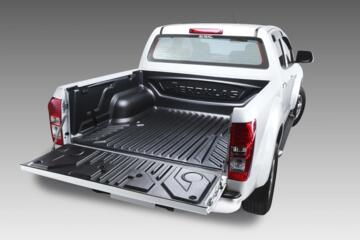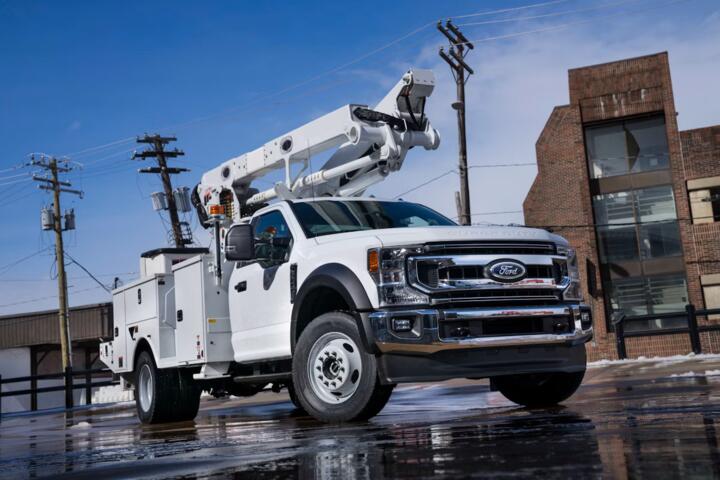
Why curb weight matters
Curb weight is the truck’s mass with standard equipment, full fuel, and required fluids, but without passengers or cargo. It affects braking distances, tire loading, and how hard the engine works at highway speeds.
For context, many mid-size pickups land around 4,000–5,500 lb curb weight, while heavy-duty models often start near 7,000–9,000 lb. EPA fuel-economy testing also reflects vehicle mass and drivetrain calibration, so weight changes can shift mpg even when horsepower stays similar.
Skip the spec-sheet guessing. It ignores how weight stacks up with GVWR and axle limits.
In practice, curb weight helps you predict whether a truck will feel strained when loaded. It also hints at how much margin you have before you approach the Gross Vehicle Weight Rating (GVWR) or the front/rear axle maximums.
Real-world scales confirm the gap between “empty” and “ready to work.” A tool box, ladder, and full water tank can add 1,000 lb quickly, and the truck’s baseline mass determines how much payload remains.
Fuel economy tests use a standardized cycle, not your commute. Still, heavier trucks usually show lower mpg because the powertrain must move more mass each cycle.
What buyers get wrong
People often treat curb weight like a synonym for payload. It is not. Payload is the difference between GVWR and the truck’s actual weight with driver, fuel, and cargo.
Skip the “towing rating” shortcut. It can look high while payload and axle limits quietly cap your real-world setup.
Another common mistake is assuming two trucks with the same horsepower behave the same. A 500–1,000 lb curb-weight difference changes engine load, transmission shift strategy, and brake thermal stress during repeated stops.
Consequences show up as faster tire wear, more frequent brake service, and higher fuel costs on long grades. If you routinely tow near the limit, you can also see more transmission heat and earlier fluid degradation, especially with towing packages that lack aggressive cooling.
Real-world examples help. A contractor who loads a 1,500 lb payload every day may hit GVWR sooner in a heavier half-ton than in a lighter one, even if both list the same “max payload” on paper.
Insurance and registration costs can track vehicle class and value, not curb weight directly. Still, heavier trucks often carry higher replacement costs for parts like wheels, tires, and brakes.
How to use curb weight
Start with GVWR math
Use the truck’s GVWR to compute payload margin. Subtract the truck’s actual scale weight (with driver and typical gear) from GVWR, then check front and rear axle ratings too.
Skip the brochure payload number. It assumes a specific driver weight and “no options” configuration.
In practice, a 7,500 lb GVWR truck with a 6,200 lb curb weight leaves 1,300 lb for everything you add. If your “ready to work” weight is 6,900 lb, your real payload margin drops to 600 lb.
Tool: a CAT scale or public weigh station. I keep a note in my phone with date, odometer, and tire pressures; it makes comparisons between trucks less fuzzy.
Numbers matter. A 700 lb payload swing can decide whether you can carry a full toolbox and still tow a small trailer.
Check axle limits, not just GVWR
Axle ratings often cap you before GVWR does. A truck can be under GVWR yet overload the rear axle if the cargo sits behind the rear wheels.
Skip the “rear axle is fine” assumption. It fails when you add a heavy hitch, toolbox, or fifth-wheel rails.
Look for the front/rear GAWR values in the door-jamb label or owner’s manual. Then weigh front and rear separately on a scale that supports axle weights.
What it looks like: two trucks with identical curb weight can feel different when loaded because their suspension tuning and axle distribution differ. A heavier curb weight can also shift how much reserve you have on each axle.
Outcome: fewer surprises when you load a ladder rack and a full bed of tools.
Estimate braking and tire load
Curb weight influences brake energy during stops. More mass means more kinetic energy to dissipate, which can raise brake temperatures and accelerate pad and rotor wear.
Skip the “it stops fine empty” test. Brake fade and wear show up under repeated loaded stops.
For tires, load index and inflation pressure matter, but curb weight sets the baseline. If your truck runs closer to its tire load rating when loaded, you can see faster tread wear and more heat buildup.
Numbers to watch: tire load ratings are printed on the sidewall, and recommended pressures are in the door-jamb sticker. If you routinely exceed the sticker’s guidance, you are trading tread life for short-term convenience.
Maintenance consideration: plan for more frequent brake inspections if you tow or haul weekly, even when the pads look thick.
Use EPA mpg with mass in mind
EPA fuel economy testing reflects vehicle configuration and mass. A heavier curb weight often correlates with lower mpg, especially in stop-and-go cycles.
Skip the “same engine, same mpg” belief. Calibration changes with weight, gearing, and drivetrain.
Compare like with like: same transmission, drivetrain (2WD vs 4WD), and tire size. A 3.5L V6 in one truck can show different highway mpg than the same displacement in another because the curb weight and axle ratios differ.
Fuel-cost comparison example: if one truck averages 18 mpg and another averages 16 mpg, the 12.5% difference shows up fast over 15,000 miles. At $3.50/gal, that gap is roughly $650 per year, before taxes and local price swings.
Real-world usage note: towing can cut mpg dramatically, and the curb weight affects how quickly the engine reaches higher load.
Plan for towing stability limits
Curb weight affects how the truck responds to trailer sway and how much tongue weight it can manage comfortably. It also influences the brake and cooling demands when descending grades.
Skip the “max tow” number alone. Tongue weight, payload, and brake controller setup decide whether the tow feels controlled.
Look at the trailer tongue weight range and compare it to your remaining payload margin. If your tongue weight is 10% of a 6,000 lb trailer, that’s 600 lb—before you add passengers and gear.
What it looks like: a heavier curb weight can reduce relative trailer motion, but it also means higher engine and brake workload. The best outcome comes from matching truck capacity, trailer weight, and hitch setup.
Tool: a weight-distribution hitch scale check or a trailer tongue scale. It is the fastest way to confirm you are not overloading the rear axle.
Account for maintenance and wear
Heavier trucks tend to experience higher wear rates on consumables. That includes tires, brake components, and sometimes suspension bushings, depending on how you drive and how often you load.
Skip the “it’s just weight” explanation. Driving style and road conditions matter, but mass changes the forces at every stop and bump.
Maintenance considerations vary by drivetrain. Four-wheel-drive systems add components and can increase service complexity, while towing packages may add coolers and lines that need periodic inspection.
Repair frequency is hard to predict across models, but patterns show up in fleet maintenance logs: brake jobs and tire rotations often dominate costs when trucks haul or tow regularly.
Ownership-cost angle: higher tire replacement frequency can outweigh small differences in purchase price over 3–5 years.
Verify with a scale before signing
Before committing, weigh the exact truck you are buying if possible. Curb weight on the listing rarely matches your final configuration after options, bed liners, and dealer-installed accessories.
Skip the “curb weight spec is close enough” habit. Options like steel bumpers, toolboxes, and larger tires can shift baseline weight.
What to do: ask the dealer to confirm the door-jamb GVWR and GAWR, then plan a weigh-station check after you add your typical gear. If you cannot weigh it, at least compare curb weight and GVWR across trims and note the payload margin difference.
Incidental detail: I once compared two 2024 half-ton trims and the curb-weight difference was only 250 lb on paper, yet the payload margin changed enough to affect a 500 lb hitch setup. That mismatch came from how the options were packaged.
Outcome: fewer surprises when you load the truck the way you actually work.
Use curb weight to compare trims
Trims with 4WD, larger wheels, or different bed lengths often carry different curb weights. Comparing curb weight across trims helps you avoid paying for capacity you cannot use.
Skip the “bigger engine fixes it” logic. A 6.2L V8 and a 3.5L V6 can both tow well, but the heavier curb weight still changes payload margin and fuel use.
Example: a 3.0L diesel may deliver strong torque for towing, but if the truck’s curb weight is higher due to equipment, your payload margin can shrink. The engine helps you pull; it does not create payload.
Numbers to compare: curb weight, GVWR, GAWR, and the listed payload for each configuration. Then sanity-check with your expected cargo and tongue weight.
Tool: a spreadsheet with your typical loadout. It turns curb weight into a decision, not a trivia fact.
Mini case: fleet and towing
A regional landscaping company bought two similar half-ton pickups for weekly trailer hauling. Both were listed with comparable towing ratings, but one had a higher curb weight due to 4WD and heavier options.
Problem: crews loaded the same tools and a 5,000 lb enclosed trailer. After weighing, the heavier truck left only about 400 lb of payload margin, while the lighter truck left about 750 lb.
What they did: they adjusted the load plan, moved some equipment forward, and standardized tire pressures and trailer tongue weight checks. They also switched to a weight-distribution hitch on the heavier truck’s trailer setup.
Result: brake inspections moved from “every 20–25k miles” to “every 30–35k miles” on the lighter truck, and the heavier truck improved to “every 25–30k miles.” Fuel economy stayed within a narrow band, but the heavier truck’s mpg dropped by roughly 1–2 mpg during towing weeks.
Numbers like these depend on driving and trailer setup, but the pattern matched the payload math.
Mini case: personal work truck
A small contractor used a 2500-class truck for jobsite runs and carried a generator, ladders, and a full tool box. The truck’s curb weight was higher than the buyer expected because of a steel bumper and larger tires.
Problem: on a busy week, the truck approached GVWR with passengers plus cargo. The rear axle weight was the limiting factor, not GVWR.
What they did: they weighed the truck with their typical loadout, then reduced rear overhang cargo and shifted lighter items to the front storage area. They also rechecked tongue weight after changing the trailer.
Result: axle weights stayed within GAWR, and tire wear slowed. The owner reported fewer “early” tire replacements over a 2-year period, though exact mileage varied by road surface and alignment checks.
That kind of outcome comes from measurement, not guesswork.
Checklist for curb weight
| What to check | Where to find it | Why it matters | Quick rule |
|---|---|---|---|
| Curb weight | Spec sheet, window sticker, listing | Baseline mass affects mpg and wear | Compare trims with same drivetrain |
| GVWR | Door-jamb label, manual | Caps total weight of truck + cargo | Payload = GVWR − actual weight |
| GAWR front/rear | Door-jamb label | Axles can limit you first | Weigh axle weights when loaded |
| Trailer tongue weight | Trailer specs + scale check | Counts against payload and rear axle | Aim ~10% of trailer weight |
| Tire load index | Sidewall + door-jamb pressures | Heat and wear rise near limits | Match pressure to load, not habit |
Common mistakes and fixes
Buying a truck with a “high payload” claim but ignoring curb weight. It happens when listings quote payload without showing the assumed driver weight and option package. The impact is a rear-axle overload once you add a toolbox and passengers. Avoid it by weighing your actual load and checking GAWR, not just GVWR.
Skip the “max tow” obsession. It happens when buyers focus on trailer weight while forgetting tongue weight and brake cooling. The impact is reduced control on descents and faster brake wear. Avoid it by matching tongue weight to remaining payload and confirming the brake controller settings work with your trailer.
Overlooking tire sizing changes. It happens when a dealer swaps wheels for appearance, which changes effective load capacity and rolling resistance. The impact is heat buildup and shorter tread life, especially when towing. Avoid it by verifying the tire load index and the door-jamb pressure guidance for your load.
Assuming mpg differences are negligible. It happens when buyers compare only horsepower or only one EPA number. The impact is higher fuel costs over 20,000 miles per year. Avoid it by comparing EPA highway mpg for the exact drivetrain and then budgeting for towing weeks.
Ignoring service intervals for towing. It happens when owners treat towing like occasional use. The impact is earlier transmission fluid degradation and more frequent brake inspections. Avoid it by following the severe-duty schedule in the owner’s manual, which often shortens intervals when towing.
FAQ
Is curb weight the same as GVWR?
No. Curb weight is the truck’s baseline mass with fluids and standard equipment, but without passengers or cargo. GVWR is the maximum allowable total weight of the truck plus passengers, cargo, and trailer tongue weight. If you compare curb weight to GVWR, you get a rough payload margin, but the real number comes from weighing the truck as you drive it. For accurate results, check the door-jamb GVWR and GAWR, then subtract your actual scale weight.
How does curb weight affect towing?
Curb weight influences how hard the engine and transmission work at a given trailer load, which affects fuel economy and heat. It also affects brake energy during repeated stops and descents. More mass can reduce relative trailer motion, but it also raises the truck’s own tire and brake demands. The practical limit is still payload and axle ratings: tongue weight counts against payload, and rear axle GAWR can cap you before GVWR. Weigh tongue weight with a scale for the setup you plan to use.
Can two trucks with the same curb weight differ?
Yes. Two trucks can share a similar curb weight yet differ in suspension tuning, axle ratios, brake sizes, and cooling capacity. Those differences change how the truck behaves under load even if the baseline mass matches. Options also matter: a truck with heavier wheels or different tire sizes can have different rolling resistance and load capacity. When comparing, match drivetrain (2WD vs 4WD), transmission type, and tire size, then verify GAWR and GVWR for each configuration.
Does curb weight predict fuel economy?
It predicts directionally, not precisely. EPA mpg depends on vehicle mass, aerodynamics, drivetrain calibration, and tire rolling resistance. A heavier curb weight often lowers mpg, especially on highway cycles where steady-state power demand rises. Still, two trucks with similar curb weight can show different mpg due to gearing and tire size. For a practical estimate, compare EPA highway mpg for the exact trim and drivetrain, then budget extra fuel when towing or hauling.
Should I weigh my truck before buying?
If you plan to haul or tow regularly, weighing is one of the fastest ways to remove uncertainty. Listings curb-weight numbers can drift from the real vehicle due to options, dealer-installed accessories, and tire differences. A scale check after you add your typical gear gives you a real payload margin against GVWR and GAWR. If weighing before purchase is not possible, ask for the door-jamb GVWR and GAWR and compare curb weight across trims, then plan a weigh-station check soon after delivery.
Author's Insight
Curb weight is a baseline that turns into real constraints once you add people, tools, and trailer tongue weight. The most useful step is not memorizing a number; it is converting curb weight into payload margin using GVWR and GAWR, then verifying with a scale. Brake and tire wear trends track mass and how often you load, which is why fleet operators weigh trucks and standardize load plans. When comparing trims like 2WD vs 4WD or different wheel/tire packages, curb weight changes can matter more than small horsepower differences.
Key takeaways
Curb weight tells you how much “room” you have left for payload and how hard the truck works under load. Use GVWR and axle ratings to compute payload margin, then confirm with a weigh station when your truck is set up the way you actually drive it.
Next steps: compare trims using the same drivetrain and tire size, check tongue weight against remaining payload, and inspect brake and tire wear history if you are buying used. If you tow often, follow the severe-duty maintenance schedule in the owner’s manual, since heat exposure changes service needs.
Limits: curb weight alone cannot predict ride comfort, exact towing stability, or long-term reliability across models. Seek professional inspection if you notice uneven tire wear, brake pull, or suspension clunks, since those issues can mask capacity problems.