Capability starts with math
Pickups advertise towing and payload, but capability comes from how those limits interact with the drivetrain, brakes, and cooling. A 7,000 lb tow rating means little if the truck’s payload drops to near zero once you add passengers and gear. EPA fuel economy also shifts with trailer weight and speed, so “highway MPG” on a window sticker rarely matches a loaded tow.
In the U.S., many pickups list maximum towing around 7,000–14,000 lb depending on configuration, while payload often lands closer to 1,000–2,500 lb. That gap is where buyers get burned: towing capacity and payload capacity are separate limits, and both matter on the same trip.
Skip the brochure numbers. They ignore your cargo and trailer pin weight.
For example, a crew cab with a 1,600 lb payload rating can still tow 10,000 lb, yet it may only carry 300–600 lb of people and tools. That’s before you add a weight-distribution hitch, a toolbox, and a full tank. The truck’s axle ratio and transmission gear spacing also affect how often it hunts on grades, which changes fuel burn and brake temperatures.
Fuel economy tests use controlled cycles, not mountain towing. Expect real-world highway towing MPG to be far lower than sticker MPG, often by 30–60% depending on speed and trailer aerodynamics. If you drive 75 mph with a tall trailer, the difference grows.
Where buyers get it wrong
People compare two pickups by towing max alone, then discover the truck can’t carry the trailer plus the stuff they planned to bring. Another common mistake is treating payload as “what’s left after the trailer,” even though payload is about what sits in the truck: passengers, cargo, and the trailer’s pin weight. Pin weight can be 10–15% of trailer weight, so a 10,000 lb trailer can put 1,000–1,500 lb onto the truck’s rear axle.
Skip the “max towing” badge. It hides the payload math and the brake limits.
Cooling and braking are the quiet constraints. A truck may tow the rated weight on a flat test route, then overheat on a long descent if the cooling system and brake sizing are marginal for that specific configuration. Transmission strategy matters too: a heavy tow can keep the transmission in lower gears, raising fluid temperatures and increasing wear.
Financial consequences show up fast. If you buy a truck that can’t handle your typical loads, you may add a second vehicle for hauling, rent a trailer, or pay for frequent repairs tied to overheating, premature brake wear, and drivetrain stress. Even if the truck survives, higher fuel use and more frequent maintenance can erase the price difference between the two options.
Real-world example: a contractor towing a 9,000 lb equipment trailer every other weekend may burn 2–4 extra gallons per trip compared with a more appropriate axle ratio and transmission calibration. Over 30 trips per year, that can become hundreds of dollars in fuel, plus brake jobs that arrive sooner than expected.
Compare pickups with tests
1) Do the payload check
Start with the sticker payload rating for the exact cab, bed, and drivetrain. Subtract passengers, driver gear, and cargo, then subtract the trailer’s estimated pin weight. Pin weight is often 10–15% of trailer weight, so a 12,000 lb trailer can mean 1,200–1,800 lb on the truck.
Use a simple spreadsheet and weigh your “usual load” once. A CAT scale visit at a truck stop gives you axle and total weights; I’ve seen buyers discover their toolboxes and water tanks add 400–700 lb more than they assumed. On a 1,500 lb payload truck, that difference changes whether you’re within limits or not.
Skip guessing. Weigh the truck with your gear.
Look for payload tied to axle type and suspension. Some configurations with higher tow ratings carry less payload due to heavier components. If one pickup has a higher tow rating but lower payload, it may still be worse for your real use.
2) Match towing rating to use
Compare towing ratings for the exact setup: engine, transmission, axle ratio, and wheel/tire size. Many manufacturers publish different maximums for 2WD versus 4WD and for different gear ratios. A 3.5L turbo V6 paired with a 10-speed automatic can tow well, but the rating changes with axle ratio and rear axle capacity.
Use the rating that matches your hitch and trailer type. A fifth-wheel setup uses different limits than a bumper pull, and a weight-distribution hitch can shift loads but doesn’t remove the need to stay within axle and tire limits. If the truck’s manual lists a maximum trailer tongue weight, treat it as a hard ceiling.
Skip “it tows fine.” Ratings exist for heat and stability margins.
In practice, test your typical grade and speed. If you tow 8,000–10,000 lb up a 6% climb for 20 minutes, the transmission and cooling system will behave differently than on a 2-mile test. Bring a thermometer app if you want to track transmission temperature, though factory gauges are more reliable.
3) Check axle ratio and gearing
Axle ratio affects how hard the engine works and how often the transmission downshifts. A numerically higher ratio (for example, 3.73 vs 3.31) can reduce engine RPM on climbs and keep the truck in the right gear longer, which often improves control and reduces hunting. It can also raise highway RPM when unloaded, which changes fuel economy.
Look at the transmission model and tow/haul mode behavior. A 10-speed automatic may hold gears differently than an 8-speed, and that changes both fuel use and brake wear. If you tow frequently, the “gear hunting” you feel on a short test drive can become a daily annoyance on long routes.
Skip the “same engine” assumption. Gear ratios change the whole tow profile.
For a concrete comparison, note whether one pickup uses a 3.5L turbo V6 and the other uses a 6.2L V8. Engine size alone doesn’t predict towing behavior; the calibration and gearing do. Still, larger displacement can provide more torque at lower RPM, which can reduce downshifts on grades.
4) Compare brakes and cooling
Brake and cooling capacity are where “rated” towing meets real heat. Look for differences in brake rotor size, caliper type, and whether the truck includes a factory trailer brake controller. Cooling packages vary by tow rating; some trucks add larger radiators, transmission coolers, or auxiliary coolers.
In practice, do a controlled tow test. Tow both trucks with the same trailer weight and drive the same route, then check for brake fade signs like longer pedal travel or a smell. After the drive, inspect for abnormal fluid temperatures if the truck has gauges, and check that the fan behavior stays consistent.
Skip “no warning lights.” Overheating can happen without immediate alerts.
Maintenance matters here. Frequent towing accelerates brake pad and rotor wear, and it can raise the interval pressure on transmission fluid service. If one truck has a known history of overheating in certain configurations, that should influence your choice, but you’ll need to verify with service bulletins and owner reports rather than marketing claims.
5) Evaluate tires and wheel limits
Trailer towing stresses tires through heat and sidewall flex. Compare tire load ratings and whether the truck uses all-terrain tires or highway tires. A truck with higher tow ratings may also come with higher load tires, which can matter more than the badge.
Check wheel size and tire width. Wider tires can improve dry grip but can increase rolling resistance, affecting towing MPG. Also confirm the truck’s maximum tire pressure guidance for towing; underinflation can overheat tires quickly.
Skip “same size tire.” Load rating and construction matter.
In practice, look at the tire’s stamped load index and speed rating, then compare across the two trucks. If one pickup uses LT tires with higher load capacity, it may handle repeated towing better, especially in hot weather.
6) Measure cabin and child-seat fit
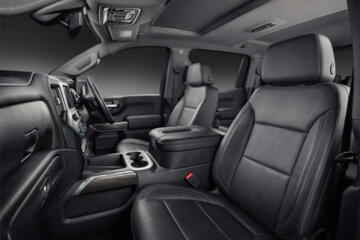
Capability isn’t only towing. Crew cab practicality affects whether you can live with the truck daily. Measure rear-seat legroom and check whether child seats fit without forcing the front seat too far forward. Some trucks have rear seat anchors that work better with specific seat bases, and the difference shows up during installation.
Bring your child seat and test it in both trucks. Installation is often easier with a consistent seat belt routing and clear anchor access; some models have tighter access around the lower anchors. If you use a booster, check seat belt length and buckle location so the belt doesn’t sit on the child’s neck.
Skip “it fits in the brochure.” Fit depends on seat geometry.
Also check cargo access. A short bed can limit hauling long tools, while a longer bed may reduce rear-seat space depending on cab style. If you haul bikes or ladders, bed tie-down locations and bed height matter more than the bed length alone.
7) Compare ownership costs for towing
Two trucks with similar purchase prices can diverge in running costs due to fuel economy, tire wear, and service intervals. If one pickup averages 14 mpg unloaded and the other averages 16 mpg unloaded, towing can still erase that gap, but it won’t erase it completely. Use your expected towing MPG, not sticker MPG.
Estimate brake and tire wear based on your mileage. A heavy tow schedule can shorten brake pad life by a large margin, and tires may wear faster due to heat cycles. If you plan to tow 10,000 lb regularly, budget for earlier tire replacement than you would for light-duty use.
Skip the “lowest sticker price.” Depreciation and insurance can swing the total cost.
Insurance premiums often differ by trim and engine. Higher-output engines and certain body styles can cost more to insure, and claims history in your area matters. Resale value also depends on demand for the exact configuration: a 4x4 with a tow package and popular cab/bed combo can hold value better than a less-equipped variant.
8) Use a repeatable test drive
Capability comparisons need repeatability. Tow both trucks with the same trailer, at the same weight, and on the same route profile. If you can’t tow, at least compare unloaded acceleration and grade response, then focus on how the transmission behaves in tow/haul mode.
Track measurable outputs during the test. Note engine RPM at 60–70 mph, how quickly the truck downshifts on a 3–5% grade, and whether the steering feels stable with crosswinds. A simple phone video helps you compare how often each transmission shifts.
Skip “feels better.” Feel is subjective; shift frequency and RPM are not.
One practical aside: I’ve seen buyers bring a cheap OBD-II scanner like a v1.5 Bluetooth unit and log transmission-related parameters, then realize the two trucks differ in how long they hold lower gears. Even without perfect data, the pattern helps you choose.
Mini case studies with numbers
Fleet manager: towing heat
A small utility fleet compared two 3/4-ton pickups for a 7,500–9,000 lb service trailer. The first truck used a smaller tow package and a different transmission calibration; the second had a larger cooling setup and a factory trailer brake controller. After 6 months, the first truck needed brake work at about 22,000 miles, while the second went to about 32,000 miles on the same brake pads.
They also tracked fuel. The fleet saw roughly 1.5–2.0 mpg better average fuel economy on the second truck during towing runs, mainly because it held gears more consistently on 5–7% grades. The fleet manager estimated brake and tire costs were about $900–$1,400 lower per truck over the year, even after factoring in slightly higher tire costs for the heavier-duty setup.
They didn’t change the trailer. They changed the truck configuration that controlled heat and gear behavior.
Contractor: payload surprise
A contractor hauling a 10,500 lb equipment trailer chose between two crew cab pickups with similar advertised towing. The first had a higher max towing number, but its payload rating was lower by about 400 lb. Once they loaded tools, a generator, and two passengers, the first truck exceeded the payload limit when the trailer’s estimated pin weight was included.
They corrected the choice by selecting the second truck with the higher payload rating and a suspension/tire setup matched to the tow package. Over the next 18 months, they avoided repeated “near-limit” loading and reduced brake wear complaints. Their maintenance invoices showed about $300–$600 less in brake-related parts, plus fewer trips to the shop for suspension inspections tied to overloaded rear axle stress.
They used a scale once, then stopped guessing.
Checklist for capability comparison
| Category | What to compare | How to test | What “good” looks like |
|---|---|---|---|
| Towing rating | Exact engine/trans/axle setup | Match hitch type and trailer class | Rating covers your trailer weight |
| Payload | Sticker payload minus real cargo | Estimate pin weight (10–15%) | You stay under payload on typical trips |
| Gearing | Axle ratio and transmission | Compare RPM on 3–5% grades | Less hunting, stable gear selection |
| Brakes/cooling | Tow package cooling and brake controller | Repeat same route with same trailer | No fade, consistent fan behavior |
| Tires | Load index and tire construction | Check stamped load rating | Higher load tires for heavy towing |
| Cabin fit | Rear-seat legroom and anchor access | Install your child seat in both | No front-seat interference, safe belt routing |
| Ownership costs | Fuel, tires, brakes, insurance | Use your towing MPG estimate | Lower total cost over 3–5 years |
Write down your numbers. Then compare the two trucks on the same assumptions.
Common mistakes and fixes
Buying the higher towing number without checking payload is the fastest way to end up overloaded. It happens because towing specs are easier to market than payload math. The impact shows up as rear-axle strain, unstable trailer behavior, and faster wear. Avoid it by calculating pin weight and weighing your truck with real cargo before signing paperwork.
Skip “it handled it once.” One trip can hide heat buildup.
Ignoring brake controller and trailer wiring differences causes uneven braking and longer stopping distances. It happens when buyers assume “factory tow package” means identical hardware across trims. The impact can be trailer sway on descents and more brake wear on the trailer. Avoid it by confirming the controller type, wiring harness, and whether the truck supports your trailer’s brake system.
Overlooking axle ratio and transmission behavior leads to gear hunting on grades. It happens because both trucks may use similar engines, so the test drive feels close. The impact is higher fuel burn and more frequent downshifts, which can raise transmission temperatures. Avoid it by comparing RPM and shift frequency on a 5% grade with the same trailer weight.
Skipping tire load ratings is a quiet risk. It happens when shoppers focus on tread pattern and ignore the load index stamped on the sidewall. The impact is heat buildup and faster tire aging, especially with repeated towing. Avoid it by matching tire load rating to your combined axle loads and keeping pressures correct for towing.
Neglecting child-seat compatibility creates daily friction. It happens because rear-seat measurements don’t predict anchor access and belt routing. The impact is unsafe installation or constant re-adjustment. Avoid it by installing the seat in both trucks and checking that the front seat can move without blocking the child seat base.
FAQ
How do I compare towing ratings fairly?
Compare towing ratings only for the exact configuration: engine, transmission, axle ratio, wheel/tire size, and drivetrain. Manufacturers often publish different maximums for 2WD versus 4WD and for different tow packages. Then match the rating to your trailer type and hitch: bumper pull, weight-distribution, or fifth-wheel. If one truck lists a higher max towing number but lower payload, it can still be worse for your trip because pin weight counts against payload. Use your trailer’s actual weight and tongue weight, not the trailer’s brochure “max.”
What pin weight should I assume?
Pin weight estimates commonly fall around 10–15% of trailer weight for many conventional trailers, but the real number depends on trailer design and how it’s loaded. If you can, measure tongue or pin weight with a scale before buying. If you cannot measure, use a conservative estimate and test your payload math. For example, a 10,000 lb trailer can mean 1,000–1,500 lb on the truck. That range can decide whether a crew cab stays within payload once passengers and cargo are added.
Do axle ratio differences matter for towing?
Yes. Axle ratio changes how the engine and transmission work under load, which affects grade control, shift frequency, and fuel economy. A truck with a numerically higher ratio often holds lower gears longer on climbs, which can reduce hunting. It can also raise RPM on the highway when unloaded. During comparison, focus on how each truck behaves on the same grade at similar speeds. If one truck downshifts repeatedly on a 3–5% hill, that pattern usually repeats when towing heavier loads.
How can I estimate real towing fuel costs?
Use your expected towing speed and trailer shape, then start from a realistic towing MPG range rather than the sticker. Many buyers see towing MPG drop by 30–60% versus unloaded highway numbers, especially at 70–75 mph with a tall trailer. Estimate gallons per trip by using your route distance and a conservative MPG assumption. Then compare the two trucks using the same assumptions. If one truck has a 3.5L turbo V6 and another a 6.2L V8, the difference in fuel burn depends on gearing and how often the transmission downshifts, not engine size alone.
What should I check for maintenance and repairs?
Heavy towing accelerates brake wear, tire aging, and sometimes transmission fluid stress. Check whether each truck has a factory tow package with an upgraded cooling system and whether it includes a trailer brake controller. Review the recommended maintenance schedule for transmission fluid service and brake inspections, then plan for more frequent checks if you tow often. Also confirm warranty coverage terms for drivetrain and cooling components. If you buy used, look for service records that mention towing-related maintenance rather than only oil changes.
Author's Insight
Capability comparisons work best when you treat towing as a system: payload, pin weight, axle ratio, cooling, brakes, and tires all interact. Specs are a starting point, but the repeatable test is the same trailer weight on the same route profile. Buyers often underestimate how quickly brake and tire wear changes once towing becomes routine. If you want a practical next step, weigh your truck with your typical gear and measure tongue weight before finalizing the purchase.
Key takeaways
Start with payload math, then confirm towing ratings for the exact configuration. Compare axle ratio and transmission behavior on grades, and verify brake controller and cooling package differences. Use a repeatable test drive with the same trailer weight, or at least compare RPM and shift patterns on a similar route.
Next step: write down your assumptions for pin weight, passengers, cargo, and towing speed, then estimate fuel and wear costs over 3–5 years. If you’re near the limits, choose the truck with more margin rather than the one with the highest advertised number.
Limits matter. If you see signs of overheating, brake fade, or unstable trailer behavior during a test, stop and reassess the configuration. For persistent mechanical issues or safety concerns, consult a qualified technician and follow the vehicle owner’s manual guidance.