Pickup Ownership Costs, In Numbers
Fuel economy and tire wear often decide the real monthly cost of a full-size pickup. A 3/4-ton truck that averages 14 mpg instead of 20 mpg can burn about 43% more fuel on the same miles. That gap shows up even before you tow anything.
In the US, the EPA reports combined fuel economy for many gas full-size pickups in the mid-teens to low-20s depending on engine and drivetrain. Insurance also tends to run higher for pickups than smaller vehicles because repair costs and claim frequency are higher for heavy trucks. Depreciation matters too: full-size trucks usually hold value better than many cars, but trim choice and mileage still swing resale.
Skip the “it’s just a truck” mindset. They add weight, bigger tires, and higher repair bills. One more thing: towing and payload change wear patterns quickly, especially on brakes and suspension.
Real-world usage examples help. A crew-cab pickup used for weekend hauling and school runs often racks up 12,000–18,000 miles per year. A fleet-style work truck can hit 25,000 miles annually, then tires and brakes arrive on a schedule that feels sudden. Even a 2-inch lift or oversized tires can move you off the manufacturer’s expected efficiency and range.
Where Buyers Underestimate Costs
People get the math wrong in three common places: fuel, tires, and “wear items” after towing. Many buyers focus on the sticker price, then ignore the cost per mile once the truck is loaded. A full-size pickup’s curb weight and frontal area raise aerodynamic drag, which hurts highway mpg.
Skip the assumption that towing is the only cost driver. Payload and frequent stop-and-go also accelerate brake and tire wear. A truck that tows 6,000 lb occasionally can still see higher wear if it carries 1,500–2,000 lb in the bed every week.
Consequences show up in repair frequency. Brake jobs on heavy trucks often arrive earlier than owners expect, especially with frequent towing and mountain driving. Suspension components can wear faster when the truck is loaded and driven on rough roads, and wheel alignment issues become more common when tires wear unevenly.
Insurance and registration add another layer. Full-size pickups can cost more to insure because parts are expensive and claims can be higher severity. If you live where salt and road grime are heavy, corrosion protection and underbody cleaning become a recurring line item.
How To Estimate Your True Monthly Cost
1) Build A Cost-Per-Mile Model
Start with a simple cost-per-mile worksheet using your expected annual miles. Fuel cost is the easiest line item: multiply your projected mpg by your local gas price. If you drive 15,000 miles and average 16 mpg, you burn about 937 gallons; at $3.50/gal that’s roughly $3,280 in fuel.
Then add tires, brakes, and maintenance. A set of quality all-terrain tires on a full-size pickup can cost $900–$1,600 installed depending on size and brand. If you replace them every 35,000–50,000 miles, that’s about $0.02–$0.05 per mile just for tires.
Use your driving mix. Highway-only miles usually stretch tire life and reduce brake wear, while city miles shorten both. I keep a spreadsheet with a “conservative” and “optimistic” mpg assumption, because real mpg swings with load, speed, and tire pressure.
2) Match Engine To Your Use
Engine choice changes fuel burn and maintenance patterns. A 5.3L V8 or 6.2L V8 gas truck can deliver very different mpg under the same load, and the difference grows at highway speeds. Diesel engines often improve mpg when towing, but they can cost more upfront and may have higher maintenance costs tied to emissions systems.
Look at horsepower and torque ratings, then compare them to your typical load. A truck with 400+ hp and 400+ lb-ft can feel “fine” unloaded, but the engine may still run at higher RPM depending on gearing and driving style. If you regularly tow near the upper end of the rating, the engine’s thermal load and fuel consumption rise.
Skip the “more power always costs less” logic. Higher output engines can still consume more fuel when you drive at the same speeds, especially with larger tires or a heavier axle ratio. Check the EPA combined mpg for the exact configuration you’re shopping.
3) Budget For Tires And Alignment
Tires are where many owners get surprised. Full-size pickups often run 275/60R20, 285/65R18, or similar sizes, and the tread life varies widely with load, alignment, and tire type. If you tow, expect more heat cycles and faster wear on the rear axle.
Plan for alignment checks. A heavy truck that hits potholes or carries a load can drift out of spec, and that can chew through tires quickly. If you see steering wheel vibration or uneven tread wear, schedule an alignment before the tires are half-worn.
Use a tire-pressure gauge you trust. Underinflation increases rolling resistance and can reduce mpg while also wearing shoulders. I’ve seen owners chase mpg with driving habits while the tire pressure was off by 5–8 psi, which is enough to change wear and consumption.
4) Plan Brake Wear With Towing
Brake wear depends on how you slow down, not just how often you drive. Towing adds kinetic energy, and repeated downhill braking can overheat pads and rotors. Many trucks use integrated trailer brake controllers, but the truck still does work when you brake hard or at low speeds.
Check your trailer setup. A properly adjusted trailer brake system can reduce stress on the truck’s brakes. If you tow 5,000–7,000 lb regularly, budget for brake service sooner than a non-towing schedule.
Skip the “pads only” estimate. Rotors can warp or develop thickness variation after heavy heat cycles, and that can mean resurfacing or replacement. Ask the shop to quote pads and rotors separately so you can see the real range.
5) Factor Insurance And Registration
Insurance cost differences can be large between trims, wheel sizes, and engine types. A higher-output engine, larger wheels, and certain safety packages can raise premiums because repair costs rise. Get quotes before you commit, using your ZIP code and the exact trim.
Registration can also vary by weight class and local fees. Heavy trucks may fall into different fee tiers than lighter vehicles. If you’re comparing a half-ton and a three-quarter-ton, confirm the registration and property-tax rules in your state.
Use the same coverage levels for comparisons. If one quote includes higher deductibles, the monthly number looks better while the out-of-pocket cost during a claim stays higher.
6) Estimate Depreciation And Resale
Depreciation is the biggest “hidden” cost for most buyers. Full-size pickups often retain value better than sedans, but the drop from new to used can still be steep in the first 2–3 years. Mileage, accident history, and trim popularity drive resale more than owners expect.
Look at typical resale patterns by drivetrain. Four-wheel drive usually holds value better than two-wheel drive in many regions, but it also costs more to operate. If you plan to keep the truck 6–8 years, the depreciation curve matters less than if you trade every 3 years.
Skip the assumption that “truck resale is always strong.” A high-mileage truck with worn tires and a rough interior can lose value quickly even if the engine runs well. Check recent listings for the same year, cab style, and drivetrain.
7) Use Warranty Coverage Like A Checklist
Warranty terms affect repair risk. Many full-size pickups offer multi-year basic coverage and longer powertrain coverage, but bumper-to-bumper coverage often ends sooner than the powertrain. Emissions components can have separate coverage durations, and diesel models may have different schedules.
Read the exclusions for towing-related damage. Some warranties limit coverage for damage caused by improper towing, overloaded trailers, or non-approved equipment. That matters if you plan to tow frequently or use a hitch setup that isn’t matched to the truck.
Keep service records. Shops often need proof of maintenance intervals for warranty claims, and missing documentation can turn a covered repair into a paid repair. I keep receipts in a folder labeled by mileage, because it’s faster during a claim.
8) Don’t Ignore Cabin Practicality
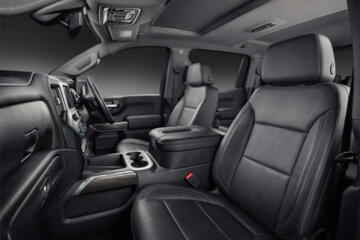
Cabin practicality affects ownership costs indirectly through child-seat fit, cargo handling, and daily wear. Crew cabs often fit rear-facing child seats better because the rear door opening is larger, and the seat can sit farther from the front seat. Check LATCH/ISOFIX anchor locations and seatbelt geometry in the exact cab configuration you want.
Road-trip comfort also matters for fatigue and noise. Full-size pickups can be loud at highway speeds, especially with all-terrain tires and certain wheel/tire combinations. If you commute at 70 mph, test with the windows up and listen for wind noise near the A-pillars and mirrors.
Skip the “it’s a truck, it’s fine” approach. If the rear seat is tight for your child seats, you’ll pay in time and frustration every week, and that can push you toward a different cab style.
Mini Case Examples From Real Use
A small construction company bought a 2021 full-size pickup with a gas V8 and 4x4 for jobsite runs. Problem: fuel costs climbed after they started towing a 7,000 lb trailer twice per week and carrying tools in the bed daily. What they did: they switched to a lower rolling-resistance tire spec, set trailer brake gain correctly, and enforced a tire-pressure check every Monday. Result: average mpg improved from about 13.5 to 15.0 on mixed routes, saving roughly 1,500–2,000 gallons over a year at 20,000 miles, or about $5,000–$7,000 at $3.50/gal.
Another case involved a utility contractor using a diesel full-size pickup for service calls. Problem: brake jobs arrived earlier than expected because of repeated stop-and-go in hilly areas and frequent idle time. What they did: they adjusted driving habits to reduce hard braking, used engine braking when towing, and scheduled alignment checks after tire replacements. Result: brake service intervals stretched by an estimated 15–25% over 30,000 miles, and the shop reported fewer rotor replacements, which reduced out-of-pocket costs by several hundred dollars per service cycle.
These numbers vary by region, tire choice, and trailer setup. The pattern stays consistent: small operational changes can move fuel and wear costs more than owners expect.
Checklist For Buying Without Regrets
| Item To Check | What To Look For | Why It Changes Cost | How To Verify |
|---|---|---|---|
| Fuel Economy | Exact engine + drivetrain mpg | Fuel is the biggest recurring line | Use EPA combined mpg and your route mix |
| Tire Size And Type | Stock size, all-terrain vs highway | Wear and rolling resistance affect mpg | Check door jamb tire placard and options |
| Towing Setup | Trailer brakes and controller | Reduces truck brake heat cycles | Confirm wiring and brake controller type |
| Payload Fit | Bed capacity vs real cargo | Overloading accelerates wear | Weigh cargo and subtract from GVWR |
| Insurance Quote | Trim and wheel size impact | Repair costs drive premiums | Quote before purchase with VIN if possible |
| Warranty Terms | Bumper-to-bumper end date | Repair risk changes after coverage ends | Read exclusions for towing and wear items |
Skip the “spec sheet only” approach. The cost comes from how the truck is used, not the brochure.
Common Mistakes And Fixes
Buying a truck with the wrong tire spec is a frequent mistake. It happens because owners choose looks or traction, then ignore rolling resistance and tread life. The impact is higher fuel burn and faster tire replacement. Avoid it by matching tire type to your route and checking the door jamb placard for the intended size.
Another mistake is assuming towing capacity equals real payload. It happens when buyers focus on maximum trailer weight without subtracting passengers, cargo, and hitch weight from GVWR. The impact is overloaded suspension and accelerated wear. Avoid it by weighing the truck and trailer together, then comparing to the manufacturer’s payload and GVWR limits.
Skip the “maintenance later” plan. It happens when the truck is new and the first oil change feels optional, which is a bad habit. The impact is higher engine wear and more expensive repairs. Avoid it by following the oil change interval in the owner’s manual and keeping receipts, even if the truck is under warranty.
Buying without an insurance quote is another costly error. It happens because the monthly payment is easier to compare than the premium. The impact is a surprise budget shortfall after purchase. Avoid it by requesting quotes for the exact trim and wheel size, then comparing deductibles and coverage limits.
Finally, ignoring cabin fit for child seats leads to a practical failure. It happens when buyers rely on general seat reviews rather than checking anchor locations and seatbelt routing. The impact is unsafe installation or constant re-adjustment. Avoid it by bringing the child seat to the test drive and verifying fit with the rear door fully opened.
FAQ
How much more fuel does a full-size pickup burn?
Fuel use depends on engine, drivetrain, tire size, and how often the truck runs loaded. Many full-size pickups land in the mid-teens to low-20s mpg combined on EPA tests, but real highway mpg often drops when you tow or run larger tires. A practical way to estimate is to use your route speed and a conservative mpg assumption, then multiply by annual miles. If you drive 12,000 miles and your truck averages 16 mpg instead of 20 mpg, the difference is about 300 gallons per year.
What maintenance costs rise first on pickups?
Tires and brakes usually show up first, especially with towing or frequent bed loads. Oil changes also matter, because heavy-duty use can increase engine workload and heat cycles. Alignment checks become more frequent when tires wear unevenly or after pothole hits. If you drive in salted areas, underbody corrosion protection and cleaning can add cost. Warranty coverage can offset some repairs, but wear items like tires and brakes often fall outside bumper-to-bumper coverage.
Do diesel pickups cost more to own?
Diesel ownership can cost more upfront and can include higher maintenance tied to emissions systems, depending on the model year and emissions equipment. Diesel engines often improve fuel economy when towing and under sustained load, which can offset some of the added cost. The best comparison uses your towing frequency and mileage, not just mpg. If you tow rarely and drive mostly short trips, diesel may not pay back as quickly because emissions systems can be sensitive to driving patterns.
How do towing and payload affect wear?
Towing increases brake heat, transmission workload, and tire stress, while payload increases suspension and alignment stress even without towing. The truck’s GVWR and axle ratings limit how much you can carry, and exceeding them accelerates wear. Trailer setup also matters: properly adjusted trailer brakes reduce the truck’s braking effort. If you tow 6,000–8,000 lb regularly, brake service intervals and tire replacement timing often arrive earlier than non-towing schedules.
What should I check for child-seat compatibility?
Check rear-seat space with the child seat installed, not just seatbelt reach. Crew cab layouts typically provide more rear legroom than extended cab layouts, but the exact fit varies by seat design. Verify LATCH/ISOFIX anchor locations and confirm that the seat can be installed at the correct recline angle. During a test drive, try buckling the seat with the rear door fully opened and check whether the front seat position interferes. If you plan to move seats between vehicles, measure the installation time too.
Author's Insight
Full-size pickup ownership costs track usage more than marketing. Fuel and tires respond quickly to load, speed, and tire choice, while brakes and suspension show up as the next wave of expenses. Warranty coverage can reduce repair risk, but it rarely covers wear items like tires and brake pads. The best budgeting approach uses your annual miles, a conservative mpg estimate, and realistic replacement intervals for tires and brakes.
Key Takeaways
Estimate your cost per mile before you shop, then compare trims using the same annual mileage and driving mix. Budget for tires, brakes, and insurance, not just fuel and payments. If you tow, verify trailer brake setup and subtract real cargo from GVWR to avoid overloading. If you’re seeing repeated warning lights, overheating, or braking issues, stop driving and get the truck inspected by a qualified technician, because safety systems and cooling problems can escalate fast.