Why Cargo Numbers Mislead
Cargo space ratings are measured under controlled conditions, then rounded for marketing and packaging. A “total” number might include the space behind the last row, the underfloor area, or both, depending on the model. The SAE J1100 standard exists for vehicle interior volume testing, but many listings still mix manufacturer methods and trim-specific layouts.
Skip the brochure math. It rarely matches your cooler, stroller, and tool bag. For example, a midsize SUV can list around 70–80 cu ft behind the front seats with the second row folded, yet the opening shape and wheel-arch intrusion reduce what you can actually slide in.
Real-world packing matters because the usable volume depends on door opening width, seatback angles, and how much of the floor is flat. A typical sedan trunk might be rated near 13–16 cu ft, but a low trunk lip makes loading bulky items harder. Cargo height also changes the “effective” space for tall boxes and car seats.
Skip the assumption that bigger numbers always mean easier loading. A pickup bed rated at 60–70 cu ft can still feel cramped if the tailgate opening is narrow or the wheel wells force you to stack oddly.
Two industry facts help frame the problem. First, interior volume is measured in cubic feet, but it does not include how the space is shaped. Second, many manufacturers publish “to the roof” or “to the window” variants, which can differ by several cubic feet even within the same vehicle line.
What Buyers Get Wrong
People often compare cargo space numbers without checking what the number includes. A “behind the second row” figure can be measured with the seatbacks upright, while another listing uses a different seat position or counts the cargo floor differently.
Skip the single-number comparison. It hides the difference between a flat load floor and a stepped one. When the floor is not level, you lose volume to the step and to the way bags settle, which is why two vehicles with similar cu ft can carry different amounts of luggage.
Weight limits also get ignored. Payload capacity is separate from volume, and it can cap what you can carry even when the trunk looks empty. For instance, a family SUV might have 1,500–1,800 lb of payload, but that number drops quickly once you add passengers, a hitch-mounted bike rack, and a full tank of fuel.
Consequences show up during the first road trip. You pack “one more bag” based on volume, then the load shifts because the cargo floor is sloped or because the load is too high. Higher loads can reduce rear visibility and change braking feel, especially on wet roads.
Real-world situations are predictable. A stroller and two child seats can take more space than a week of groceries because of their footprint and the need to keep them upright. A sedan trunk may fit a set of golf clubs by volume, but the clubs can snag on the trunk opening or require removing the front wheels from a stroller.
How to Compare Cargo Capacity
Match the measurement definition
Check whether the listing says “behind 2nd row,” “behind 1st row,” “to the roof,” or “to the window.” This works because the same cubic-foot number can represent different boundaries. In practice, two SUVs can both claim ~70 cu ft, yet one counts the space with the floor raised by a storage bin.
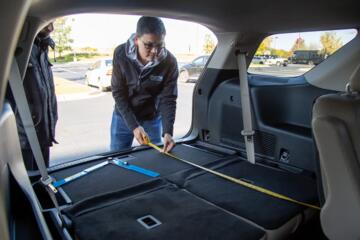
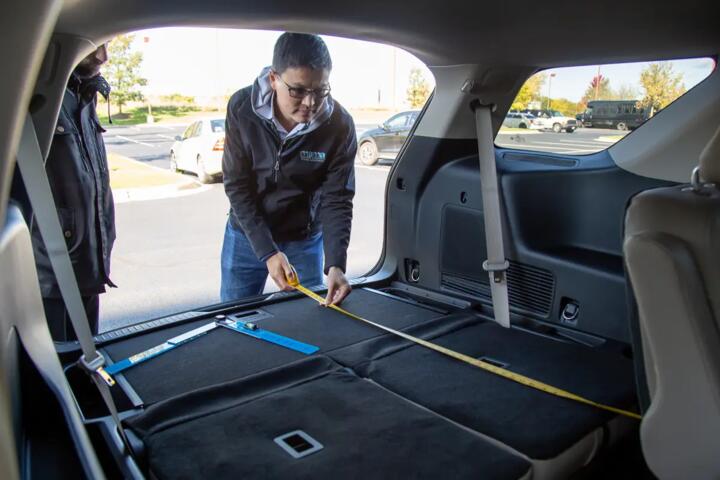
Bring the spec sheet to the lot. Then verify the seatbacks fold flat and the cargo floor stays level. If the floor has a hump, measure the length from the seatback to the tailgate at the lowest point, not at the highest.
Test the opening, not just volume
Measure door opening width and trunk lip height with a tape measure. This works because loading is limited by access geometry, not by cubic feet. In practice, a hatchback with a wide liftgate can move a 30–32 inch suitcase in easily, while a sedan trunk may require tilting or removing the suitcase lid.
Skip the “it fits in the trunk” claim. Use a cardboard box cut to the dimensions of your largest item. I’ve seen shoppers discover the box clears the opening but hits the rear seat latch area, which changes the effective usable space.
Account for weight and payload
Look up the vehicle’s payload rating and subtract passenger weight and gear. This works because payload is the hard cap that volume cannot override. For example, if a vehicle has 1,600 lb payload and you carry 4 adults averaging 180 lb each, you’ve already used 720 lb before adding luggage, tools, or a full cooler.
Check the hitch rating if you tow. A hitch-mounted cargo carrier adds weight high on the vehicle, which can reduce rear axle margin even when the trunk is empty.
Plan for child-seat footprints
Verify rear-seat access and the space around the child seat base. This works because child seats need clearance for installation and for the child’s legs, not just cubic feet. In practice, a rear-facing seat can require 2–3 inches of additional front-seat travel, which reduces the “usable” cargo space behind it.
Bring the seat manual or the seat itself. Many stores let you test fit, and you’ll see whether the seat blocks the fold-down lever or prevents a flat cargo floor.
Use a packing test on the floor
Pack with the same items you actually carry: a cooler, a duffel, and a set of grocery bags. This works because it reveals how bags compress and how the cargo floor shape forces stacking. A trunk with 14 cu ft can still carry more if the floor is flat and the sidewalls are low.
Use a simple method: measure each item’s footprint, then stack them like you would at home. I keep a small roll of painter’s tape in my trunk for quick marking; it helps compare two vehicles without guessing.
Check underfloor storage and spare tire
Confirm whether the spare tire sits under the floor or in a side well. This works because underfloor storage can be counted in “total” cargo volume, but it may not be available with certain trims. In practice, a spare tire well can reduce flat load length by several inches.
Skip the assumption that “total” includes everything you can access. Some vehicles have a removable floor panel, and others keep it fixed, which changes how you store tools or a first-aid kit.
Consider towing and bed payload limits
For pickups, separate bed volume from payload and axle ratings. This works because a bed can be large but still limited by payload, especially with a loaded camper or trailer. Many half-ton pickups list payloads around 1,500–2,000 lb, but the number varies widely with cab configuration and drivetrain.
Measure bed width between wheel wells and check tie-down placement. If you plan to haul a motorcycle, the ramp angle and tie-down reach matter more than the cu ft figure.
Mini Case Studies
Fleet van swap for service calls
A small service company replaced two compact vans with one larger model. The spec sheet showed about 20% more cargo volume, but the real issue was loading time and access, not just space.
They standardized a packing layout: tool bins on the floor, ladders secured to the side rails, and a single tote for parts. They also weighed the typical load and found they were hitting payload limits earlier than expected.
Result: fewer trips per week because the bins stayed organized, and payload margin improved by shifting heavy items lower. The company estimated a 12–15% reduction in total mileage by consolidating runs, with no change in average fuel economy of the new van.
Family SUV road-trip packing
A family compared two three-row SUVs with similar “behind 2nd row” numbers. One had a flatter cargo floor when the third row folded, while the other left a noticeable step.
They packed the same set of items: two car seats, a stroller, and four checked-size suitcases. The SUV with the step required rearranging and left a gap that couldn’t be filled without raising the load height.
Result: the flatter-floor SUV carried all four suitcases plus the stroller without stacking on the third-row seatbacks. They estimated about 25–30 minutes less total loading time per trip, and the load stayed lower, which made rear visibility feel less compromised.
Cargo Checklist for Shopping
| Check | What to look for | Why it matters | Quick test |
|---|---|---|---|
| Spec definition | Behind 2nd row vs total vs to roof | Numbers can include different boundaries | Compare the wording, not just cu ft |
| Load floor | Flat vs stepped when seats fold | Steps reduce usable volume | Measure length at the lowest point |
| Access | Opening width and trunk lip height | Access limits loading more than volume | Use a cardboard box mock-up |
| Payload | Payload rating and axle limits | Weight caps gear even with space | Add passenger + gear weights |
| Child seats | Rear-facing clearance and seat interference | Installation space changes cargo reality | Test-fit the seat or measure travel |
| Underfloor | Spare location and floor panel | Storage can be counted but not usable | Check spare well and removable panels |
Common Mistakes and Fixes
Comparing cu ft without wording
Why it happens: listings often show one number first, and the fine print gets skipped. Impact: you end up comparing different boundaries, so the “winner” can lose in real packing. How to avoid it: match the exact phrase used for the measurement, then compare vehicles with the same seat configuration.
Skip the “total” label. Ask what happens when the third row is up, and what changes with the floor panel.
Ignoring trunk lip and door shape
Why it happens: cubic feet do not describe access geometry. Impact: you buy space you cannot load quickly, which becomes a daily annoyance. How to avoid it: measure the trunk opening and test with your largest item; a 30-inch box can clear the opening but still hit the latch area.
Bring a tape measure. Also check how far the liftgate opens on a garage ceiling.
Overloading because “it fits”
Why it happens: people focus on volume and forget payload. Impact: you can exceed the vehicle’s rated payload, which affects braking and tire load. How to avoid it: weigh your typical load and compare it to the payload rating on the door jamb sticker.
Skip the guesswork. Use a bathroom scale for small items and a luggage scale for bags.
Assuming folded seats create a flat floor
Why it happens: brochures show ideal angles, and real trims differ. Impact: a step forces you to stack higher, which reduces rear visibility and can shift weight forward. How to avoid it: fold the seats and run a straightedge along the floor to spot gaps.
Some SUVs like the Toyota Highlander and Honda Pilot vary by trim and third-row design, so verify the exact configuration you plan to buy.
Forgetting child-seat travel reduces cargo
Why it happens: rear-facing seats require front-seat clearance. Impact: cargo behind the front seats can shrink, even if the “behind 2nd row” number looks unchanged. How to avoid it: install the seat or measure front-seat travel with the seat in place.
In minivans like the Chrysler Pacifica, the sliding doors and aisle access can change how you load car seats, but the seat footprint still matters.
FAQ
Do cargo numbers include the spare tire?
Some manufacturers count underfloor storage in “total” cargo volume, but the spare tire location varies by trim and whether the vehicle uses a full-size spare or a compact spare. If the spare sits in a well, it can reduce flat load length even when the cubic-foot number looks generous. The practical check is to fold the seats and measure the usable floor area with the spare in place, then compare that to your largest item’s footprint. If you use a tire inflator kit instead of a spare, the underfloor area can be more usable.
Why do two SUVs list similar cu ft?
Similar cubic feet can come from different measurement boundaries. One SUV may measure to the roof with the second row folded, while another measures to the window line or counts a raised floor storage bin. Seatback angles also change how much of the space is “usable” for boxes versus soft bags. The best comparison is to match the wording and then test the load floor shape. If you haul a stroller and a cooler, the opening height and wheel-arch intrusion often matter more than the headline number.
How do payload limits affect cargo?
Payload is the maximum combined weight of passengers and cargo. Cargo volume does not stop you from loading too much weight, so you can exceed the payload rating even with empty-looking space. For example, a family of four can consume 700–800 lb of payload quickly, leaving less room for luggage, tools, and a full cooler. Check the payload rating on the door jamb sticker and compare it to your typical load weights. If you tow, include tongue weight and hitch accessories in the calculation.
What’s the best way to test cargo in person?
Bring a tape measure and at least one mock-up box that matches your largest item’s dimensions. Fold the seats to the configuration you actually use, then test whether the box clears the opening and sits flat without forcing it into corners. Measure the load length at the lowest floor point, not at the highest step. If you use child seats, install one and check whether it blocks seat folding or reduces access to the cargo area. A 15-minute test often beats comparing numbers from different trims.
Do EVs have different cargo limits?
EVs can have different cargo packaging because battery placement changes the floor height and underfloor storage. Many EVs offer a front trunk (“frunk”) plus rear cargo space, but the frunk’s usable volume depends on the vehicle’s design and whether it has a spare tire well. Charging equipment and cables also take space, and some EVs include a tire inflator kit instead of a spare. Range estimates affect road-trip planning, which can change how much you pack for long trips. Verify cargo volume with the exact trim and check whether the floor is flat when seats fold.
Author's Insight
Cargo volume numbers are only half the story because access geometry and payload limits decide what you can load without frustration. I’ve seen shoppers focus on a headline cu ft figure, then discover a trunk lip or a stepped floor forces higher stacking. The most reliable comparison uses the same seat configuration, the same measurement wording, and a quick mock-up box test. If you haul heavy items, the payload rating and tire load limits matter more than any cubic-foot claim.
For a practical reference point, a sedan trunk around 14 cu ft can carry a surprising amount of soft bags, while a larger SUV with a raised floor can carry less of the same items. That mismatch is usually shape, not volume.
Final Thoughts
Use cargo specs as a starting point, then verify the measurement definition, load floor shape, and opening access. Next step: bring a tape measure and one cardboard box mock-up, fold the seats to your real configuration, and check whether the box clears and sits flat. Benefits: you avoid buying a vehicle with a “big number” that loads slowly or forces awkward stacking. Limits: you still need to weigh your typical gear to confirm payload margin.
If you plan to carry heavy tools, tow, or transport child seats daily, confirm the vehicle’s payload and child-seat fit with the exact trim. For safety-critical concerns like repeated overload warnings, consult the vehicle owner’s manual and a qualified technician before continuing. If you notice unusual tire wear or braking changes after loading, stop and reassess the load and weight distribution.