Used Pickup: What Matters
A used pickup is a work vehicle first, so wear patterns tell the truth faster than paint condition. A 2019–2024 half-ton can tow 7,000–14,000 lb depending on engine, axle ratio, and hitch setup, but the same truck can hide overheating damage from repeated heavy pulls. In the U.S., pickups make up a large share of new-vehicle sales, and used inventory is huge, which means the “best deal” often comes from someone else’s maintenance shortcuts.
Skip the “looks good” checklist. It misses the parts that fail under load. For example, a cooling system that runs hot during towing can warp heads or accelerate gasket leaks even if the truck idles normally.
Fuel economy also changes the ownership math. Many gas half-tons average roughly 15–20 mpg combined, while diesel versions often land around 18–25 mpg combined in real mixed driving, depending on tire size and gearing. That difference affects how quickly you recoup higher purchase prices, especially if you drive 12,000–15,000 miles per year.
Safety systems matter too. A truck with a clean exterior can still have a faulty trailer-sway control sensor, a miscalibrated camera, or a suspension that no longer tracks straight. Those issues show up during braking, lane-keeping, and towing stability tests, not during a 5-minute test drive.
Common Mistakes and Costs
People get wrong the same way across brands: they focus on engine sound and ignore how the truck behaves when it’s warm. A transmission that shifts late only after 30–45 minutes can still pass a cold-start inspection. The seller may blame “normal learning,” but the driveline doesn’t learn away worn clutches.
Skip the short test drive. It hides heat-related problems. A cooling fan that cycles late, a thermostat that sticks, or a radiator that’s partially clogged often shows up only after sustained highway speed.
Rust and frame damage are another frequent miss. Surface rust on a ladder frame is common, but deep pitting near crossmembers, leaf-spring hangers, or the rear shock mounts is a different story. That kind of corrosion can turn a $600 brake job into a $2,000–$4,000 suspension repair once bolts seize and components need replacement.
Financial consequences show up later. If a truck has a history of towing without proper maintenance, you can see accelerated wear in the differential, transfer case, and wheel bearings. If the truck has a history of “cheap oil changes,” you may also see sludge that shortens engine life, especially on direct-injection engines that tolerate less neglect.
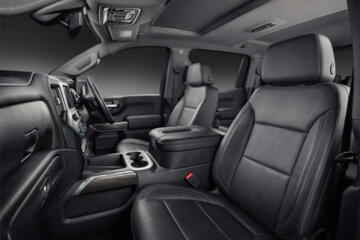
Cabin practicality gets overlooked as well. Rear-seat legroom and child-seat fit matter when you’re hauling kids, not just when you’re commuting. Some pickups have rear seats that fold flat but leave awkward anchor placement for certain car-seat bases, and the seat belt geometry can make installation harder.
Checks that Catch Real Issues
Verify service records
Ask for receipts or a dealer printout that shows oil changes, filter replacements, and coolant service. This works because maintenance intervals correlate with wear, especially on transmissions and cooling systems. In practice, look for consistent mileage gaps, not a single “big service” at 60,000 miles. A quick aside: I’ve seen trucks with “full synthetic” claims but no proof of filter changes, which matters for oil cleanliness.
Skip the verbal history. It rarely includes the parts that fail. If the truck has a 10-speed automatic, confirm fluid service timing; many owners stretch intervals too far, and the shift quality can degrade.
Pressure-test cooling health
Inspect the coolant reservoir level and check for dried residue around hoses, the water pump area, and the radiator end tanks. This works because small leaks and weak radiators often show up as crusty deposits. In practice, run the engine until the fan cycles, then check for steady temperature behavior on the dash. If the truck has a scan tool, watch coolant temperature rise during a 10–15 minute drive; a thermostat that sticks can cause slow warm-up or sudden spikes.
Don’t ignore fan behavior. It’s a clue. A fan that never runs until late can mean airflow issues, while a fan that runs constantly can mean a sensor or thermostat problem.
Test transmission under load
Drive in a way that forces shifts: accelerate from 25–45 mph, then hold 45–65 mph for several minutes. This works because many transmission issues appear when torque demand rises and the fluid is hot. In practice, feel for delayed engagement when shifting from Park to Drive, and listen for harsh clunks at low speed. If the truck has a tow/haul mode, test it briefly; abnormal hunting in that mode often points to valve-body or solenoid wear.
Skip the “it shifts fine” claim. It can be cold-only. If you can, scan for stored codes and pending transmission-related codes before negotiating.
Inspect suspension and steering
Check for uneven tire wear, steering wheel off-center, and clunks over speed bumps. This works because worn ball joints, tie-rod ends, and bushings create play that shows up at low speeds. In practice, bounce each corner and watch for excessive rebound or creaks. If the truck has rear leaf springs, look for sag and inspect the U-bolts and spring packs for signs of movement.
Don’t accept vague “alignment issues.” Misalignment can be a symptom of bent components. If the seller refuses a lift inspection, you can still measure tread depth across tires and compare left-to-right differences.
Check drivetrain transfer case
If the truck has 4x4, test engagement in a safe area and verify the system transitions smoothly. This works because transfer case and front differential wear can cause grinding or delayed engagement. In practice, listen for abnormal noises when switching modes, and confirm the 4WD indicator matches what you feel. If you have access to a scan tool, check for wheel-speed sensor codes; those can trigger limp modes and ruin traction control behavior.
Skip the “it’s just the sensor” assumption. Sensors can be the symptom, not the cause. Worn bearings can still trigger repeated codes.
Evaluate towing hardware
Inspect the hitch receiver, wiring harness, and brake controller if equipped. This works because trailer wiring faults and misadjusted brake controllers cause real-world braking problems that show up only when a trailer is connected. In practice, check that the 7-pin connector is intact, the harness isn’t spliced with random tape, and the controller settings match the truck’s brake system. If the truck claims a towing package, verify the presence of the correct tow mirrors, trailer brake wiring, and factory tow rating label.
Don’t trust the sticker alone. A truck can be “rated” and still be poorly set up. Also check payload: many half-tons have payload limits around 1,500–2,000 lb, and adding passengers plus cargo can eat that quickly.
Measure bed and cab practicality
Confirm bed length, tie-down points, and whether the rear window and tailgate seals keep water out. This works because bed rust and leaky seals lead to hidden corrosion and electrical issues near the tail lights. In practice, open the tailgate and check for sag, then inspect the bed floor for bubbling or soft spots. For child-seat fit, test the rear seat with the actual car seat base if possible; check whether the LATCH anchors are accessible and whether the seat belt locks reliably.
Skip the “it has rear seats” assumption. Some rear benches are narrow and make booster installation awkward. If you plan road trips, check rear HVAC vents and how much air reaches the back.
Run a scan and leak check
Use an OBD-II scanner to read live data and stored codes, then inspect for fresh leaks under the engine, transmission, transfer case, and differential. This works because many failures trigger codes before they become obvious. In practice, look for wetness around valve covers, oil pan seams, and differential covers. A mild frustration: sellers sometimes wipe the engine bay right before showing the truck, so you may need to check for residue patterns and smell for burnt oil.
Skip buying without a scan. It catches misfires, EVAP leaks, and sensor faults that affect emissions and drivability. If the truck has a diesel, also check for exhaust-related codes and verify the DEF system status.
Mini Case: Fleet Trade-In
A small landscaping company bought a used 2020 half-ton at 48,000 miles for $31,500. After 6 months, the truck started showing delayed shifts when towing a 7,000 lb trailer, and fuel economy dropped from about 16 mpg to 13 mpg combined. They stopped towing until diagnosis, then found transmission fluid contamination and a failing cooler line. The repair cost was about $2,400, and they avoided a full transmission replacement that could have run $4,500–$7,000 depending on parts and labor.
They also changed how they tracked maintenance. They required documented fluid service every 30,000 miles for towing use, and they added a pre-trip inspection for coolant hoses and fan operation. The result was steadier shift timing and a return toward 15–16 mpg on similar routes.
Mini Case: Rust and Resale
A utility contractor considered a used 2018 crew cab with 92,000 miles priced at $24,900. The truck looked clean, but a lift inspection showed deep pitting on the rear frame rails near the shock mounts and seized U-bolts on the leaf springs. The shop estimate for suspension replacement and frame repair work came to about $3,200, plus alignment costs. The contractor walked away and bought a different truck with lighter rust for $26,500, then sold it after 18 months with less depreciation pressure.
Resale value followed the condition. Trucks with heavy corrosion often sell slower and attract lower offers, especially in regions with salt. That difference can be bigger than the initial price gap once you factor in repair time and downtime.
Used Pickup Checklist
| Check | What to look for | Why it matters | Pass/fail note |
|---|---|---|---|
| Service history | Receipts for oil, filters, coolant, and transmission fluid | Wear accelerates when intervals stretch | Documented vs missing |
| Cooling behavior | Stable temp; fan cycles normally after warm-up | Overheating can cause gasket and head issues | Temp gauge and fan timing |
| Transmission shifts | No delayed engagement; smooth shifts when hot | Heat reveals clutch and valve problems | Cold vs hot behavior |
| 4x4 operation | Smooth mode changes; no grinding | Transfer case and diff wear is expensive | Engagement feel and noises |
| Suspension and tires | Even tread; no clunks; no torn boots | Worn joints create alignment and safety issues | Tread depth spread |
| Towing setup | Hitch, wiring, brake controller, tow mirrors | Trailer braking faults can be dangerous | Wiring condition and controller |
| Rust and frame | No deep pitting at mounts and crossmembers | Corrosion drives repair costs and resale loss | Photo notes from lift |
| OBD scan | No stored/pending codes; sensors read plausibly | Codes can signal drivability and emissions issues | Screenshot of results |
Common Mistakes and Fixes
Skipping a hot drive
Why it happens: buyers often schedule test drives around traffic and time limits. Impact: heat-related transmission and cooling problems show up after 30–60 minutes, not at first start. Avoid it by planning a route with highway speed and a few moderate accelerations. If the seller refuses a longer drive, treat that as a data point, not a negotiation tactic.
Ignoring tire wear patterns
Why it happens: tread depth looks fine from a distance. Impact: uneven wear can signal alignment issues, worn ball joints, or bent components, which can cost more than a tire set. Avoid it by measuring tread depth at the inside, center, and outside edges on both sides. If the spread is more than about 3/32 in, ask for an alignment check.
Buying towing claims without proof
Why it happens: sellers quote towing capacity from memory or a brochure. Impact: a truck can be rated for 10,000 lb but still have mismatched axle ratios, missing brake controller wiring, or a tired cooling system. Avoid it by verifying the tow package label, checking the brake controller operation, and inspecting the hitch and wiring harness. If you tow, connect a trailer wiring tester if available.
Overlooking rear-seat fit
Why it happens: buyers focus on the front seats and the bed. Impact: child-seat installation can be awkward if anchor points are hard to reach or belt geometry is tight. Avoid it by bringing the car seat and trying it in the truck’s rear seat. Check that the seat belt locks and that the LATCH anchors are accessible without forcing the base.
Accepting “wiped clean” engine bays
Why it happens: some sellers clean the truck before showing it. Impact: fresh grime removal can hide leaks until after purchase. Avoid it by checking for residue patterns, smelling for burnt oil, and using a flashlight to inspect around the oil pan, valve covers, and radiator seams. If the truck has a recent oil change, ask for the date and mileage.
FAQ
What mileage range is risky?
Risk depends on how the truck was used, not just the odometer. A 70,000-mile pickup that towed heavy loads every weekend can wear driveline components faster than a 110,000-mile commuter truck. Focus on service records for oil, coolant, and transmission fluid, then verify behavior when hot. If you see repeated transmission-related codes, persistent coolant temperature swings, or uneven tire wear, treat those as higher risk than the mileage number alone.
Should I buy a diesel pickup used?
Diesels can be durable, but the maintenance profile matters. Look for documented DEF service, exhaust system repairs, and no stored codes related to NOx sensors or DPF regeneration. Check for signs of soot around the tailpipe and verify that the truck completes regen cycles without frequent interruptions. Also confirm towing cooling capacity and inspect the radiator and charge-air cooler area, since heat management is central to diesel longevity.
How do I check for frame rust?
Surface rust on a ladder frame is common, but deep pitting near mounting points is the red flag. Use a flashlight and, if possible, a lift inspection to examine crossmembers, leaf-spring hangers, and rear shock mounts. Probe with a pick if the shop allows it; flaking metal and soft spots indicate corrosion that will spread. Ask for photos from the underside, and compare both sides because corrosion often progresses unevenly.
What scan tools help most?
An OBD-II scanner that reads live data and pending codes is more useful than a basic code reader. Look for tools that can display coolant temperature, transmission temperature (if supported), and misfire counts. A shop scan can also run manufacturer-specific tests and check readiness monitors for emissions. If you see pending codes for sensors tied to drivability, negotiate repair or walk away, because clearing codes before sale is common.
How should I test towing without a trailer?
You can’t fully replicate trailer dynamics without a load, but you can still test the setup. Drive with a moderate load in the bed if the seller agrees, then watch for transmission hunting, coolant temperature rise, and brake feel during repeated stops. Inspect the brake controller settings and wiring, and confirm trailer-sway control indicators work. If you tow regularly, connect a trailer wiring tester at minimum, and plan a real tow test with a safe, appropriate trailer.
Author's Insight
Used pickup failures often show up as heat problems, not cold-start quirks. Cooling-system neglect and transmission fluid stretching are common patterns because towing multiplies stress on radiators, coolers, and clutches. A practical approach is to scan for codes, then drive long enough to reach stable operating temperature before judging shift quality. If you’re comparing two trucks with similar mileage, the one with documented coolant and transmission service usually costs less over the first year.
Also pay attention to payload and rear-seat fit. A truck that “fits the job” on paper can become annoying on road trips if rear HVAC airflow is weak or if child-seat installation is tight.
Key Takeaways
Start with documentation, then verify behavior when the truck is warm. Check cooling fan timing, transmission shifts under load, and drivetrain operation for 4x4 systems. Inspect suspension wear, rust at frame mounts, and towing hardware condition, since those repairs can exceed the price gap between similar listings.
Next step: schedule a pre-purchase inspection with a shop that can lift the truck and run a scan. If the seller won’t allow a scan or a longer hot drive, treat that as a reason to slow down. If you find frame corrosion, repeated transmission codes, or overheating history, negotiate repairs in writing or walk away.
Limits: a test drive can’t confirm internal engine wear or future reliability. If you’re seeing warning lights, stored codes, or signs of overheating, seek professional diagnosis before buying, because the cost of guessing is usually higher than the cost of inspection.