Used SUV Checks that Matter
A used SUV is a bundle of wear items plus one or two systems that can get expensive fast. Transmission service gaps, cooling neglect, and worn suspension parts show up as drivability issues long before the dashboard lights. In the U.S., SUVs make up a large share of vehicle sales, and many are bought for towing, road trips, and family use, so the failure modes hit real budgets. A 2018–2023 SUV with a 3.6L V6 or a 2.0L turbo four can feel fine at idle, then show issues under load.
Skip the “looks clean” logic. It hides the 60,000-mile decisions that shaped the car. Many automakers recommend transmission fluid service at intervals that vary by model, and some “lifetime” claims are marketing language rather than a maintenance plan. If you’re shopping a 2019 model with a 2.0L turbo, ask whether the fluid was serviced around 30k–60k miles, because that range is where many owners start noticing shift harshness when service was skipped.
Fuel economy also changes the math. A typical gasoline SUV might return about 20–25 mpg combined, while a diesel or hybrid can differ widely; the exact number depends on engine size, gearing, and tire choice. If a listing claims 26 mpg combined but the car averages 18 mpg on the trip computer, that mismatch is a clue worth investigating. Tire size and tread depth alone can swing consumption by a few mpg, and worn brakes can add drag.
Safety systems deserve attention too. Many SUVs use electronic stability control, adaptive cruise, and collision avoidance sensors that can be miscalibrated after windshield or bumper work. In U.S. crash testing, the Insurance Institute for Highway Safety (IIHS) rates front crash protection and other categories; you can use those ratings to compare models, then verify the specific car’s sensor history. A clean vehicle history report helps, but it does not confirm calibration after a minor front-end repair.
Common used SUV buying traps
People get the biggest surprises from drivetrain and cooling, not from the paint. A transfer case that’s dry, a differential with neglected fluid, or a transmission that never saw service can turn a “minor” problem into a $3,000–$6,000 repair. Suspension wear is the second trap: worn control arm bushings and shocks can feel like “loose steering” or “wandering,” especially on highway expansion joints.
Skip the test-drive shortcut. It misses intermittent faults that show up after 20–30 minutes. Many electrical issues—like a failing wheel-speed sensor, a sticky HVAC blend door, or a weak battery—appear only when the alternator load rises. If the SUV has a 3.5L V6 or 3.6L V6, listen for vibration under acceleration and check whether the engine smoothness changes after warm-up.
Consequences show up in ownership costs. Tires on SUVs are often 18–20 inches, and a set can cost $700–$1,200 depending on brand and size. Brakes can be more expensive too, especially if the SUV uses larger rotors or has rear calipers that seize. If the seller says “it needs nothing,” check for uneven tire wear and brake dust patterns that suggest alignment issues or dragging calipers.
Real-world situations matter. If you plan to tow, a used SUV’s towing capacity is only half the story; the other half is cooling capacity and transmission behavior in heat. A 5,000-lb tow on a 2.0L turbo four can be fine on paper, then feel strained if the cooling system is weak or the transmission shifts late. If the SUV has a tow package, verify the wiring harness, brake controller (if equipped), and whether the hitch receiver is straight and securely mounted.
Checks and Test Steps
Start with service records
Ask for maintenance receipts, not just a photo of a dashboard. Transmission fluid service matters on many SUVs, and the interval varies by model and drivetrain. Look for entries around 30k–60k miles for a typical gasoline automatic, plus coolant service if the car is older than 5–6 years. Skip the “no records” situation; it forces you to guess what was done.
In practice, you want to see consistent intervals for oil changes, brake service, and any drivetrain fluid work. A 2.5L or 3.5L V6 with frequent short trips can accumulate sludge faster, so oil change frequency is a clue. Use a VIN-based service history report from a reputable provider if the seller won’t share receipts; it won’t show everything, but it often fills gaps.
Inspect cooling and overheating clues
Check the coolant reservoir level when the engine is cold, then look for dried residue around the cap and hoses. A history of overheating can warp components and damage head gaskets, even if the engine runs smoothly today. For a 3.6L V6 or 2.0L turbo, watch for a fan that cycles too often, a thermostat that takes too long to reach temperature, or a heater that blows lukewarm air.
Bring a basic scan tool if you have one, or ask for a pre-purchase inspection with diagnostics. Look for stored codes related to misfires, cooling fans, or oxygen sensors. If the SUV has a stop-start system, confirm it works after warm-up; repeated failures can point to battery health or charging issues.
Verify drivetrain behavior
Drive in a way that loads the drivetrain. Accelerate from 20–40 mph with light throttle, then again with firmer throttle, and note shift timing and any shudder. Skip the “it shifts fine once” logic; a worn torque converter or valve body can act up only under moderate load. For AWD SUVs, listen for driveline clunks when turning at low speed.
In practice, check for vibration on takeoff and for a change in noise when you lift off the throttle. If the SUV has a transfer case, test in a parking lot with gentle turns; binding or jerky engagement can indicate worn clutches or fluid neglect. A scan tool can show pending transmission codes even when the check engine light stays off.
Check suspension wear patterns
Inspect tires for uneven wear: inside-edge wear can point to toe issues, while cupping can suggest worn shocks. Bounce the front and rear corners; repeated oscillation after you release the body can mean tired dampers. On many SUVs, worn control arm bushings show up as clunks over potholes and a steering wheel that feels vague.
Use a flashlight and look at ball joints, tie rods, and sway bar links for torn boots or wet grease. If the SUV has air suspension, check for uneven ride height and compressor cycling; repairs can be expensive. A quick alignment check at a tire shop can cost less than a surprise $1,000 suspension job, and it gives you a baseline.
Evaluate brakes and tires honestly
Measure tread depth with a gauge if you can, and compare left-to-right. Uneven tread depth often matches uneven brake wear or alignment problems. Check rotor edges for heavy scoring and look for brake caliper slide issues by feeling for heat after a short drive—careful, the rotors get hot.
For SUVs with larger brakes, confirm the parking brake holds on a slope. If the SUV uses electronic parking brakes, test it a few times; a weak actuator can show up as a delayed engagement. Tire age matters too; look for the DOT date code and compare it across tires. A set with mixed ages can mean the seller replaced only what failed.
Test electronics and sensors
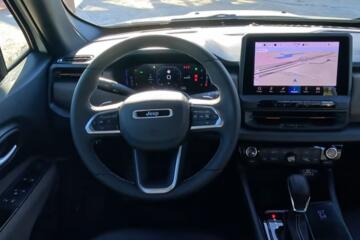
Turn on every major system: headlights, high beams, fog lights, wipers, rear defrost, heated seats, and the infotainment screen. Watch for warning messages that appear only after the vehicle warms up. Many SUVs use radar and camera-based driver assistance; after windshield replacement, calibration may be required.
In practice, check that adaptive cruise and lane centering engage without repeated “system unavailable” messages. If the SUV has a 360-degree camera, verify the image quality and that the sensors don’t show persistent dirt warnings. A pre-purchase inspection with a scan for body control module codes can catch issues that a simple OBD scan misses.
Confirm towing and payload fit
Read the door-jamb label for the SUV’s gross vehicle weight rating and tire pressures, then compare it to your planned cargo. Towing capacity depends on engine, transmission, axle ratio, and cooling package; the number on the brochure is not always the number on the specific car. If the SUV is rated for 5,000 lb, verify the tow hitch rating, wiring harness, and whether the transmission has a tow mode.
Check the brake controller operation if equipped, and test trailer light functions with a plug-in tester. For payload, measure how many people and how much gear you carry; a family SUV can run out of payload before it runs out of towing capacity. Child-seat compatibility matters too: check LATCH anchors, seatbelt routing, and whether the rear door opening is wide enough for your seat model.
Assess cabin practicality and road-trip comfort
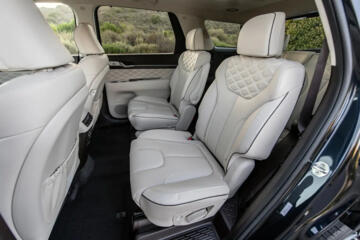
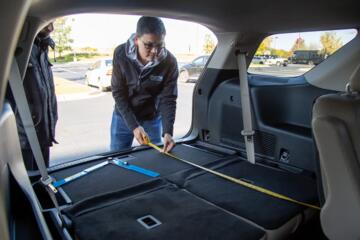
Check rear-seat access with the door open and closed, then test child-seat installation if you have one. Look at seatbelt length and whether the buckle stalk interferes with a child seat base. For cargo, measure the usable space with a tape measure if you’re comparing two SUVs; cargo floor height and opening width change how often you’ll fight with bags.
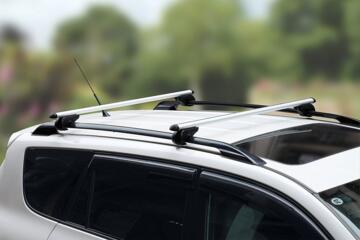
Road-trip comfort is measurable. Note cabin noise at 60–70 mph, and listen for wind whistle around mirrors or roof rails. Check HVAC performance by setting 72°F and watching how quickly the cabin reaches temperature. If the SUV has a panoramic roof, check for rattles and confirm the shade opens and closes smoothly.
Mini Case: Fleet SUV
A small delivery company bought a used mid-size SUV with a 3.5L V6 at 72,000 miles. The problem showed up as delayed shifts when the vehicle was loaded, especially on 6–8% grades, and the driver complained about a “hunting” feel. They stopped using the SUV for heavy towing and scheduled transmission service plus a cooling system inspection.
Skip the guesswork. They pulled the pan, inspected fluid condition, and replaced the filter and fluid with the correct specification. After service, the shift behavior stabilized and the company tracked fuel economy for 30 days. Average combined mpg improved from about 16.5 to 18.2, and the vehicle avoided a $4,000 transmission replacement that the shop initially warned about.
Mini Case: Family SUV
A family purchased a used compact SUV with a 2.0L turbo at 38,000 miles. The listing looked clean, but the first week brought a recurring “lane assist unavailable” message and a slight steering pull. They returned for a pre-purchase style inspection, then found a recent front bumper repair and a misaligned camera calibration target.
They corrected alignment and recalibrated the camera system, then replaced a wheel-speed sensor that had intermittent readings. The repair cost was about $650 for sensor and calibration work, plus $120 for an alignment check. Afterward, the lane system engaged normally and tire wear slowed; tread depth loss over the next 10,000 miles matched the expected wear pattern.
Used SUV Checklist
| Check | What to look for | How to test | Why it matters |
|---|---|---|---|
| Maintenance history | Oil, coolant, transmission service receipts | Ask for invoices; run VIN history | Drivetrain neglect drives big repair bills |
| Cooling system | Coolant level, fan behavior, leaks | Cold reservoir check; warm-up observation | Overheats can damage head gaskets |
| Transmission shifts | Smooth engagement under load | 20–40 mph accelerations; scan for codes | Valve body and torque converter wear |
| AWD/Air behavior | Clunks, binding, ride height changes | Low-speed turns; check for compressor cycling | Transfer case and air systems get pricey |
| Tires and brakes | Uneven tread, rotor scoring, dragging calipers | Tread depth gauge; feel for heat after drive | Alignment and caliper issues cost over time |
| Driver-assist sensors | No repeated “unavailable” messages | Test adaptive cruise and lane assist | Calibration after repairs can be required |
| Child-seat fit | LATCH anchors and seatbelt routing | Install your seat; check buckle access | Wrong fit is a safety and usability issue |
Common Mistakes and Fixes
Skipping a cold start check causes missed misfires. Sellers often start the SUV before you arrive, and a weak battery or failing ignition coil can show up only after sitting overnight. Impact: you buy a car that runs rough for the first 2–5 minutes. Avoid it by asking to hear the engine at cold start, then watch for smoke and rough idle.
Ignoring tire wear patterns wastes money. People focus on tread depth, not wear shape, and they miss alignment or suspension problems. Impact: you replace tires early, sometimes at 20k–30k miles instead of 40k–60k. Avoid it by photographing all four tires from the side and comparing inner vs outer wear.
Overlooking scan-tool data invites repeat repairs. A simple OBD read can miss body module codes, and a seller may clear codes before the appointment. Impact: you pay for diagnostics twice. Avoid it by requesting a pre-purchase inspection and asking the shop to print stored and pending codes. If you bring a tool, note the software version—my last bench test used a generic scanner labeled “v2.1.0,” and it missed some pending codes.
Buying for towing without checking cooling invites overheating. People read the maximum tow rating and ignore transmission behavior in heat. Impact: the SUV may enter limp mode or shift late under load. Avoid it by asking whether the SUV has a tow package and by doing a short hill test if the route allows.
Assuming driver-assist works because the screen looks clean creates frustration. Cameras and radars can be blocked by prior repairs, and calibration can drift after windshield work. Impact: repeated “system unavailable” messages and extra shop visits. Avoid it by testing adaptive cruise and lane centering in daylight, then checking for stored sensor codes.
FAQ
What mileage range is safest?
There is no single safe mileage number because maintenance history matters more than odometer digits. A 40,000-mile SUV with skipped oil changes can be worse than a 90,000-mile SUV with documented service. Focus on the interval where major wear items start: tires, brake pads, and suspension bushings often show up between 30,000 and 70,000 miles depending on roads and driving. For drivetrain risk, ask whether transmission fluid was serviced and whether the cooling system was maintained, especially on turbo engines.
How do I check transmission health?
Use a test drive that includes moderate acceleration and deceleration. Pay attention to shift timing at 20–40 mph, and note any flare (engine revs rising without speed) or harsh engagement. If the SUV has AWD, listen for clunks when turning at low speed. A scan tool helps: look for pending codes related to transmission, torque converter clutch, or misfires. If the seller refuses a pre-purchase inspection, treat that as a red flag rather than a negotiation point.
What cooling signs should I watch?
Watch for coolant smell, wetness around hoses, and dried residue near the reservoir cap. On the drive, confirm the temperature gauge stays stable and the radiator fan cycles at reasonable times. Check heater output after warm-up; a weak heater can point to trapped air or thermostat issues. If the SUV has a history of overheating, ask for repair invoices. A clean engine bay helps, but it does not prove the cooling system was serviced on schedule.
Do I need a scan tool at the lot?
A scan tool is useful, but it does not replace a pre-purchase inspection. Many issues show up as pending codes that a basic reader might miss, and some body module faults require manufacturer-level diagnostics. If you use a tool, record the date and the software version so you can compare results later. Even without a scan tool, you can still check for warning lights, test driver-assist functions, and verify that the HVAC and charging systems behave consistently after warm-up.
How should I evaluate towing readiness?
Start with the door-jamb label and the vehicle’s specific tow rating, then verify the tow package parts on the car. Look for a hitch receiver, wiring harness, and a brake controller if the SUV is equipped for it. Test trailer lights with a plug-in tester if possible. On the road, do a short hill test and watch for late shifts, overheating, or unusual transmission hunting. If the SUV has been used for towing, ask for service records tied to that use.
Author's Insight
Used SUV problems cluster around a few systems: cooling, drivetrain fluid maintenance, suspension wear, and sensor calibration after body work. Those failures often start as drivability complaints—shift flare, fan cycling, clunks over bumps—before they trigger major warning lights. A careful buyer treats the test drive as a controlled experiment, not a casual ride, and they verify claims with receipts or diagnostics. If you’re comparing two SUVs, the one with documented transmission and cooling service usually costs less over 3–5 years, even if the purchase price is slightly higher.
Key Takeaways
Bring a checklist and verify service history, cooling condition, drivetrain behavior, and tire/suspension wear patterns. Do a loaded test drive, test driver-assist systems, and confirm towing and child-seat fit before you negotiate price. If you find missing receipts, repeated sensor warnings, or uneven tire wear, budget for repairs or walk away and keep shopping.
Next step: schedule a pre-purchase inspection with a shop that will print scan results and check underbody components. If the SUV shows overheating signs, transmission flare, or persistent AWD binding, get a second diagnostic opinion before committing. If you’re unsure about child-seat installation, use the seat manufacturer’s manual and a local inspection event; correct fit matters more than the vehicle’s brochure dimensions.