EV resale is not linear
EV resale value depends on battery condition, charging habits, and policy shifts, not just odometer miles. A 2022 EV with 30,000 miles can price like a 10,000-mile car if its battery health report looks strong. In the U.S., many EVs use 8-year/100,000-mile battery warranties, but the coverage details vary by brand and model year.
Skip the “mileage only” mindset. It ignores battery degradation, which drives long-term cost and buyer confidence. Battery degradation rates are not uniform; they depend on temperature exposure, charging frequency, and time spent at high state of charge. That variability shows up in auction results, where two cars with the same range rating can trade at different prices.
Range ratings also drift in the real world. EPA range is measured under standardized conditions, while winter driving can cut usable range by 20–40% depending on temperature and speed. That gap affects how buyers judge a used EV’s daily usability, and usability affects resale.
Insurance and repair patterns add another layer. Some EVs have higher insurance premiums than comparable gas models because of parts cost and repair complexity, and those costs can influence what dealers pay at trade-in time. A single body-panel repair can be expensive when you need calibrated sensors or high-voltage component work.
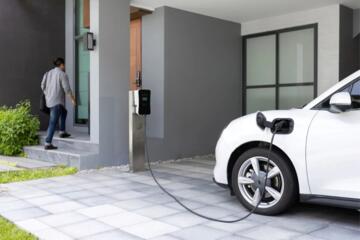
Resale value is also tied to charging access. A used EV with a home Level 2 charger tends to be easier to live with than one that relies on public DC fast charging. Buyers notice that difference quickly, especially when they price convenience into monthly ownership costs.
What buyers get wrong
People often assume EV depreciation follows the same curve as gas cars. That assumption breaks because battery health is a moving target, and buyers treat it like a risk score. Skip the “same trim equals same value” idea; options that affect charging and thermal management can change long-term costs.
Charging history matters more than many shoppers realize. Frequent DC fast charging at high battery temperatures can accelerate wear, and the car’s thermal strategy may not fully offset that. Even if the battery warranty remains intact, buyers may still discount the car if the battery health estimate looks low.
Software and feature changes can also affect resale. Some EVs receive updates that improve efficiency or add features, while others may lock certain functions behind subscriptions or region-specific availability. When a buyer can’t verify what the car will do in 2–3 years, they discount the price.
Financing terms can distort the market too. If lenders tighten credit or raise rates for certain vehicle types, the used EV market can cool even when the cars are mechanically fine. That shows up as wider bid spreads at auctions, which then flows into dealer trade-in offers.
Consequences show up at the transaction level. A buyer who overestimates resale can end up rolling negative equity into the next purchase. Fleet managers see this as a budgeting problem: residual value assumptions that were reasonable at order time can become wrong by the time vehicles reach remarketing.
Real-world example: a commuter EV used for 60 miles/day with mostly Level 2 charging can look different from a road-trip-heavy EV that relies on DC fast charging. Both may show similar odometer mileage, but the battery stress profile can differ enough to change buyer perception.
How to estimate resale risk
Start with warranty terms
Check the battery warranty coverage for the exact model year and trim. It matters because the warranty often covers capacity loss thresholds, not just a fixed number of years. In the U.S., many warranties are 8 years/100,000 miles for the battery, but the capacity threshold and exclusions vary. In practice, a car near the mileage limit can trade lower even with a clean battery report.
Look for the capacity threshold language. It can be 70% or 60% depending on the manufacturer and region, and that threshold drives how buyers price “future replacement risk.”
Verify battery health data
Use the manufacturer app or a diagnostic tool that can read battery health metrics, if available. Some EVs provide a battery health estimate; others require dealer-level diagnostics. If the seller can’t show any battery health information, treat that as a pricing risk, not a minor inconvenience. A buyer who can’t verify health often pays less because they can’t quantify the downside.
Skip vague claims like “it’s at 95%.” Without a documented source, it’s hard to compare cars.
Measure real range, not EPA
Plan a range check that matches your climate and driving pattern. EPA range is a standardized test, but winter conditions can reduce range by 20–40% in many regions. For a practical test, drive at 55–70 mph, note the battery percentage drop, and compare it to your typical route. If the car consistently underperforms, buyers will assume battery wear or efficiency loss.
Use a repeatable method. Same route, same speed, same temperature window, and you get a number you can defend.
Audit charging access
Ask how the car was charged: Level 2 at home, workplace charging, or frequent DC fast charging. Charging access affects both battery wear and the buyer’s day-to-day cost. A car that was mostly DC fast charged may have higher wear, and it may also have a history of charging sessions that the buyer can’t replicate cheaply. That changes resale because convenience is part of the value equation.
Also check connector compatibility. Some regions and trims use different charging standards, and adapters can be a hassle later.
Price insurance and repair risk
Get insurance quotes for the exact VIN or at least the trim before you commit. EVs can cost more to insure in some markets because of higher parts and labor costs, especially for crash repairs involving sensors and high-voltage components. Repair frequency can also differ; for example, tires can wear faster on some EVs due to instant torque and vehicle weight. Those ownership costs influence what dealers can pay at trade-in time.
Request a quote with the same deductible. Small changes can swing the annual premium enough to matter.
Inspect thermal and charging hardware
Look for signs of repeated charging issues: error codes, slow charging complaints, or frequent service visits. Thermal management components like the battery coolant system and heat pump can affect both efficiency and battery longevity. If service records show repeated coolant or charging-related repairs, buyers may discount the car even if it’s currently working. That discount can be larger than the repair cost because it signals uncertainty.
Ask for service invoices. A line item like “coolant service” can explain a lot, and it rarely appears by accident.
Model the depreciation window
Use a simple timeline: 12 months, 36 months, and 60 months. EV depreciation often accelerates when incentives change, when new models launch with better efficiency, or when battery warranty terms shift. Compare current used prices against original MSRP and against similar cars with known battery health. If the gap widens quickly, the market is repricing risk.
Track auction results if you can. Even a rough view of bid-to-sale spreads helps you avoid guessing.
Mini case: fleet remarketing
A regional delivery company leased 40 EVs and planned to sell them after 36 months. Their initial residual value assumption assumed “average” battery health, but remarketing bids came in lower than expected. The fleet had a high share of DC fast charging during route peaks, and service records showed more thermal-management-related visits than their gas fleet had for comparable components.
They changed the charging policy mid-cycle: more Level 2 charging during off-peak hours and fewer back-to-back DC sessions. They also required a monthly battery health export from the fleet telematics system. After 18 months, the average battery health estimate stabilized, and the next remarketing round improved by about 6–10% versus the earlier batch, based on their internal sale results.
That improvement wasn’t magic. It came from reducing uncertainty and showing buyers consistent health data.
Mini case: private buyer trade
A private buyer traded a 2021 EV with 28,000 miles for a newer model. The car had a clean service history, but the buyer relied on the seller’s verbal claim about battery condition. The dealer discounted the trade because the buyer couldn’t produce a battery health report, and the car’s winter range test showed a larger-than-expected drop compared with similar listings.
The buyer rechecked the battery health using dealer diagnostics and provided a documented capacity estimate. The dealer reappraised the trade-in and raised the offer by roughly $1,500–$2,000, depending on the final sale channel. The difference came from reducing buyer uncertainty, not from any sudden mechanical repair.
Documentation changes the conversation. It turns “trust me” into a number.
Checklist for pricing a used EV
| Item | What to check | Why it affects resale | Practical target |
|---|---|---|---|
| Battery warranty | Exact coverage miles/years and capacity threshold | Limits downside risk for the next owner | Confirm remaining term in writing |
| Battery health data | App estimate or dealer diagnostic printout | Reduces uncertainty during pricing | Bring a screenshot or invoice |
| Range test | Repeatable route at your typical speed | Buyers judge daily usability, not EPA | Compare to similar listings |
| Charging history | Level 2 vs DC fast charging share | Affects wear profile and buyer confidence | Ask for logs if available |
| Insurance quote | Annual premium for your ZIP and coverage | Higher costs can reduce buyer demand | Get VIN-level quotes |
| Service records | Thermal, charging, and sensor-related work | Signals uncertainty even if fixed | Look for repeated patterns |
Common mistakes and fixes
Assuming resale tracks MSRP alone causes pricing errors. It happens because EV markets reprice risk when battery health data becomes more visible and when incentives change. The impact is a trade-in offer that feels “random” but isn’t. Avoid it by comparing the car to listings that include battery health screenshots or documented capacity estimates.
Skip the “range number on the dash” shortcut. It happens because the dash estimate depends on recent driving and temperature, and it rarely matches EPA. The impact is overpaying for a car that feels worse in winter. Avoid it by doing a short, repeatable range check on a consistent route.
Ignoring charging access creates a resale mismatch. It happens when buyers focus on the car’s specs and forget the buyer’s daily routine. The impact is a smaller buyer pool, which pushes prices down. Avoid it by asking whether the car was mostly charged at home or relied on public DC fast charging.
Overlooking insurance and tire costs is a quiet depreciation driver. It happens because monthly payments hide operating costs until you renew coverage. The impact is that some buyers walk away when premiums land higher than expected. Avoid it by getting an insurance quote and checking tire wear history, which can be faster on heavier EVs.
Buying without service records invites uncertainty. It happens because some sellers treat invoices as optional. The impact is a dealer discount for “unknowns,” even when the car is mechanically fine. Avoid it by requesting invoices for thermal system work, charging hardware repairs, and any sensor calibrations.
FAQ
How much does battery health move resale?
Battery health can move resale more than mileage for many EVs because it changes perceived replacement risk. Buyers often treat a lower capacity estimate as a future cost, even when the car still meets warranty thresholds. The exact effect varies by model, warranty terms, and whether the seller can document health data. If two cars have similar odometers but one has a documented capacity estimate and the other does not, the documented car usually prices higher because it reduces uncertainty.
Do EVs depreciate faster than gas cars?
Some EVs depreciate faster early in their life cycle, but the pattern is not universal. Depreciation depends on incentives, new-model launches, and how quickly battery and charging tech changes. Gas cars also face depreciation swings, but EVs add battery-health perception and charging convenience into the pricing equation. Watch the used market for your exact model year and trim, then compare it to the same model’s earlier listings to see how quickly prices are repriced.
Can software updates change resale value?
Software updates can affect resale indirectly by changing efficiency, charging behavior, and feature availability. If an update improves real-world range or fixes a charging bug, buyers may pay more for a car that has already received it. If updates add features that require subscriptions, resale can vary by buyer preference. The practical step is to ask for the vehicle’s software version history and confirm whether any known issues were addressed in service records.
What charging habits hurt resale the most?
Frequent DC fast charging at high battery temperatures can increase wear risk, and buyers discount cars that appear to have that history. The impact depends on the vehicle’s thermal management and the charging pattern, not just the number of DC sessions. A car used for long highway trips with occasional DC charging can look better than a car that was repeatedly topped up quickly during short stops. The best approach is to ask for charging logs or, if unavailable, to request service records that mention charging-related faults.
Should I buy an EV for resale or keep it longer?
Resale uncertainty is highest when you plan to sell before the battery warranty window stabilizes in the buyer’s mind. If your plan is to sell in 2–3 years, you need stronger documentation: battery health data, consistent range performance, and clear charging history. If you plan to keep the car longer, the warranty coverage and your own charging setup matter more than short-term market swings. For many shoppers, the practical move is to align purchase price with the likelihood you’ll keep the car through the warranty period.
Author's Insight
EV resale value is hard to predict because battery condition is not a single measurable spec at purchase time. Buyers price uncertainty, and uncertainty comes from missing battery health documentation, inconsistent real-world range, and unclear charging history. Warranty terms help, but capacity thresholds and exclusions vary by model year and region. When a seller can show battery health data and service records, the market often prices the car more confidently, even if the odometer is the same.
I also see a pattern in how people test range: they rely on the dash estimate instead of repeating a route. That makes it harder to compare cars fairly, and it feeds pricing noise at trade-in time.
Key takeaways
Resale value is difficult to forecast because EVs mix battery wear risk, charging convenience, and market repricing from incentives and new models. Start with warranty terms, then verify battery health using app data or dealer diagnostics. Do a short, repeatable range check in your conditions, and price insurance and tire wear into your ownership cost model.
Next step: build a “documentation pack” before you negotiate—battery health screenshot, service invoices, and a range test note. If the seller refuses, treat that as a real pricing signal, not a minor inconvenience. If you see charging errors, repeated thermal-related service, or capacity readings near warranty thresholds, ask a qualified EV technician to inspect the battery and thermal system before you commit.
Limits exist. Even with good data, used EV prices can swing when incentives change or when a new battery/efficiency generation arrives. For medical advice, seek a licensed professional; this article covers vehicle economics and inspection steps only.